Two landmark papers published in Nature in 2026 have demonstrated that CRISPR-Cas12a2, a newly discovered enzyme, can be programmed to selectively kill cancer cells by shredding their entire genome — while leaving healthy cells unharmed.
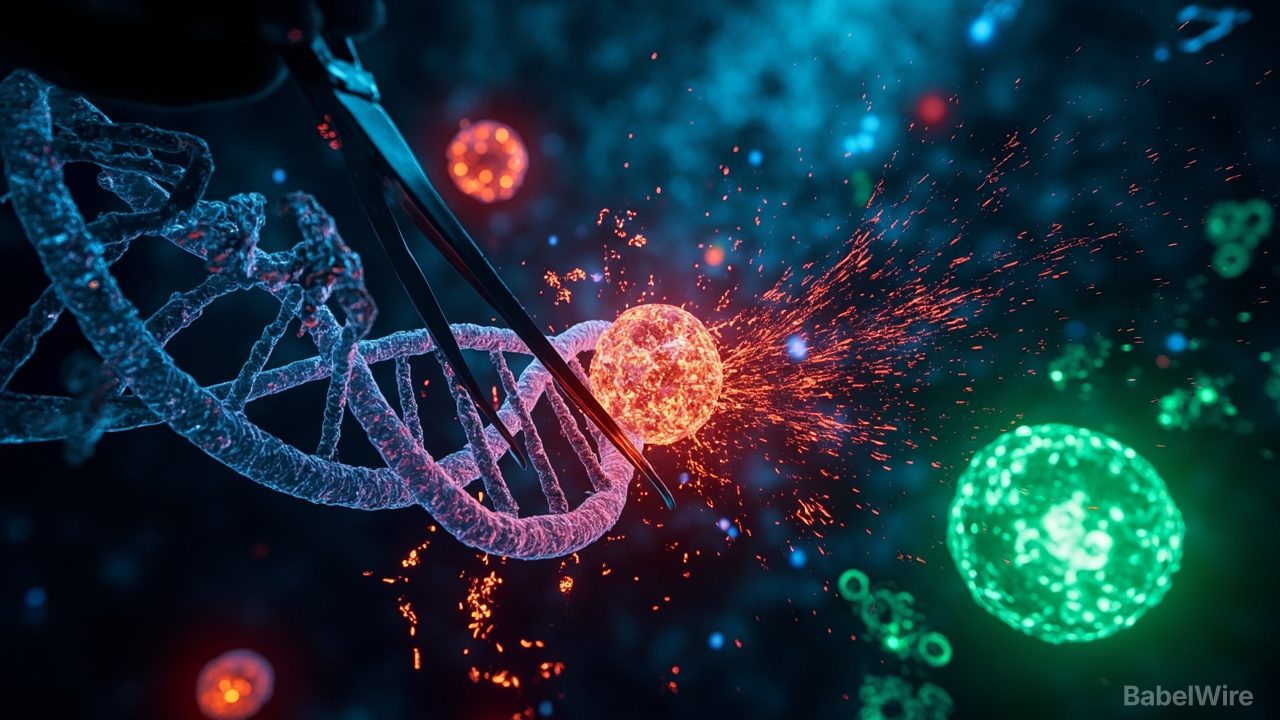
Unlike traditional CRISPR-Cas9, which makes precise cuts at a target DNA location, Cas12a2 works differently: when it detects a specific RNA sequence, it activates a rampant DNA-shredding mode that destroys all genetic material in that cell. The key insight is that only cells producing the target RNA — those carrying mutations in genes like TP53, MYC, or EGFR — are killed.
In mouse studies, researchers programmed Cas12a2 to target mutant transcripts of TP53, a tumor suppressor gene mutated in nearly half of all cancers. The therapy reduced tumor volume by approximately 50%, while healthy cells with normal TP53 were left completely intact.
The approach, described by researchers as "RNA-triggered chromatin shredding," could offer a path to treating some of the most difficult-to-target cancers, including those driven by mutations in MYC and other oncogenes that have long been considered undruggable.