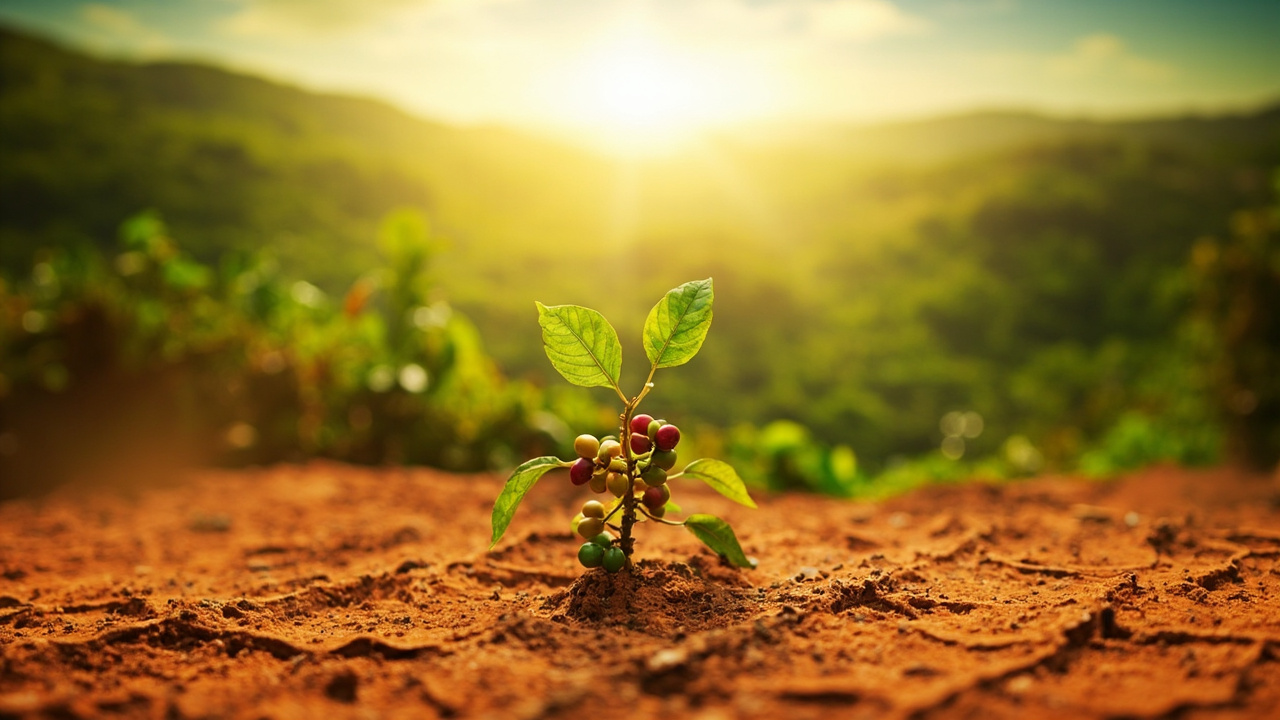
Coffee is one of the world's most beloved beverages and an essential stimulant for researchers and workers everywhere. But its future is increasingly uncertain as climate change bears down on the narrow range of conditions where coffee plants thrive.
"Coffee is critically threatened by climate change," says Kassahun Tesfaye, a plant geneticist at Addis Ababa University. Nearly all of the 10 million tonnes of coffee beans consumed annually come from two species: robusta (Coffea canephora) and the more delicate arabica (Coffea arabica). Arabica suffers or dies when temperatures rise just a few degrees, and robusta requires massive amounts of water, with yields dropping drastically in drought.
Preserving Genetic Diversity
Ethiopia, the birthplace of arabica coffee, is taking action. The government is establishing conservation areas to preserve natural genetic diversity, and maintains living collections of over 12,000 arabica plants at institutes in Addis Ababa and Jimma. These plants could provide the material for breeding — or genetically engineering — arabica cultivars with traits designed to withstand higher temperatures and drought.
Rediscovering Forgotten Species
There are 134 known wild coffee species, and some show remarkable resilience. Aaron Davis at the Royal Botanic Gardens, Kew, has championed Coffea stenophylla — a "bonkers" species described by a Swedish botanist in West Africa in the 18th century, then largely forgotten. "It still freaks me out, because here we have a coffee which isn't related to arabica, occurs in an extreme environment — and yet tastes like a very specific arabica from Rwanda."
Other promising species include C. liberica, which tolerates higher temperatures and requires less water than arabica, and C. excelsa, which offers climate resilience with fruity and almondy notes.
Chemistry: Getting More from Less
Scientists are also looking at the consumer side. Christopher Hendon at the University of Oregon found that grinding coffee beans at below-freezing temperatures results in smaller particles, but counter-intuitively, finer grinds don't always yield tastier brews due to electrostatic clumping. Tweaks like starting with moist beans can help. Surprisingly, coarser grinds can release more flavor under lower pressures, opening new possibilities for extraction efficiency.