Wenchang, China — China successfully launched and recovered a reusable orbital-class rocket booster for the first time on July 10, joining an elite club previously occupied only by SpaceX and Blue Origin. The Long March 10B lifted off from the Wenchang Commercial Space Launch Site on Hainan Island at 12:15 pm local time, powered by seven kerosene-fueled YF-100K engines generating nearly 2 million pounds of thrust.
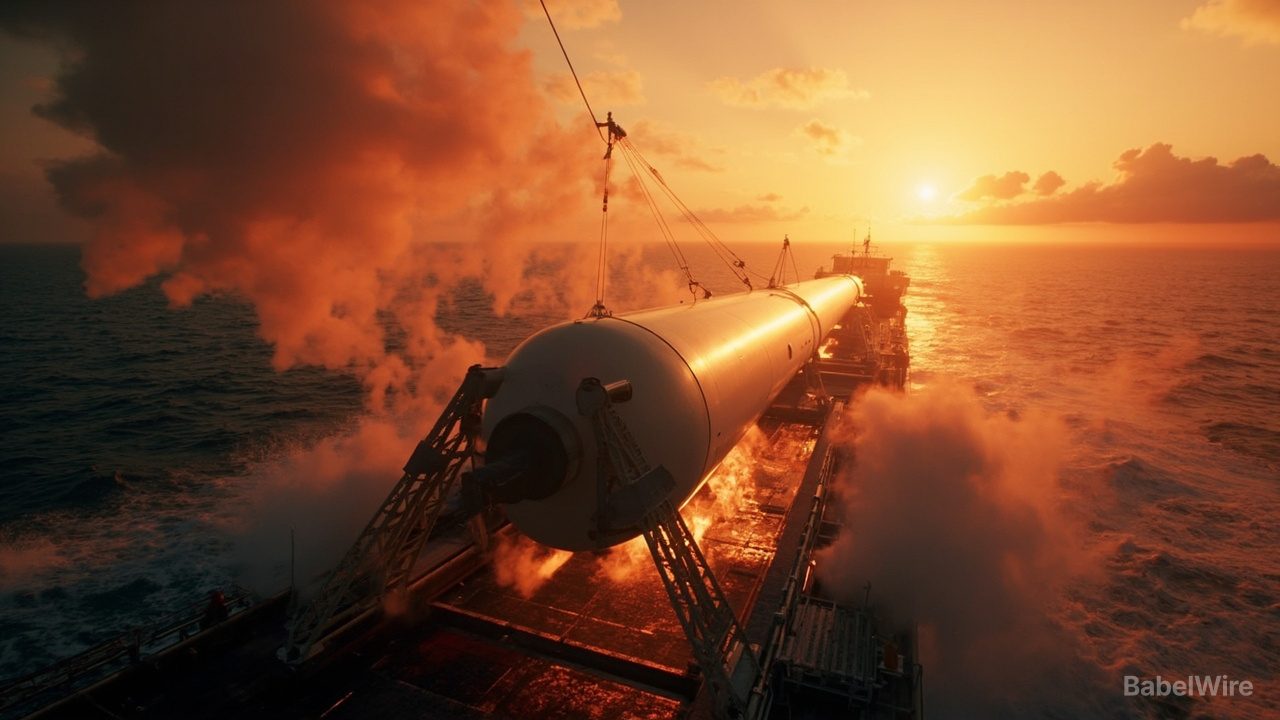
About 10 minutes after launch, the 16-foot-wide (5-meter) booster descended from the edge of space and guided itself into a tensioned net system aboard an offshore recovery vessel in the South China Sea. The rocket's upper stage continued into orbit, deploying a payload designated CX-26. Chinese officials hailed the flight as a "complete success."
A Unique Capture Method
Unlike SpaceX's Falcon 9, which lands on drone ships using deployable landing legs, or Blue Origin's New Glenn, which uses a similar propulsive landing approach, the Long March 10B employs a novel sea-based net capture system. The booster descended into a four-legged frame on the ship, where tensioned cables strung in a grid pattern caught the rocket as it shut down its landing engines, leaving the smoldering booster suspended in midair. This technique reduces the payload penalty of reuse by eliminating the need for heavy landing legs.
"A historic day in China's space program!" wrote Mao Ning, spokesperson for the Chinese Foreign Ministry, on social media. "This marks the country's first-ever controlled rocket recovery. A major leap toward reusable launch capabilities."
Third Enterprise to Achieve Orbital Booster Recovery
Friday's achievement makes China Aerospace Science and Technology Corporation (CASC) and its subsidiary CALT the third enterprise worldwide to recover an orbital-class booster. SpaceX first achieved the feat with Falcon 9 in 2015 and later with Starship/Super Heavy in 2024. Blue Origin landed its New Glenn booster on an offshore platform for the first time last November.
Lunar Ambitions and Strategic Context
The Long March 10B is more than a technological demonstrator. It shares its first stage with the Long March 10A, which is being developed for crewed missions to China's Tiangong space station using the new Mengzhou spacecraft. A heavier configuration, the Long March 10, will combine three reusable first-stage boosters together to send Chinese astronauts to the Moon — a goal the Chinese government has set for 2030.
US military officials have expressed concern about China's rapidly advancing reusable rocket capabilities. "I'm concerned about when the Chinese figure out how to do reusable lift that allows them to put more capability on orbit at a quicker cadence," said Maj. Gen. Brian Sidari, the Space Force's deputy chief of space operations for intelligence, at a conference last year.
China now has multiple commercial and state-backed rocket companies racing toward reusability, including LandSpace, Space Pioneer, and i-Space. Analysts say the country's growing number of launch sites — four land-based spaceports plus ocean platforms — could help it achieve a launch cadence rivaling that of the United States within a few years, if reusability is mastered.
CASC said it plans to complete first-stage reuse flight tests by the end of the year, with iterative upgrades to follow.
Sources
- arstechnica.comChina recovered its first reusable rocket — Ars Technica
- english.news.cnChina Focus: China achieves first-ever controlled rocket recovery — Xinhua
- abcnews.comChina touts first reusable rocket booster — ABC News
- scientificamerican.comChina's long march to reusable rocketry — Scientific American