The personal computer market just had its worst quarter in more than three years — and the reason is a shortage created thousands of kilometres away, in the AI data centre.
Global PC shipments fell 20.1% year over year to 62.7 million units in the third quarter of 2026, according to preliminary IDC data: a drop of roughly 15.8 million machines and a 9.1% fall from the second quarter. Omdia, counting 58.1 million units, reported a decline of 21.2% — the steepest since early 2023. Both figures exclude tablets and servers.
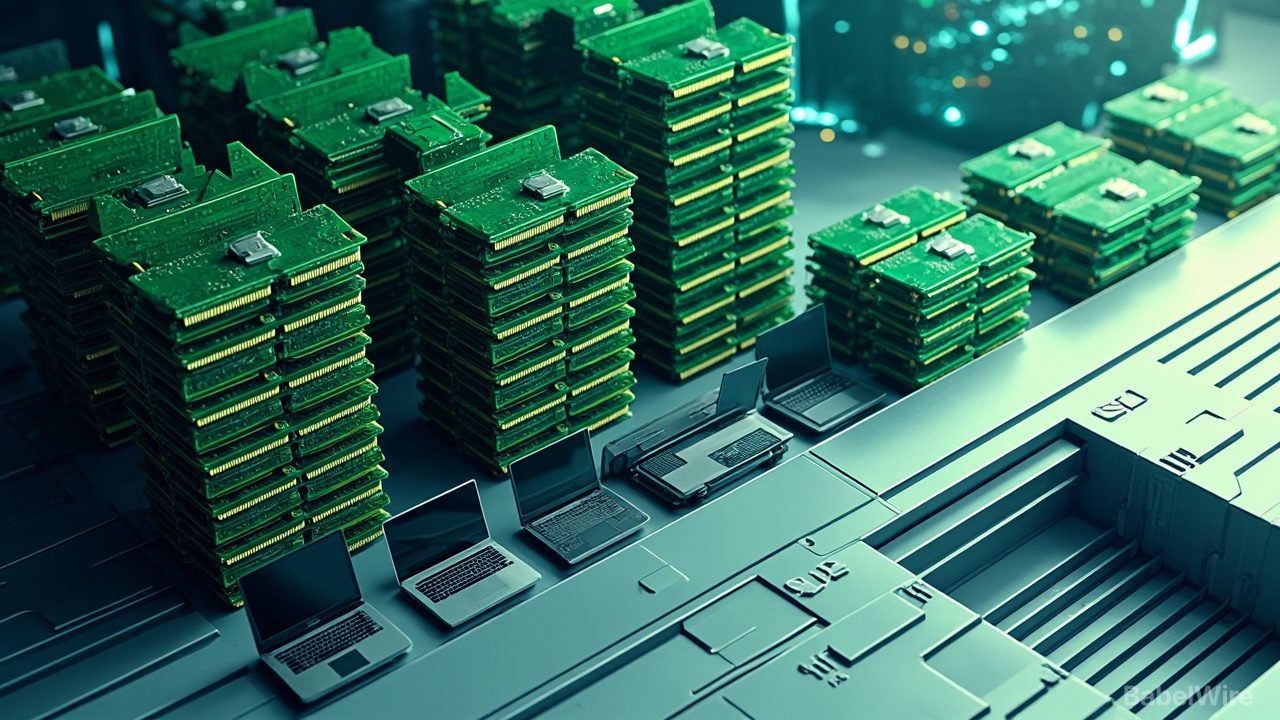
The cause is memory. As hyperscalers pour money into AI servers, DRAM and NAND flash production has been redirected to higher-margin data-centre parts. IDC and Omdia say DRAM and SSDs have risen from a typical share of around 15% of a PC's material costs to nearly 40%, after price increases of more than fourfold on some parts. Memory makers have warned the crunch could last into 2027 and beyond.
The impact lagged because retailers and distributors loaded up on inventory in the first half of the year to get ahead of price rises, and the market researchers count shipments from manufacturers to those intermediaries, not only to end customers. Now that the pipeline is full, the reckoning has arrived.
The three largest vendors took the hardest hits. Lenovo, the world's biggest PC maker, fell almost 23%; Dell dropped about 25%; and HP's shipments slid roughly 31%, with the top three shipping about 11.6 million fewer units than a year earlier. Asus fared best with a single-digit decline, while Apple, despite a reported 11.3% drop, gained share because the overall market shrank faster.
The pain is not over. Omdia forecasts a further 24% decline in the fourth quarter — nearly 58 million units, a slight sequential fall even in the holiday season — and another 7% drop in 2027. IDC sees possible discount campaigns as retailers fear high inventories, but expects prices to stay well above last year's levels. For buyers, the silver lining is narrow and temporary: falling demand may bring bargains, in a market where the underlying components keep getting more expensive.
Sources
- heise.deJetzt rumst es im PC-Markt (heise online)
- tomshardware.comPC shipments tumble over 20% in 3Q26 as chip shortages bite (Tom's Hardware)
- theregister.comGlobal PC shipments crater 20% as rising prices hammer demand (The Register)
- businesswire.comOmdia: Global PC Shipments Fall 21% in 3Q26 as Pull-Forward Demand Subsides (Business Wire)
- finance.yahoo.comOmdia: Global PC Shipments Fall 21% in 3Q26 (Yahoo Finance)