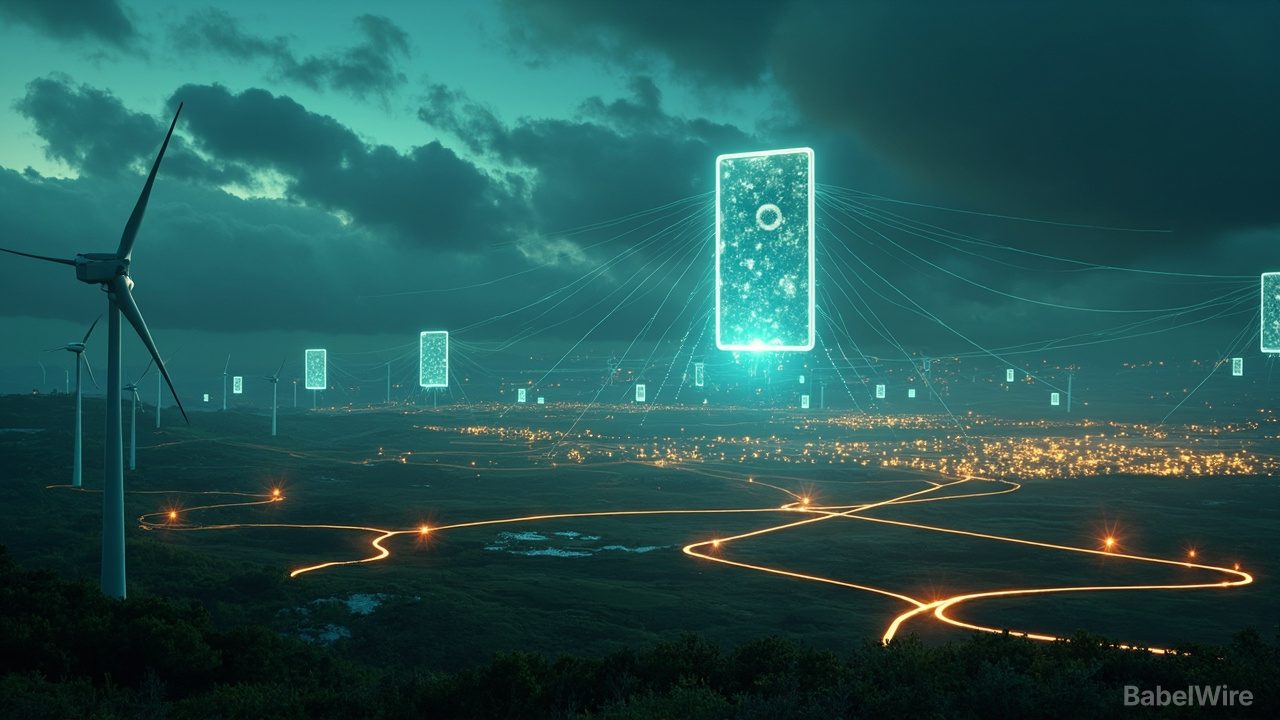
Security researchers have catalogued thousands of management systems belonging to European wind and solar installations that are reachable directly from the open internet — interfaces that in some cases can start, stop or reset the equipment behind them.
The Hague-based internet intelligence firm Modat presented the findings on October 6 at the ONE Conference in The Hague, in a talk titled "To See the Wind and the Sun". The team mapped operating wind farms and solar parks in 40 European countries — EU, EFTA and EU candidate states — and found exposed systems in 35 of them. Using machine-learning clustering, the researchers counted 8,547 internet-facing systems they could confidently tie to a specific solar park or wind farm: 7,942 at solar sites and 605 at wind farms.
The exposure is concentrated. Spain alone accounts for 2,766 solar systems, 35% of the total, followed by Greece with 1,860, Italy with 753 and Germany with 672; together the four make up 76% of all solar systems found. On the wind side Germany leads with 212 systems and Italy follows with 192, together 67% of the wind total. The Netherlands has 132 exposed solar systems and nine wind systems.
What was exposed matters. A single turbine's web interface showed live production data next to Start, Stop and Reset controls, and placed the turbine on a map. Login pages named the wind park they protect, and one noted that the default username was "root". Reuters reported that the researchers said full control appeared possible at around 181 sites.
Modat stresses the 8,547 figure is a lower bound: many more systems share the same characteristics but could not be attributed, and the count is of systems, not turbines or panels — some exposed interfaces control several turbines or an entire wind farm. The company says the same census an attacker could perform takes hours, and its advice to operators is blunt: take admin interfaces off the internet immediately, assume breach, and re-plan monitoring around that assumption. Affected parties are being informed through national CERTs, and no park names, operators or IP addresses were published.
The findings land as renewables become the backbone of Europe's power supply — 54% of EU electricity in the second quarter of 2026 came from renewables, with solar at 42% and wind at 28%, per Eurostat — and weeks after Dutch security services warned that AI is accelerating the threat.
Sources
- modat.ioModat Research Shows More Than 8,500 Exposed Systems in Europe's Wind and Solar Parks
- reuters.comThousands of European wind and solar power systems exposed online, Dutch researchers say (Reuters)
- heise.deTausende europäische Windanlagen und Solarparks offen im Internet (heise online)
- pv-magazine.comThousands of European solar park systems exposed online (pv magazine)
- insurancejournal.comThousands of European Wind, Solar Power Systems Exposed (Insurance Journal)