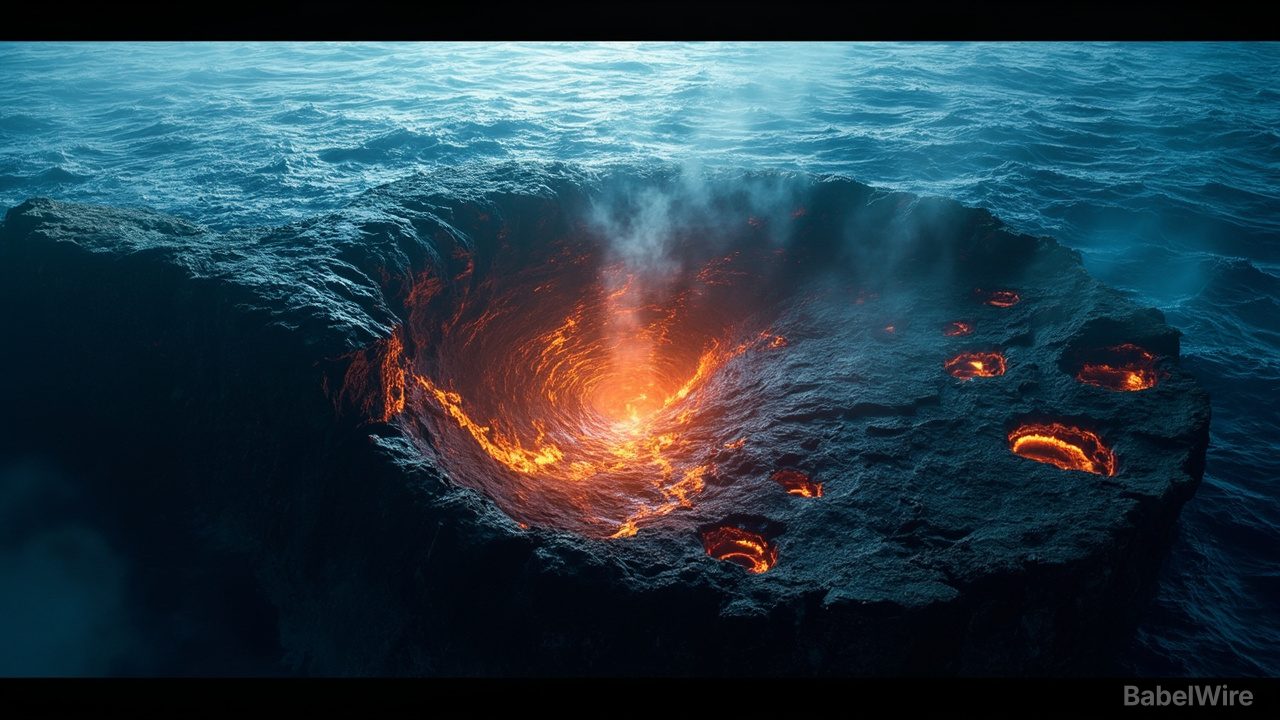
The asteroid that ended the Cretaceous also turned the crater it left into a hot, mineral-rich spring. New dating suggests that spring ran for about 8 million years — four times longer than earlier estimates — giving any microbes that found it an unusually generous window.
BACKGROUND. The Chicxulub impact, 66 million years ago, deformed rock to a depth of about 35 kilometres and melted an immense volume of it; exposure to seawater left that rock porous. When hot water seeped into the pores, a hydrothermal system formed under what is now the partially submerged Yucatán Peninsula. In 2016 researchers drilled into the impact zone and recovered samples, and the system was previously thought to have lasted roughly 2 million years.
WHAT THE NEW WORK FOUND. A team led by Annemarie Pickersgill of the SUERC Centre for Isotope Sciences at the University of Glasgow drilled 1 kilometre down and dated feldspar samples by potassium-argon radioisotopic measurement. Because argon escapes from molten rock, the ratio of potassium-40 to the argon-40 it decays into records when the rock last solidified — and therefore how long heat persisted. The argon levels indicate the system stayed heated from 66 million to 58 million years ago.
SIMULATIONS MATCHED. Computer models of hydrothermal activity at the site suggested cooling to 90 °C took between 1.5 and 2.3 million years at a depth of one kilometre, cooling below 50 °C took up to 5 million years, flow dropped significantly after 6 million years and had ceased by 8 million — consistent with the isotope ages. "Longer periods of hydrothermal activity will generate extended windows of opportunity for prebiotic chemical reactions to occur, life to develop, and micro-organisms to thrive and propagate beyond their point of origin," Pickersgill said.
WHY IT MATTERS BEYOND EARTH. Impact-generated hydrothermal systems are common on this planet, but signs of life in them are hard to find: microbes have been confirmed at only eight of the 70 underwater impact craters with known hydrothermal activity. The Chicxulub result is about habitability potential, not proof of inhabitants — the work does not establish that the crater was inhabited. It does feed into the search for life elsewhere: Pickersgill notes that Chicxulub is small compared with the impact basins expected on early Earth and observed on other planetary bodies, so larger impacts could have sustained habitable conditions for at least several million years. That is a useful constraint when assessing ancient Mars or icy moons.
Published in Communications Earth & Environment.