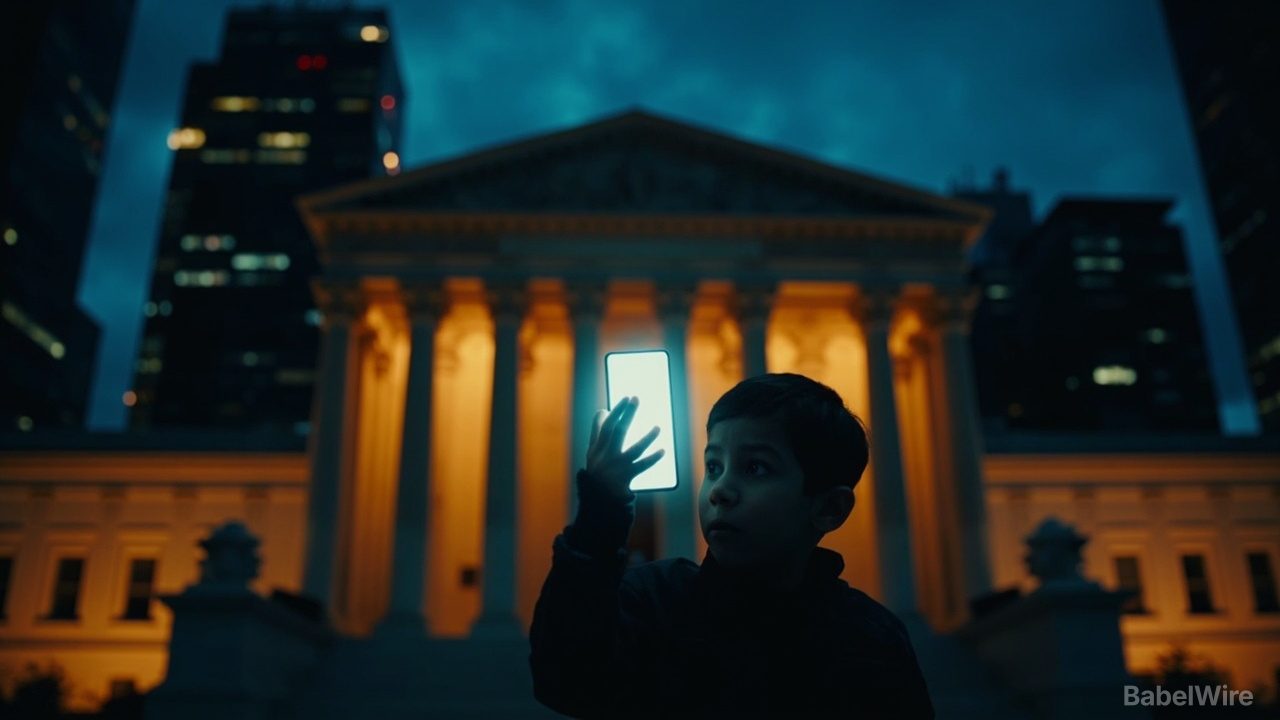
California's Assembly Bill 1709 was written to do one thing: keep the for-you feed away from children under 16. On Wednesday, the three companies that run the largest for-you feeds in the world filed separate lawsuits to stop it — in three different federal courthouses, with the same argument.
The law
Governor Gavin Newsom signed AB 1709 on September 10. It bars platforms from serving under-16 users what the statute calls "psychologically exploitative features": personalised recommendation feeds, infinite scroll, and autoplay. It also requires deletion of accounts whose core function depends on those features. It takes effect January 1, 2027, unless a court voids or stays it.
Attorney General Rob Bonta is the only named defendant. His office said Thursday it was reviewing the filings and is "committed to defending California's commonsense laws to protect kids online."
The age signal comes from the device, not the platform. From next year, Americans setting up a new phone or laptop will be asked for a date of birth, and the operating system will pass apps an age-bracket flag — not the date itself.
The argument
Google sued in San Jose, Meta in San Francisco, TikTok in Los Angeles. All three lean on the First Amendment: the state, they say, is substituting its editorial judgment for parents'. Meta's complaint argues California "cannot override the editorial decisions of Meta about how billions of third-party posts are curated and displayed." Google spokesperson José Castaneda framed it as breakage: "Overly broad laws like this actually break the systems we've built to help kids find high-quality, age-appropriate videos." TikTok argued that protected speech "cannot be suppressed solely to protect the young from ideas or images that a legislative body thinks unsuitable." All three also invoke Section 230 of the Communications Decency Act.
The ruling they are walking into
The difficulty is that this argument has already been tried, in the same state, before the same generation of judges, and lost.
In August, a federal district court rejected the identical framing in the parallel challenge to California's earlier addictive-feed statute, SB 976, holding that the addictive design of a feed is not speech protected by the First Amendment. The companies lost their bid for a preliminary injunction and have taken that case to the Ninth Circuit, where they are now asking the appeals court to pause the law while it is litigated. EPIC, which filed an amicus brief in the SB 976 case that the district court cited repeatedly, read Wednesday's filings as a rerun: the companies are "repeating the same losing arguments."
The appellate record is worse for them than the district-court record. EPIC's tally: three Ninth Circuit decisions in two years rejecting NetChoice's First Amendment challenges to state data-practice and design rules; a Sixth Circuit ruling in June refusing to enjoin Ohio's limits on minors' social media access; and two Eleventh Circuit decisions in October rejecting challenges to Georgia's and Florida's laws — including a finding that Florida's addictive-design statute was adequately tailored to protect minors. Since the Supreme Court's 2024 decision in Moody v. NetChoice, the industry has not won a significant appellate ruling on this theory.
The coalition is the story
What makes AB 1709 unusual is who opposes it, and why. The platforms say the law censors them and displaces parental authority. The Electronic Frontier Foundation calls it "a massive privacy and free speech nightmare" — for the opposite reason: to know who is under 16, every platform and now every operating system has to establish the age of every user, which turns anonymity into an engineering problem. EPIC, meanwhile, wants the law upheld.
So the same statute is under attack from both directions at once, and January 1 is the only date everyone agrees on.
What to watch
Three things. Whether the courts consolidate the three cases — likely, since the statute and the claims are the same. Whether any judge grants a stay before January 1. And what the Ninth Circuit does with the SB 976 appeal in the meantime, because that ruling will largely decide these. Until then, the compliance work is already running inside the platforms: account-deletion flows, age-bracket gating, and a version of the feed designed by a legislature rather than a product team.
One number worth keeping in view: in August, Meta agreed to pay up to $18 billion and to limit teenagers' use of Facebook and Instagram to settle privacy and consumer-protection claims with nearly all US states. The companies are still defendants in thousands of suits from individuals, school districts and municipalities alleging addiction and harm.
Sources
- sg.news.yahoo.comReuters: Google, Meta, TikTok sue to block California youth social media law
- heise.deheise online: Google, Meta und TikTok klagen gegen kalifornisches Gesetz
- epic.orgEPIC: Big Tech Companies Repeat Same Losing Arguments in New Challenge to California's AB 1709
- mlex.comMLex: Google, Meta, TikTok urge US appeals court to pause Calif. addictive-feed law