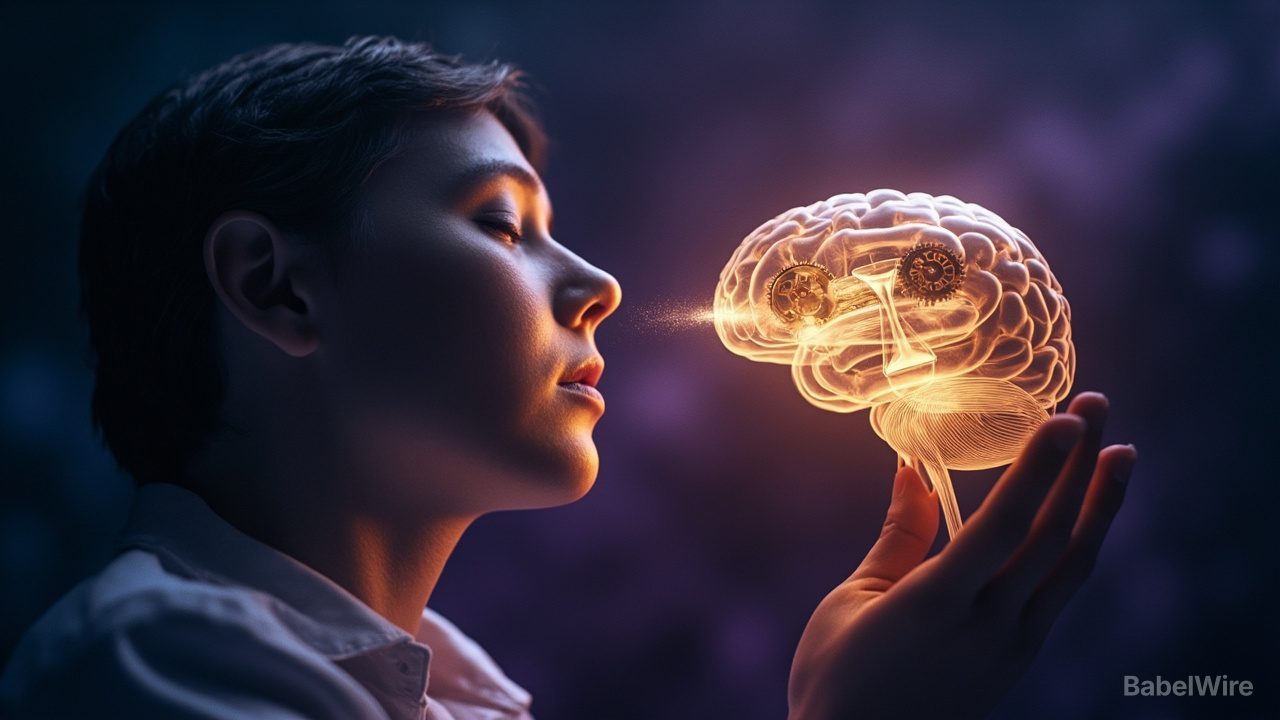
How does the brain know when it's time to wake up? Researchers have identified a chemical signal that acts as a timer in the mouse brain — logging both the length of a single sleep session and the number of interruptions, and predicting exactly how likely an animal is to wake at any given moment.
The team, led by neuroscientist Yao Chen of Washington University in St. Louis, used a specialized fluorescent sensor to watch in real time the activity of protein kinase A (PKA) — an enzyme also found in humans that adds chemical 'tags' to proteins on the surface of brain cells. When the mice were awake, the level of tagging stayed high and steady. As soon as they drifted off, it began a slow, continuous decline that lasted the entire sleep session. Whenever the mice experienced a microarousal — a brief interruption in sleep — the PKA-related signal spiked upwards before dropping again.
That means the tagging simultaneously tallies total sleep duration and the frequency of interruptions, Chen says. Because the signal accounts for these restless moments, monitoring it predicted the moment-to-moment probability of waking more accurately than tracking how long the animal had been asleep. But it doesn't act like an alarm clock that triggers the exact second of waking, which a sudden noise could cause. 'Instead it reflects a growing physiological readiness to wake,' she says.
The signal could offer a new way to measure 'sleep debt' — accumulated sleep loss. Such a biomarker could one day reveal whether someone is sleep-deprived, says Ketema Paul, a neuroscientist at UCLA who was not involved in the research. 'We really don't have what a lot of people call the sobriety test for sleep,' Paul says — a test that could ensure people in high-stakes occupations, such as truck drivers or hospital emergency room staff, stay alert. 'The negative effects of sleep loss can have serious negative consequences.'
The work was posted on the bioRxiv preprint server (Tilden, E. I. et al., 2026) and has not yet been peer reviewed. Previous sleep research focused mostly on the brain circuitry that snaps people awake in seconds, or on how sleep debt accrues after days of bad sleep. The intermediate time scale — how the brain keeps track of minutes or hours spent in a single continuous sleep session — has remained a mystery. This study offers the first clear molecular account.