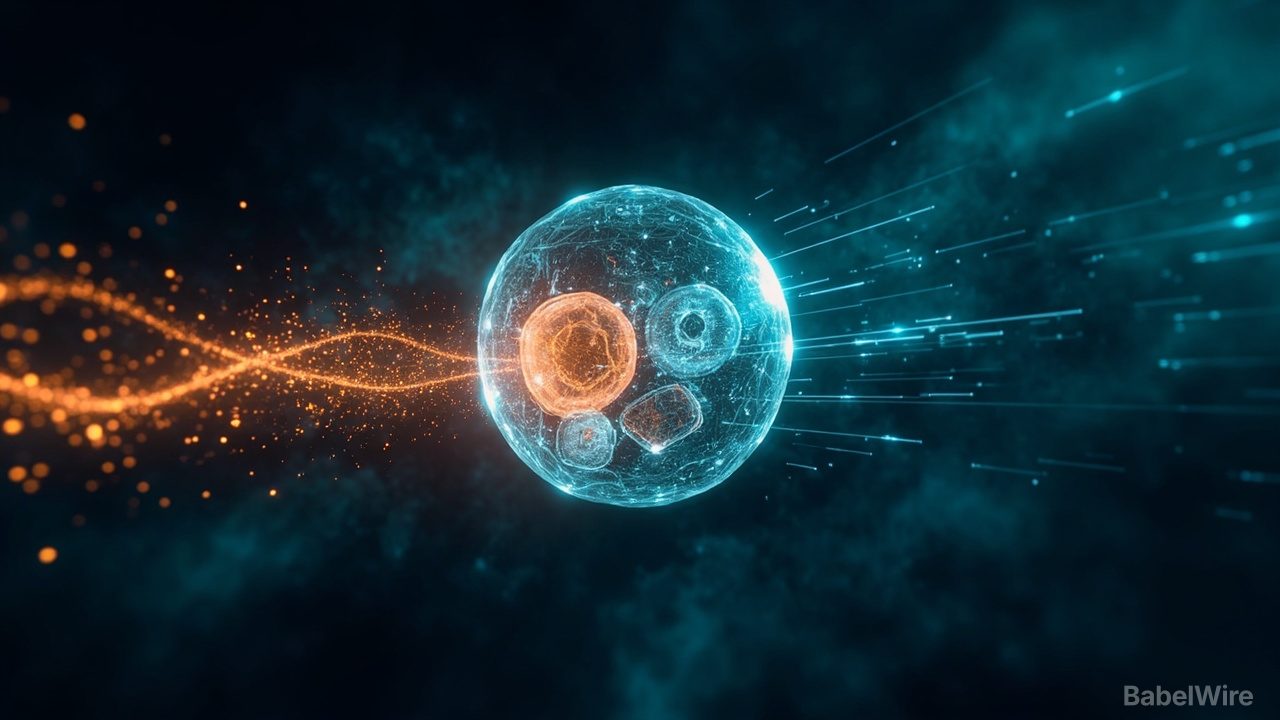
Google DeepMind, Meta and AI drug-discovery company Isomorphic Labs are jointly putting $300 million into Biohub, the nonprofit biomedical research organization founded by Mark Zuckerberg and Priscilla Chan in 2016, as part of a push to build a working "virtual cell".
The commitments are the private half of a larger package. The US Department of Energy will invest more than $500 million over the next five years in laboratory measurement, modelling and computing, while the National Institutes of Health will coordinate datasets, repositories and knowledge bases drawn from previous federal investment totalling more than $500 million. Together the partners describe nearly $1.8 billion committed to what Biohub calls the Virtual Biology Initiative: multimodal datasets and models intended to let researchers "ask, predict, and answer biological questions digitally".
"An accurate predictive model of biology could dramatically accelerate scientific discovery by enabling scientists to perform experiments digitally," Alex Rives, Biohub's head of science, said in the announcement. "The creation of a virtual cell is one of the most important challenges for the next era of science. It will require coordinated data generation efforts at a national and international scale, which is why these partners are coming together."
The bet is that biology's bottleneck is now data rather than compute. A model of a cell that behaves like the real thing would let researchers screen hypotheses in silicon before touching a wet lab, compressing years of trial and error into hours of simulation. Getting there requires standardised, instrument-generated measurements at a scale that neither a single company nor a single agency can produce alone — which is why the structure here is a consortium rather than a grant.
The news was first reported by Reuters and confirmed by The Verge. Pricing and timelines for the models themselves have not been disclosed; the initiative is framed as infrastructure that others will build on. For the AI industry, it is also a reminder that the most consequential use of large models may end up being neither text nor images, but the parts of science that have never been written down.
Sources
- theverge.comGoogle invests millions in Mark Zuckerberg's efforts to create a 'virtual cell' — The Verge
- newswise.comInternational, Cross-Sector Collaboration Commits Nearly $2 Billion to Build Foundational Data for AI Models to Predict and Treat Disease — Newswise/DOE
- prnewswire.co.ukInternational, cross-sector collaboration commits nearly $2 billion — PR Newswire
- axios.comZuckerberg's Biohub teams with Google in push to map cells — Axios