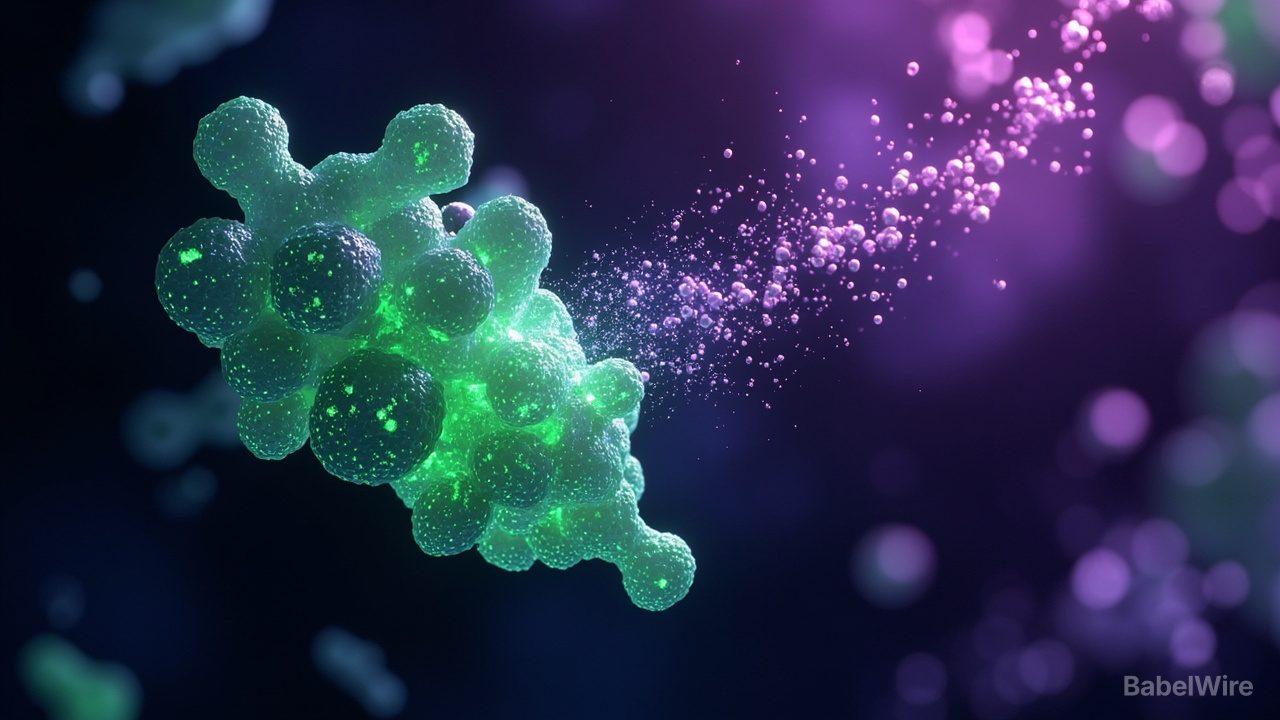
Scientists have finally uncovered how bacteria naturally create multiple versions of powerful anti-cancer drugs, solving a mystery that has frustrated researchers for decades.
Researchers from the University of Warwick and Monash University have solved a long-standing mystery about how bacteria naturally produce multiple versions of powerful cancer-fighting compounds. Their discovery could help scientists develop new treatments for cancers that are difficult to treat by revealing how nature creates a wide variety of drug molecules from the same biological machinery.
For years, researchers have wanted to harness bacterial enzymes to produce new drug variants through a process known as combinatorial biosynthesis. However, progress has been limited because scientists did not understand how the enzymes worked together to assemble different compounds.
Now, in a study published in Nature Communications, the research team has uncovered how bacterial enzymes communicate and cooperate to build an entire family of related anti-cancer molecules. One member of this family is Romidepsin (Istodax), an FDA-approved treatment for certain blood cancers.
'For decades, we've known that bacteria can naturally produce multiple versions of powerful anti-cancer drugs, yet we had no idea how they achieved this,' said first author Dr. Munro Passmore, Research Fellow at the University of Warwick. 'This work finally cracks that code. We've identified how the different enzymes communicate and cooperate to produce these drug variants, something that has eluded researchers because the system is so elegantly economical. It's the breakthrough we needed to actually engineer these drugs ourselves.'
The researchers discovered that small protein regions known as 'docking domains' serve as molecular connectors between the main drug-producing machinery and the enzymes responsible for adding different chemical components. These docking domains share a common connection point that allows them to interact with several different enzyme partners, enabling bacteria to generate a variety of closely related drug molecules while maintaining precision.
The research focuses on a group of medicines called HDAC inhibitors, which work by blocking histone deacetylases — enzymes that regulate which genes inside a cell are switched on or off. Romidepsin, one of the best-known drugs in this class, is already approved to treat T-cell lymphomas.
Professor Greg Challis of the University of Warwick and Monash University concludes: 'This research gives us a blueprint to do what nature does, but better and faster. By reverse-engineering nature's evolutionary logic, we can now design synthetic pathways that generate new anti-cancer drug candidates with properties optimized for clinical use, such as superior potency, improved selectivity, fewer side effects. Our immediate goal is to build an expanded library of candidates for various cancers where new treatments are urgently needed. This discovery is moving us from understanding how the systems work to building new ones.'
Sources
- scitechdaily.comSciTechDaily — This Tiny Bacterial Secret Could Lead to Better Cancer Drugs
- doi.orgNature Communications — Molecular basis for depsipeptide HDAC inhibitor combinatorial biosynthesis
- medicalxpress.comMedical Xpress — Bacteria's 'mix-and-match' code could create new cancer-fighting drugs