Forterra, a U.S. builder of autonomous vehicles, has revealed that more than 100 of its self-driving ATVs have been operating in Ukrainian combat zones for the past nine months — in what the company believes is the largest deployment of autonomous ground vehicles in active combat by any American defense tech firm.
Funded by U.S. defense dollars, the mission marks a major milestone in the transformation of modern warfare. While aerial drones have dominated the narrative in Ukraine, ground-based autonomy is proving equally critical as soldiers face an environment where drone surveillance makes every movement a potential target.
"There's nowhere to hide," explains Sergeant Major Corey Wilkens, who leads autonomous vehicle programs for the U.S. Army. "You become very, very vulnerable to being attacked by drones, artillery, mortars — the full range of threats."
The Lancer in Action
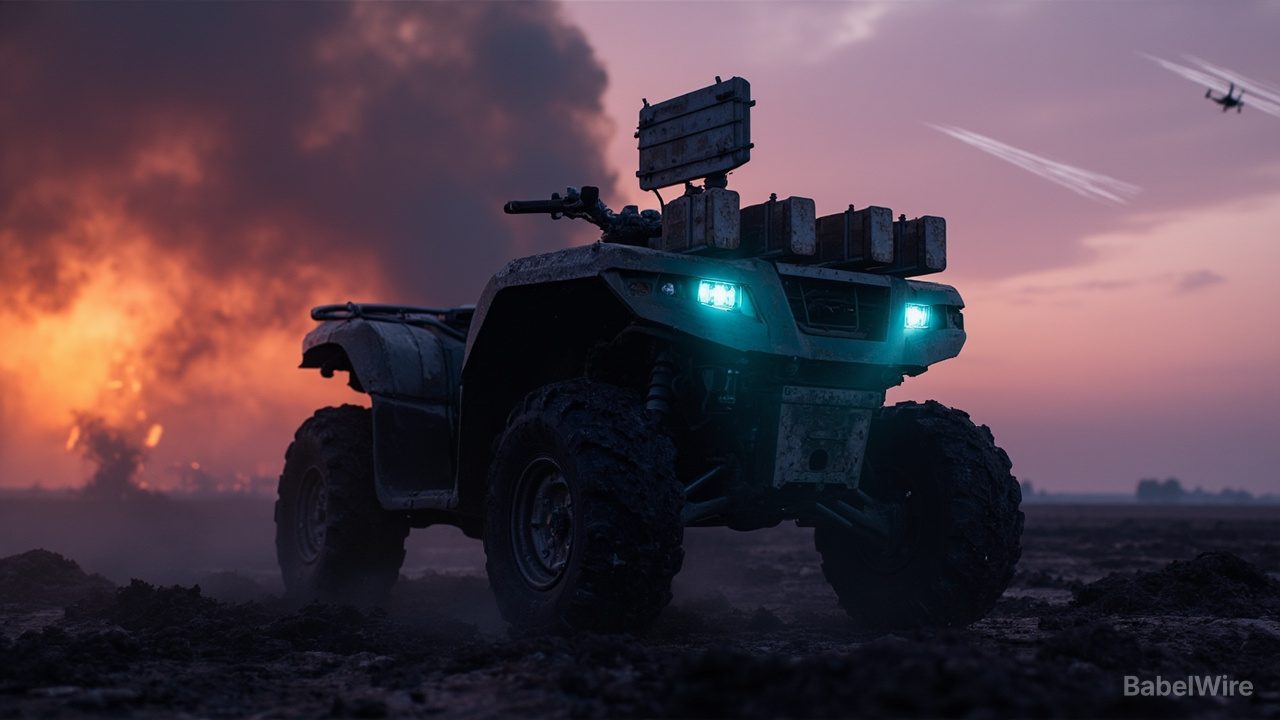
Forterra's Lancer vehicles are based on commercial Polaris ATVs, retrofitted with a custom sensor and compute stack. Unlike the battery-powered Ukrainian UGVs that carry up to 250 kg, the gas-powered Lancers haul 750 kg of cargo — making them far more versatile for logistics, resupply, and casualty evacuation.
Since arriving in Ukraine last October, the vehicles have: - Driven more than 2,500 miles across 1,100+ missions - Carried 777,440 pounds of total weight - Completed 52 casualty evacuations
"The bottom line is that this UGV for logistics and just maintaining our defense is the most important UGV in Ukraine," a Ukrainian soldier who operates the vehicles told TechCrunch. "It's fucking fantastic, and we are dying to get more."
Lessons from the Battlefield
Forterra's deployment has been a learning experience. Some vehicles have been lost in combat, particularly when stuck in deep mud where Russian forces could target them. Electronic warfare, software updates from afar, and challenging terrain have all tested the platform.
A critical adaptation was adding Starlink satellite internet antennas, making the vehicles viable for the Ukrainian operational environment. Ukrainian soldiers mainly teleoperate the vehicles in combat zones — full autonomy for threat response remains a work in progress.
"We actually need to be able to respond to the enemy threats live, while it's in front of the enemy, which the autonomy doesn't know how to do yet," the soldier explained.
The Next Frontier
Forterra, which has raised over $500 million in venture funding, is now working on combining classical robotics approaches with generative AI to give the vehicles generalized situational awareness. Competitors like Scout AI, Field AI, and Overland AI are also racing to field UGVs for military use.
One challenge from the Ukrainians is clear: make them cheaper so they can be deployed in larger numbers without prohibitive cost per unit.