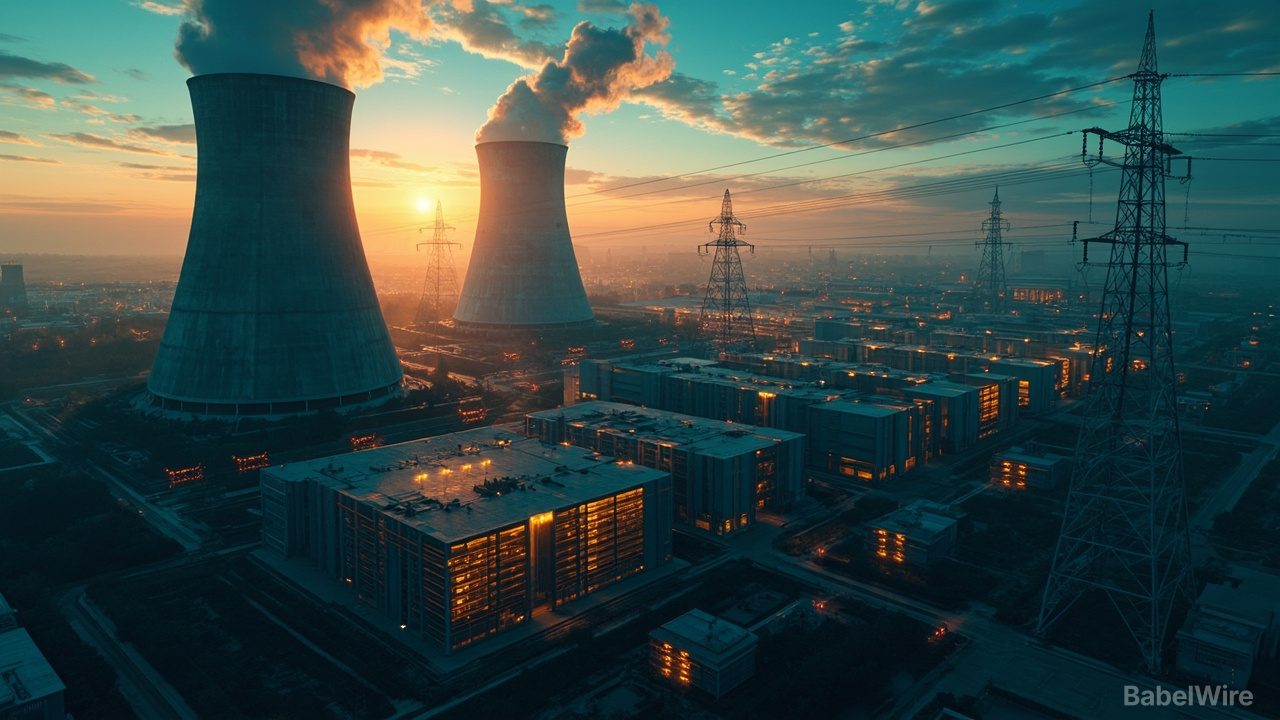
Google has signed a 20-year power agreement with Constellation Energy covering 3.59 gigawatts (GW) of electricity — a deal the two companies frame as a template for feeding AI data centers without leaning entirely on new gas plants or the spot market.
Under the arrangement, Constellation will uprate 11 existing nuclear units across Illinois, Pennsylvania and New Jersey, adding 890 megawatts (MW) of capacity. Constellation says it will invest more than $4.3 billion in its generation fleet, and the first upgraded plant is expected to begin supplying Google in 2028.
A second, separate 15-year agreement covers 2.7 GW of supply on the PJM grid, the largest US wholesale electricity market. That capacity is not tied to a specific generation source. Google says the structure makes revenue from Constellation's existing plants more predictable over the long run. Together the two contracts add up to roughly 3.6 GW.
The backdrop is demand. Data-center electricity consumption in the US is climbing fast, and PJM capacity prices have risen more than elevenfold since 2024 as the region's auctions have tightened. Utilities and developers have warned that new load is arriving faster than generation and transmission can be built.
Google's global head of energy, Amanda Peterson Corio, said the company is committed to sustaining its growth by investing in clean, reliable power. The two companies also say they hope to develop a model that can be applied in other parts of the US — for generation, battery storage and managing demand.
The deal lands in a crowded field. Constellation has already agreed to restart the Three Mile Island Unit 1 reactor for Microsoft, and Google separately lined up a supply arrangement in Wyoming for its planned Cheyenne data center. For technology firms, the race is no longer only about chips: it is about who can lock up electrons.