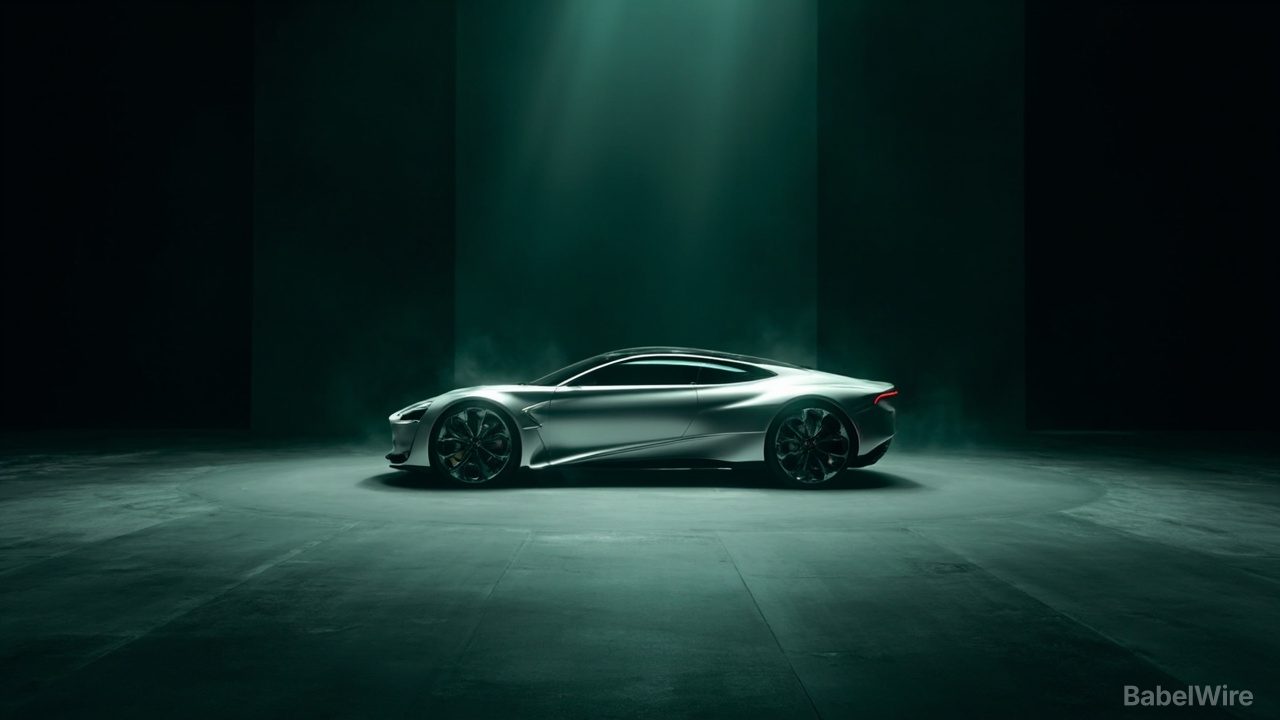
Jaguar's long, loud reinvention reached its destination on Tuesday in New York City, where the British marque finally showed the production version of the car it has been promising for two years: the Type 01.
The Type 01 is the finished form of the Type 00 concept Jaguar unveiled in December 2024 — a car so polarizing that it drew attacks on the company's own staff for supposedly betraying its 90-year history. Since then Jaguar has stopped building cars altogether: the last F-Pace left the line in December 2025, and the brand has sold no new vehicle since. The production car keeps the concept's proportions: a 5.24-metre grand tourer just 1.4 metres tall, with a very long bonnet, huge arches and 23-inch wheels — and no rear windscreen at all, a camera and a central display doing that job instead.
The numbers are the most powerful in Jaguar's road-car history. Three motors — a 260 kW unit at the front and two 310 kW units at the rear — produce up to 757 kW (about 1,030 PS / 1,015 hp) and 1,365 Nm. Jaguar quotes 0–100 km/h in 3.2 seconds and a top speed above 250 km/h. The 118 kWh usable battery sits on an 850-volt architecture and supports charging at up to 350 kW; the company says 13 minutes can add roughly 320 km of WLTP range, while 10–80 percent takes about 22 minutes. Claimed range is up to 400 miles on the EPA cycle or 450 miles on WLTP. At 0.23 Cd it is also the most aerodynamic Jaguar ever built.
Inside, a long central spine divides the cabin into four zones. A 24-inch OLED sits ahead of the driver, a 7-inch touchscreen handles common controls, and there is almost no physical switchgear. Luggage space is a modest 450 litres, expanding to 1,000 litres with the rear seats folded.
The gamble is commercial as much as aesthetic. Jaguar says the car will start at around $130,000 in the United States — roughly €165,000 in Germany or £130,000 in the UK — placing it below Ferrari's and Lamborghini's electric offerings but clearly above the premium mainstream, a segment where Porsche, Mercedes and now Bentley have all struggled to make luxury EVs work. Jaguar built more than 150 prototypes, drove 700,000 miles and filed more than 360 patents during development, including a single unbroken three-metre aluminium side panel its own modelling software deemed impossible until engineers spent around 22 weeks on it. Production is due to start in 2027; success, management says, will be measured by whether a genuinely new, younger audience shows up.