Rail freight is efficient on paper but has been losing ground to trucks for decades, largely because of flexibility: a train needs a locomotive, often an electrified line, and enough volume to fill a consist before it is worth running.
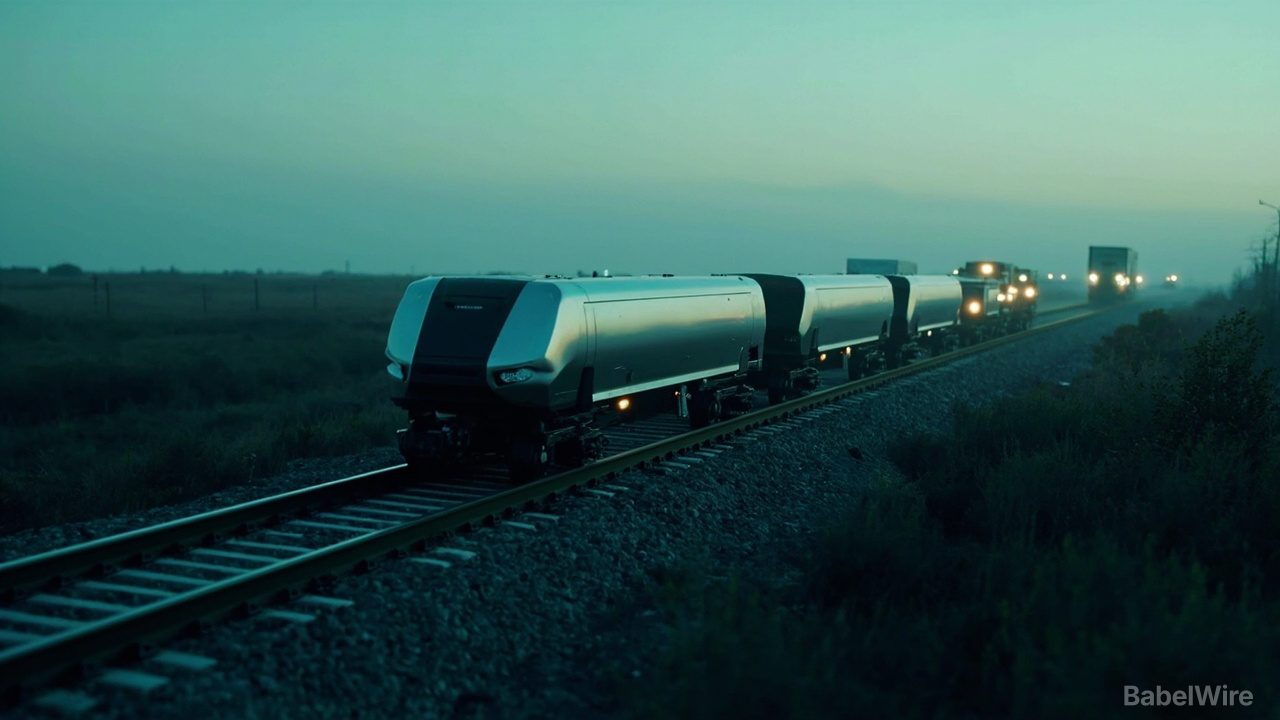
Golem reports on a proposal to attack that problem from the other end: battery-powered, autonomous freight wagons that could move in small groups on existing tracks, without waiting for a locomotive or a catenary.
The idea trades on two trends. On one side, freight rail in Europe has stagnated and much of the network — including large parts of Germany's — is still not electrified, so battery traction could cut emissions without new overhead wires. On the other, trucking faces a chronic driver shortage and pressure to decarbonise, while long-haul battery trucks remain heavy and charging-limited.
If it works, the pitch is single-wagon traffic with rail's efficiency and road's flexibility: goods that today would go by lorry rolling to a siding near the destination instead.
Why it matters: decarbonising freight is one of the hardest parts of the energy transition. Autonomous battery wagons are a bet that the answer is not more road or more wires, but smaller, smarter trains.