On April 1, 2026, the Space Launch System rocket carrying Artemis 2 lifted off from Cape Canaveral with four astronauts aboard — the first crewed lunar mission since 1972. Seven months later, a study in Geophysical Research Letters describes an unintended side effect: the rocket punched temporary holes in the ionosphere, and ground-based GPS receivers registered the disturbance.
The research comes from the National Cheng Kung University in Taiwan and NASA's Goddard Space Flight Center. According to the paper, three separate manoeuvres produced measurable changes in electron density in the ionosphere, the electrically charged layer of the upper atmosphere between roughly 60 and 1,000 kilometres.
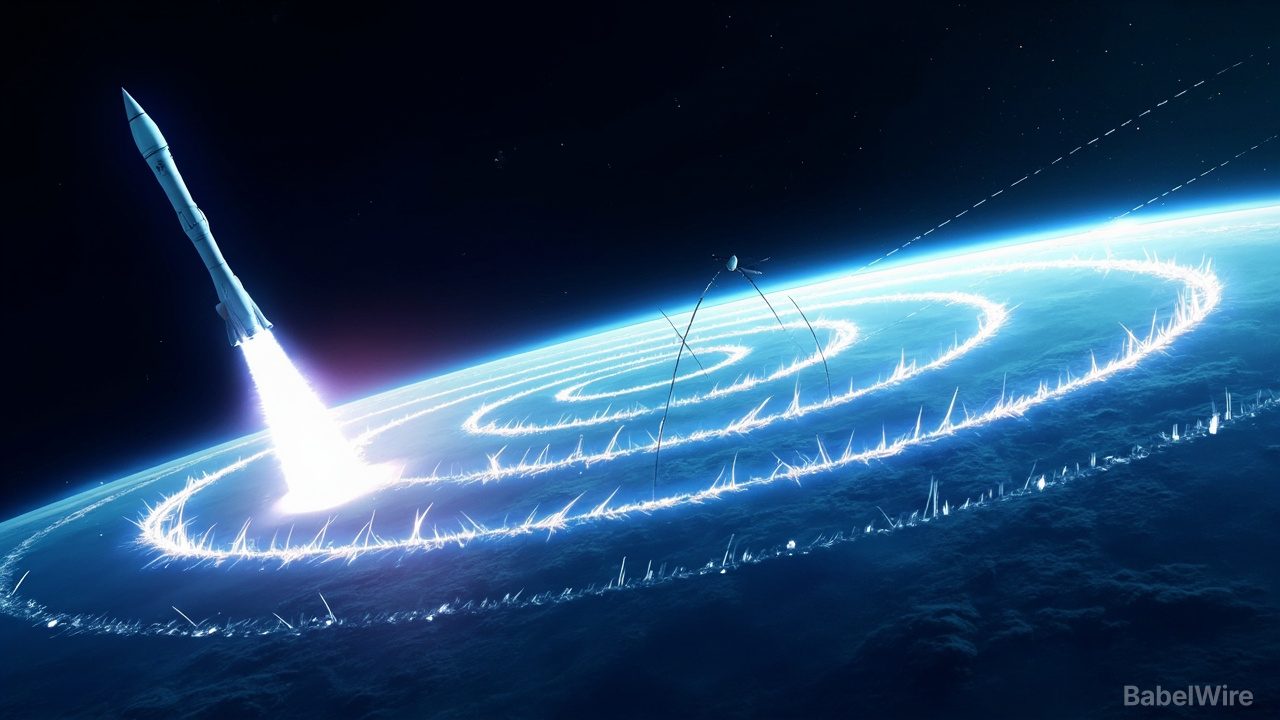
The first came at liftoff, when shock waves and gravity waves from the ascent briefly opened a hole in the layer. About two hours later, the burn that raised the orbit's apogee — fired at the closest point of the trajectory — created a second hole over North America roughly 5,000 kilometres long. About a day after launch, the translunar injection burn produced a third, weaker disturbance over the same region.
That repetition is what makes the event notable: according to the study, Artemis 2 is the first single mission to cause ionospheric disturbances over the same region during three separate manoeuvres.
The mechanism is straightforward physics with an awkward practical edge. GPS receivers calculate position by timing signals from satellites; when the density of free electrons in the upper atmosphere changes, the signals arrive slightly early or late, and the computed range shifts. Solar storms do the same thing, which is why ionospheric weather is already a monitoring problem for precision navigation.
The difference here is that the disturbance was created by a rocket rather than the Sun. "A position error of just a few metres is enough to make an autonomous car change lanes," study author Charles Lin told Space.com. He said drone positioning could be affected too. Whether Artemis 2 caused any actual incident is not known.
For future missions the finding adds a variable that launch planning has not had to carry. If Artemis flights become routine, and if they are joined by a growing number of other heavy-lift launches, the ionosphere becomes a shared resource that launch schedules modify. The study does not argue that launches should be restricted; it supplies the measurement that would let anyone arguing either way do so with numbers.