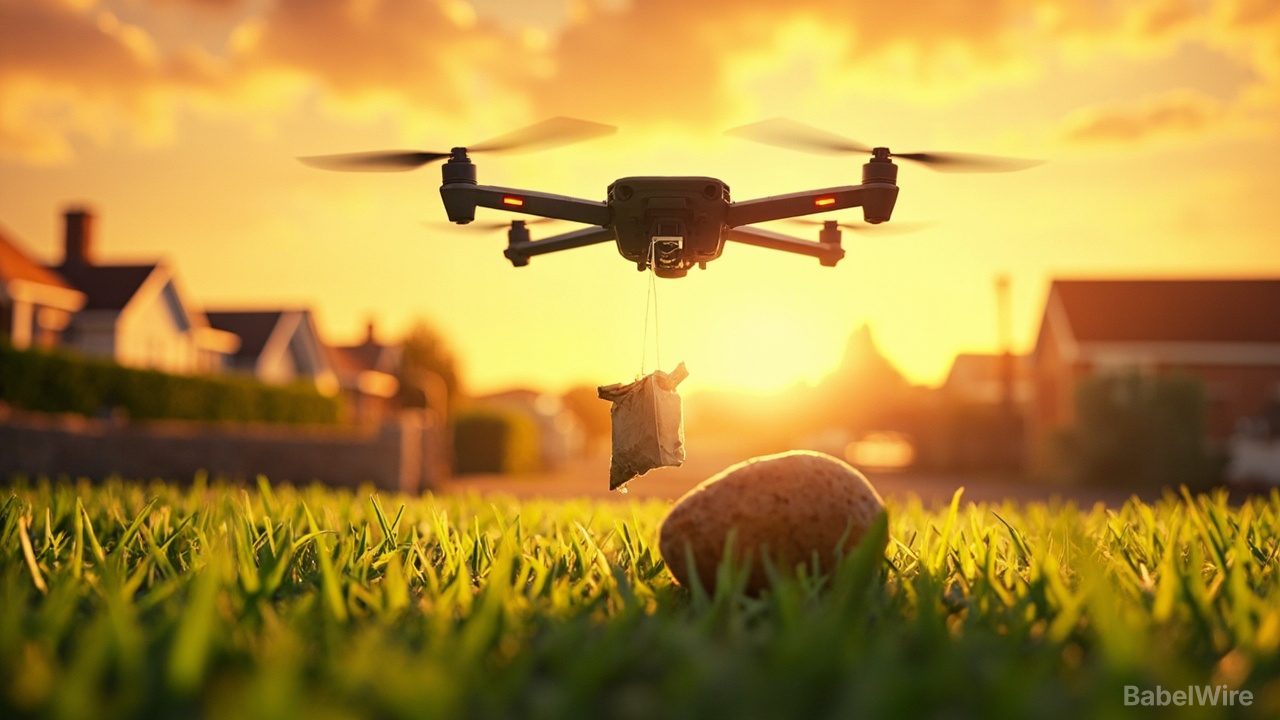
The Wing Hummingbird 7000W-B weighs less than 15 pounds, has 16 propellers — four for horizontal movement and 12 for vertical — a top speed of 60 miles per hour, a payload of up to 2.7 pounds and a delivery radius of about six miles. The FAA has authorised it for beyond-line-of-sight flight. As engineering, it is impressive. In one Texas neighbourhood, it has mostly been used to send people potatoes.
It started with a discovery in a dads' group chat: the subdivision had come into range of Wing's partnership with Walmart, and household items could be dropped on lawns within 25 minutes. When the reporter Nathan Edwards asked whether you could order to someone else's yard, a neighbour answered immediately — with a potato delivery. Within minutes, an "air strike squadron of potatoes" was inbound.
Each order arrived as a single russet potato plus a bottle of water, apparently added as ballast. The cost of each delivery: 82 cents, all in. No minimum order, no delivery fee, in-store prices — and Wing, by its own numbers, is losing money on it. Millennial lifestyle subsidy, drones edition.
Wing spokesperson Jessie Poole-Strang said the company has completed more than 1 million residential drone deliveries, averaging several thousand a day. Customers must be physically present for their first order, every account is verified, and each order requires confirmation of a clear delivery zone. As with conventional delivery or mail, customers can send an order to a friend's or family member's address in an eligible area, and support can help with complaints.
The model has edges. For a single light item, drone delivery looks greener and cheaper than driving — but a frozen dessert and a pint of gelato arrived on two separate drones, three minutes apart, which makes the arithmetic less flattering. And every drone that lowers a bag removes a task from a human courier. What the neighbourhood discovered, in short, is that infrastructure feels magical precisely until you notice who is paying for it.