University of Maryland astronomers have identified the first dormant supermassive black hole ever found this far from a galactic core — sitting about 30,000 light-years (9.3 kiloparsecs) from the center of its host galaxy.
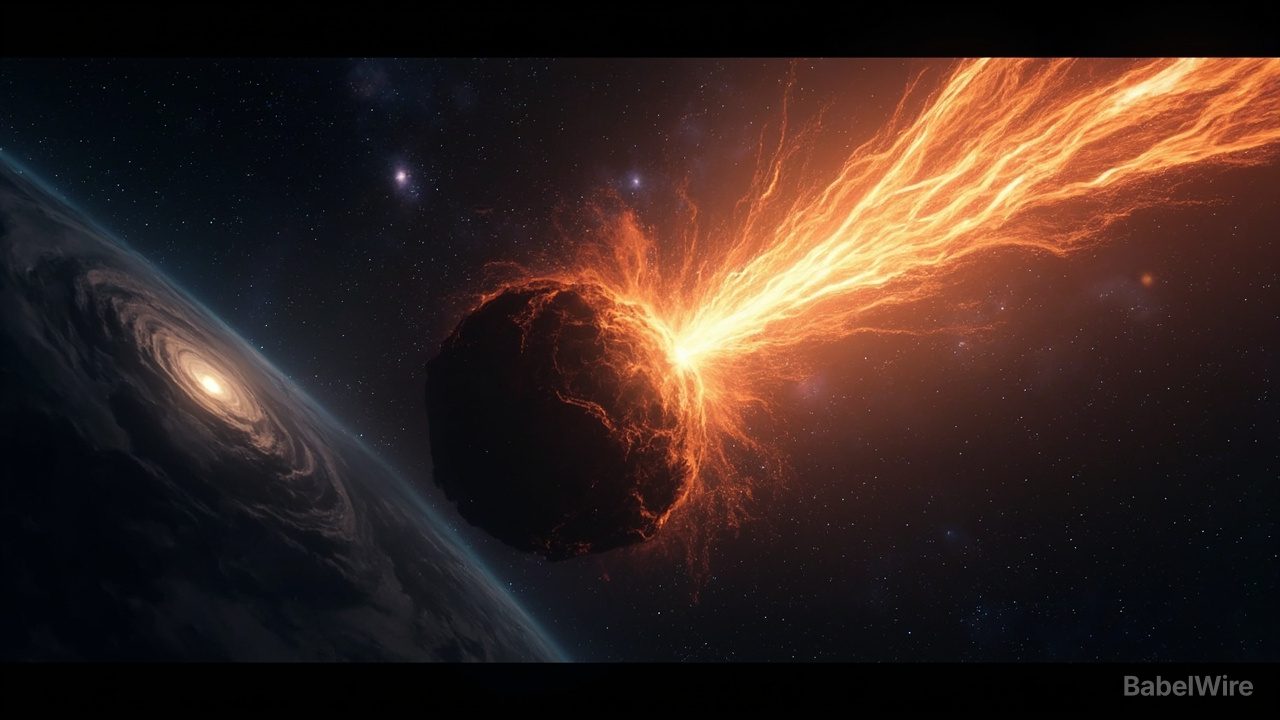
Because the black hole was not actively feeding, it should have been invisible. It revealed itself only when it tore apart a passing star, producing a brief, brilliant flare — a tidal disruption event named TDE 2025abcr. The findings appear in The Astrophysical Journal Letters.
What makes the discovery doubly remarkable is how it was made: an AI program trained to recognize the light signature of a star being destroyed by a black hole, scanning Zwicky Transient Facility data across the entire sky. The system went live in August 2025 — and flagged the event just three months later.
Its mass is comparable to the black hole at the center of the Milky Way, yet no visible galaxy surrounds it. Researchers think it may be the stripped core of a devoured companion galaxy, or a black hole flung outward during a chaotic three-body encounter.
"This is the strongest case of a wandering black hole that we know," said co-author Sylvain Veilleux. The team expects the Vera C. Rubin Observatory to find dozens or hundreds more wandering black holes each year.