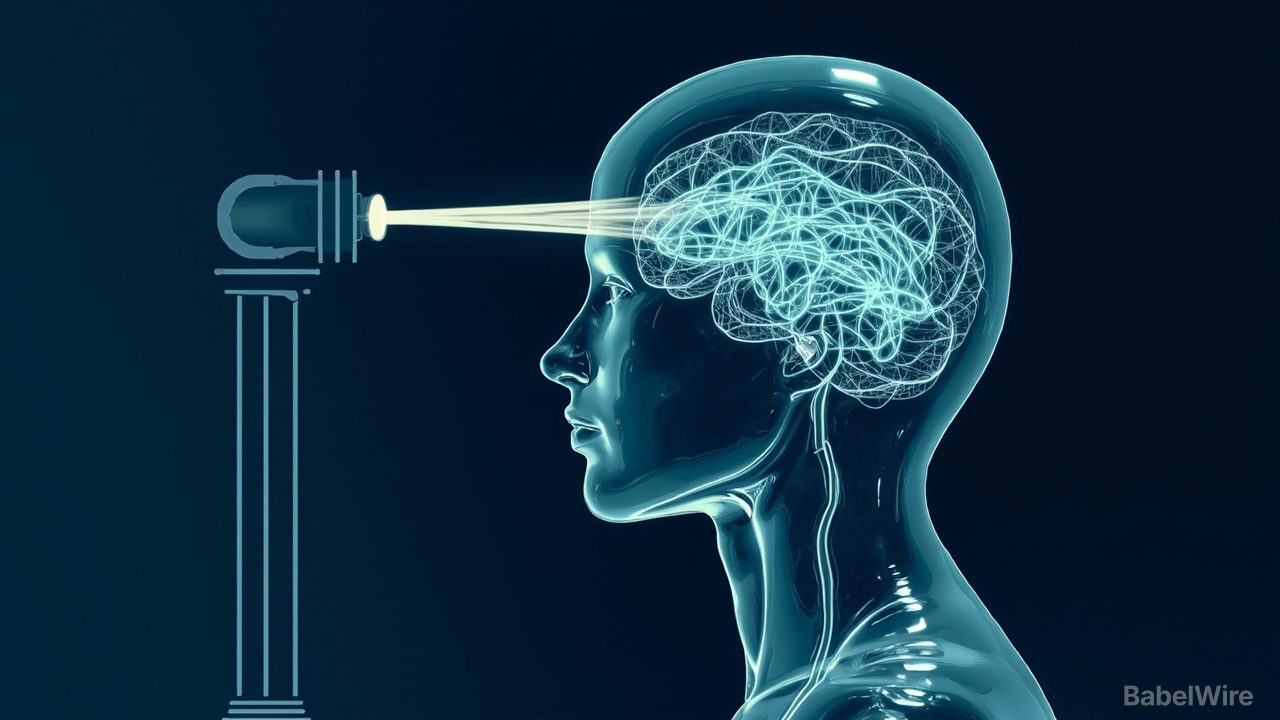
The United Nations has issued what coverage describes as its first formal warning that neurotechnology is advancing fast enough for governments to reach into people's minds — and that criminal justice is where the risk bites hardest.
A report by the UN Secretary-General, reported by The New York Times under the headline "U.N. Warns Against Technology Used to Read Citizens' Minds," cautions that new technologies could be used to access and criminalize people's innermost thoughts. German outlet Golem framed the same findings around criminal justice, warning of the misuse of neurotechnology in the penal system. The New York Times quotes the report's own language: "Neurotechnology, including new and emerging forms, raises profound human rights challenges when applied to the administration of justice."
The scenarios are no longer purely science fiction. Brain-computer interfaces are moving from laboratories into clinics and consumer products — headsets, earbuds and wearables that read electrical or hemodynamic brain activity — while machine-learning methods for decoding mental states from brain scans improve year on year. The concern, as coverage describes it, is the point at which such tools are pointed not at consenting patients but at suspects, defendants and prisoners.
The UN system has been circling this problem for several years. The Human Rights Council commissioned a study on the impact of neurotechnologies on human rights (A/HRC/57/61), and its Office of the High Commissioner for Human Rights has solicited input specifically on neurotechnology "in both civil and criminal matters," including risks to freedom of thought, conscience and belief. In November 2025 UNESCO adopted global standards on the ethics of neurotechnology, describing a field it called "a bit of a wild west." INTERPOL and the UN Office on Drugs and Crime are jointly assessing how ready law enforcement is to use — or misuse — such tools.
The legal gap is the crux. International law protects freedom of thought, but the frameworks in force were drafted for a world in which a mind could not be read and its data could not be harvested. Neurorights advocates argue that mental privacy, mental integrity and freedom of thought need explicit protection before the technology becomes routine — the same sequence in which the internet and biometrics outran their own rulebooks.
What remains unclear from the coverage reviewed here is how far the Secretary-General's report goes beyond warning: the specific safeguards, moratoria or treaty language it proposes, and how governments are expected to respond. The direction of travel, however, is unambiguous — the UN has moved from describing neurotechnology as an emerging issue to naming it a human-rights risk serious enough to require action.
Sources
- worldpoliticsreview.comU.N. Warns Neurotechnology Could Put Human Rights at Risk — World Politics Review
- golem.deStrafjustiz: UN warnt vor Missbrauch von Neurotechnologie — Golem.de
- ohchr.orgCall for input: Human Rights in the Administration of Justice — OHCHR
- unesco.orgEthics of neurotechnology — UNESCO