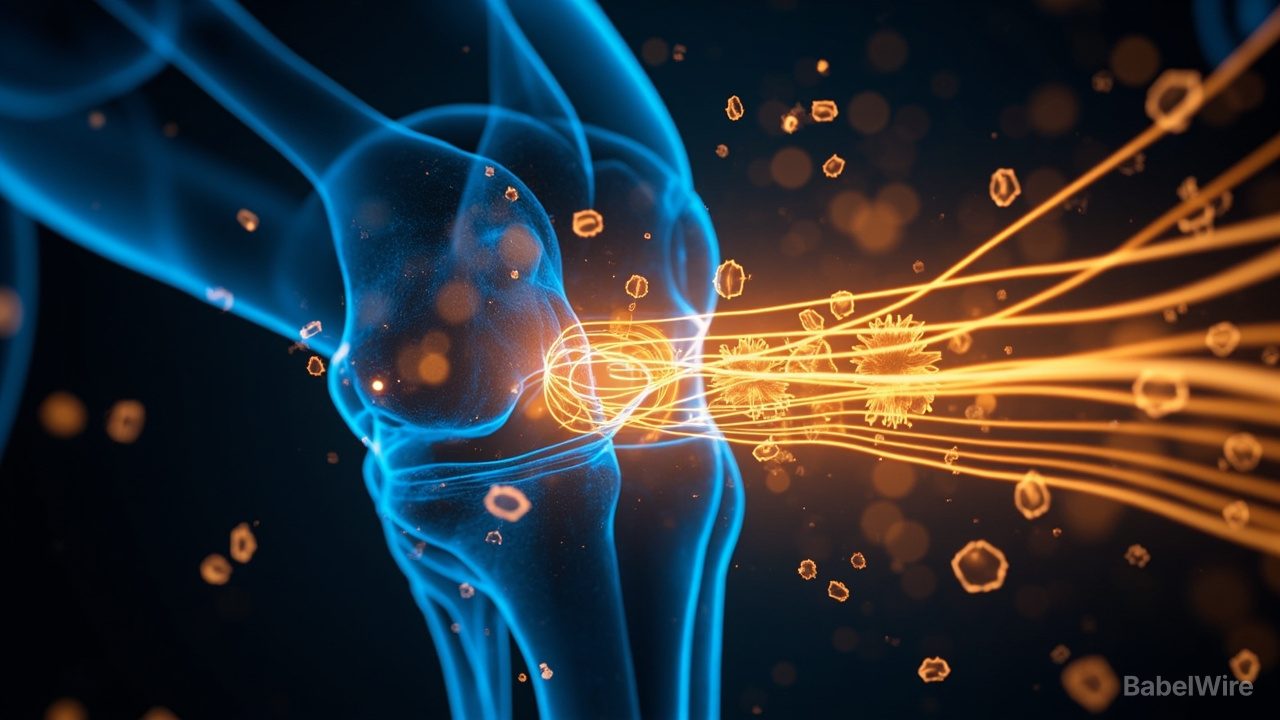
The snap, crackle and pop of aching joints may one day be silenced by sound waves themselves. Researchers at the University of Alabama in Huntsville (UAH) have discovered that continuous low-intensity ultrasound could help injured joints heal by nudging the immune system away from damaging inflammation toward tissue repair.
Published in Scientific Reports (a Nature journal), the study led by Dr. Anuradha Subramanian, professor of chemical and materials engineering, examined how ultrasound affects macrophages — specialized immune cells that act as both first responders and repair workers after injury.
"Following injury, the body recruits inflammatory 'defender' macrophages to clear damaged tissue and healer macrophages to support repair and recovery," Subramanian explained. "Persistent dominance of defender macrophages can create a prolonged inflammatory environment that contributes to post-traumatic osteoarthritis."
The team found that continuous low-intensity ultrasound could encourage macrophages to shift away from this prolonged inflammatory state toward one associated with tissue repair. The work included biological experimentation by Dr. Shahid Khan and computational methods by Dr. Satyaki Roy, professor of mathematical sciences.
"Post-traumatic osteoarthritis is driven in part by persistent inflammation that limits tissue repair and accelerates joint degeneration," Roy said. "Continuous low-intensity ultrasound offers a non-pharmacological, non-invasive approach that may help regulate immune cell behavior."
While the research remains at the laboratory stage, the findings highlight the potential of sound-wave-based therapies as an alternative to drugs for joint conditions affecting millions worldwide. The team plans to validate the approach in animal models of early post-traumatic osteoarthritis.
Osteoarthritis affects more than 500 million people globally, and current treatments primarily manage symptoms rather than addressing the underlying inflammatory processes driving joint degeneration.