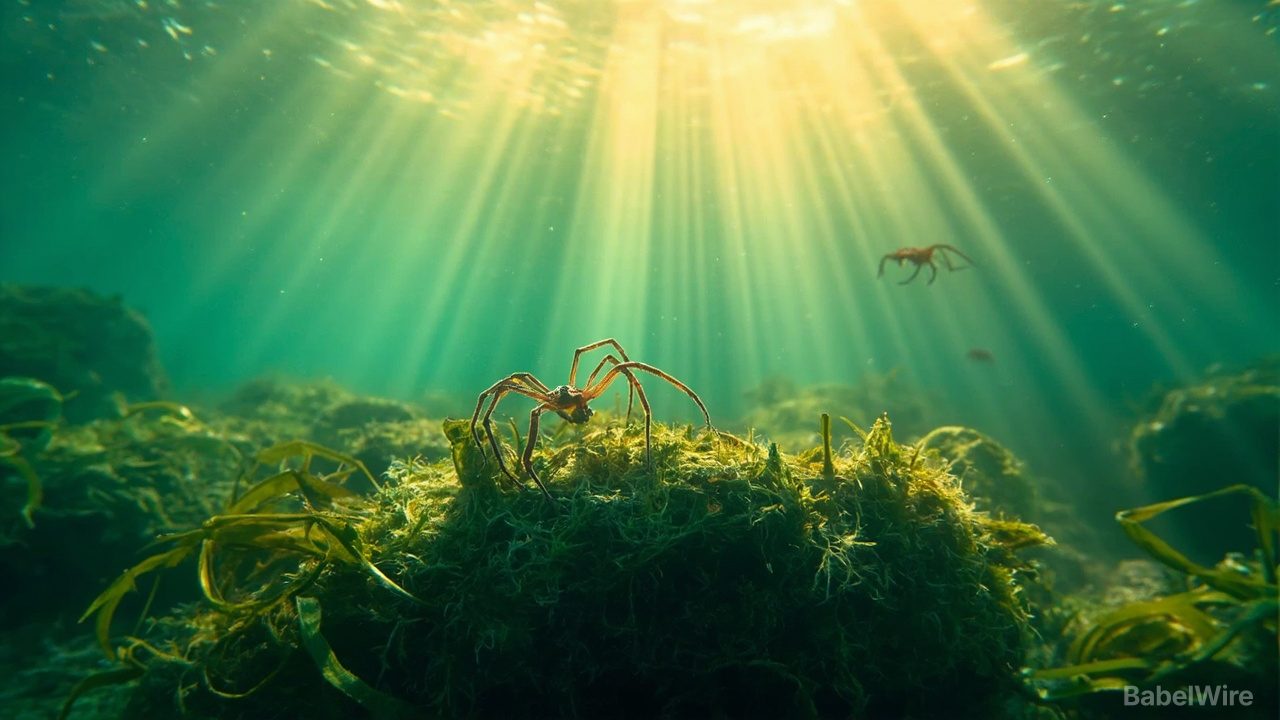
Divers working with University of British Columbia researchers have described two sea spider species new to science - the first new species of these marine arthropods named in the Salish Sea in nearly a century.
The two animals, Callipallene pilosuspedes and Tanystylum kiixin, were collected between September 2023 and August 2024 on dives to depths of up to about 18 metres, at sites around Quadra Island, Vancouver, Bamfield and elsewhere off British Columbia's coast. The study, led by Cormac Toler-Scott and published in Organisms Diversity and Evolution, combined detailed anatomical imaging with DNA analysis.
Sea spiders - pycnogonids - are not true spiders, though the resemblance is close enough to unsettle people: eight long legs, a body so small that much of the gut and reproductive system sits inside the legs, and in some species a feeding proboscis that looks distinctly like a beak. One of the new species is distinguished by unusually hairy legs; the other was found carrying tiny parasites. The name kiixin reflects Indigenous heritage associated with the region.
The finding is a reminder that the Salish Sea, an urbanised inland waterway between Vancouver Island and the mainland, is better surveyed than most of the ocean and still yields new large animals. The specimens were hiding in shallow water reachable by ordinary sport diving, not in the deep sea. Pycnogonids matter beyond novelty: they are common predators and parasites in benthic food webs, and their sensitivity to changing conditions makes them useful indicators of what is happening on the seafloor.
The authors note how much in the region remains undescribed - a point that sits awkwardly alongside the pace at which coastal habitats are being developed and warmed.
Sources
- vancouverisland.ctvnews.caCTV News Vancouver Island: Nightmare fuel - 2 sea spider species discovered off B.C. coast
- wmur.comCNN via WMUR: New hairy-legged, three-lipped, red-eyed sea spider
- thebrighterside.newsThe Brighter Side of News: Hairy legs and red eyes - two bizarre new sea spiders
- sflorg.comSci.News: New Sea Spiders Discovered in Salish Sea