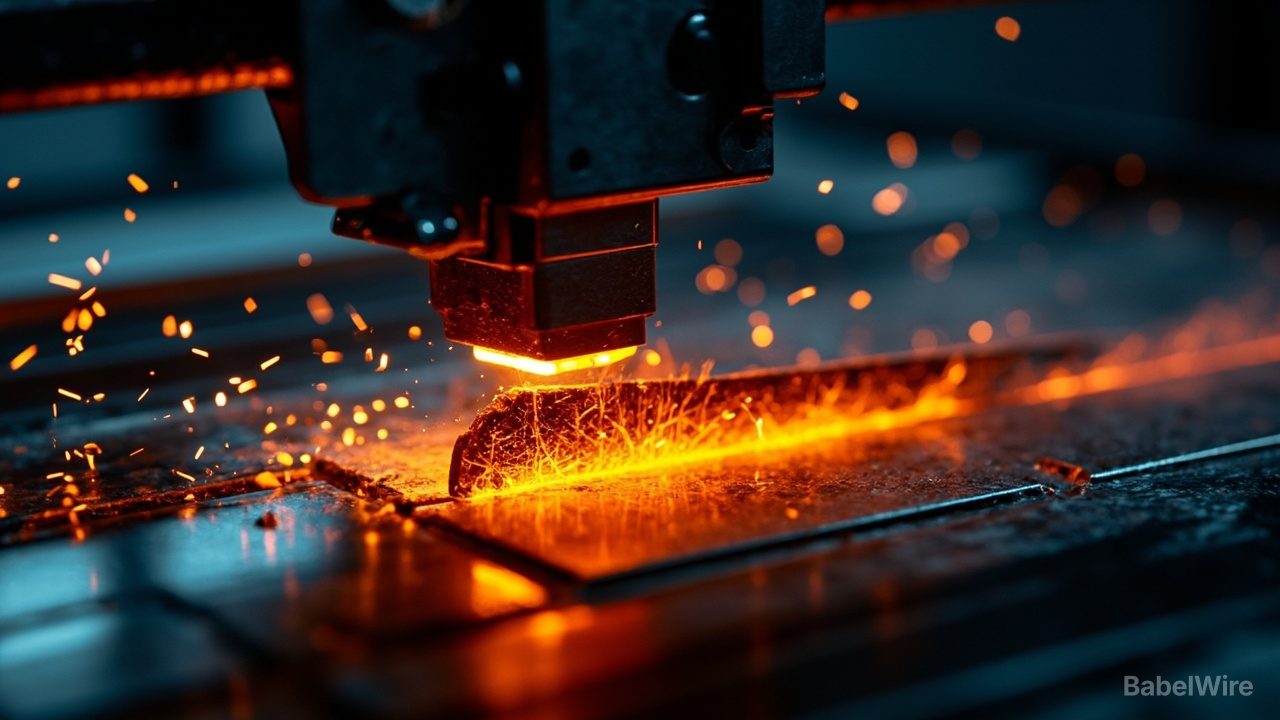
Tungsten carbide-cobalt (WC-Co) is one of the hardest materials in industrial use, but it is notoriously difficult and expensive to shape. Researchers at Hiroshima University and Mitsubishi Materials Hardmetal have now shown that additive manufacturing can do it — without fully melting the metal.
Using a hot-wire laser technique that softens rather than melts the material, the team produced WC-Co samples with hardness above 1,400 HV (Vickers), in the range of the toughest materials used in industry, with no defects or decomposition. The work appears in the International Journal of Refractory Metals and Hard Materials.
The approach matters because tungsten and cobalt are costly, and conventional powder-metallurgy production wastes a large share of the raw material. 3D printing deposits the carbide only where it is needed — for cutting tools, drills, and machining equipment — potentially cutting material consumption dramatically. In one of two tested arrangements, the researchers added a nickel-alloy middle layer and carefully controlled temperature to preserve hardness.
Corresponding author Keita Marumoto called the softening-not-melting approach novel, and said it may extend beyond cemented carbides to other metals. Challenges remain — reducing cracking and producing more complex shapes — but the results open the door to making ultra-hard tools cheaper and less wasteful.
Sources
- sciencedaily.comScienceDaily: Scientists just 3D printed one of the hardest metals on Earth
- tomshardware.comTom's Hardware: 3D printing with one of the world's hardest tungsten-based materials is now possible
- advancedmanufacturing.orgAdvanced Manufacturing: 3D Printing Method Cuts Waste in Tungsten Carbide Production