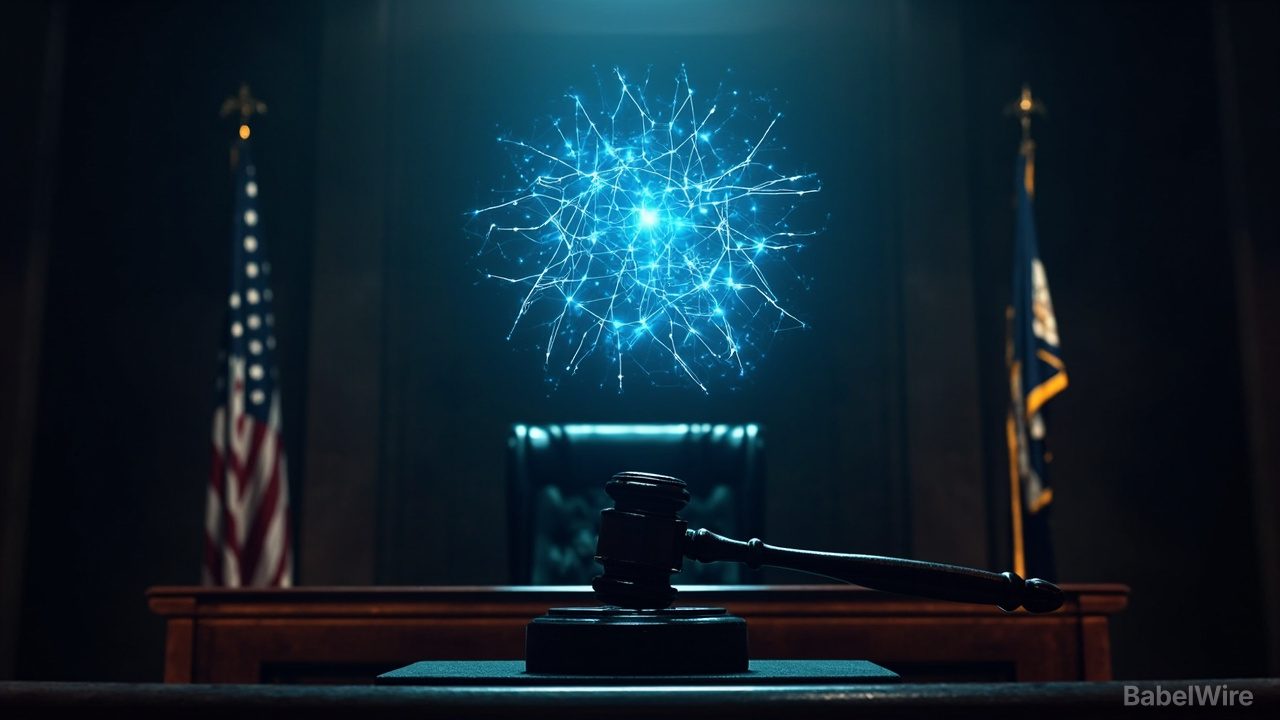
In a landmark ruling with profound implications for AI governance and military technology, the US Court of Appeals for the District of Columbia Circuit ruled 2-1 on September 25 that the Trump administration has authority to blacklist Anthropic — the company behind the Claude AI model — for refusing to enable features the government considers necessary for national security operations.
The case stems from actions taken in March 2026, when President Trump and Defense Secretary Pete Hegseth ordered federal agencies to stop using Anthropic's products and banned defense contractors from doing business with the company. Anthropic sued, alleging the administration was retaliating after the company refused to drop restrictions on using Claude for lethal autonomous warfare and mass surveillance of Americans.
The core legal question centered on whether Anthropic's refusal to enable certain features constitutes a "supply chain risk" under federal procurement law. The DC Circuit — which has exclusive jurisdiction over procurement disputes under 41 U.S.C. § 4713 — found that it does.
The ruling drew sharp contrast between the competing risks at stake: "Overly constrained AI models could cause military operations to fail," the judges wrote, while acknowledging Anthropic's argument that "unconstrained AI models hallucinating inappropriate targets for lethal military force" poses an equally grave danger.
**Two courts, two answers.** The ruling creates a striking legal split. In August, US District Judge Rita Lin in Northern California ruled the blacklisting violated the First Amendment, finding the action was illegal because Anthropic did not meet the definition of a supply-chain risk limited to malicious adversaries. The DC Circuit did not dispute that finding but said it reviewed the case under a different, broader statute — one that does not require evidence of bad motive.
Judge Karen Henderson dissented, arguing the law was designed to address hostile actors infiltrating government supply chains, not contractors who "honestly and upfront enforce restrictions" on their own products.
Anthropic's response was pointed: "We respectfully disagree with the court's decision," a spokesperson said. "Another federal court has already held the government's parallel designation unlawful. We remain confident in our position and are considering all options." The company may seek en banc review or petition the Supreme Court.
The case raises fundamental questions about whether governments can compel AI companies to remove safety restrictions — and whether refusing to do so can be classified as a security threat. As AI models become critical infrastructure for military and intelligence operations, the tension between corporate safety guardrails and state security demands appears destined for further legal battles.