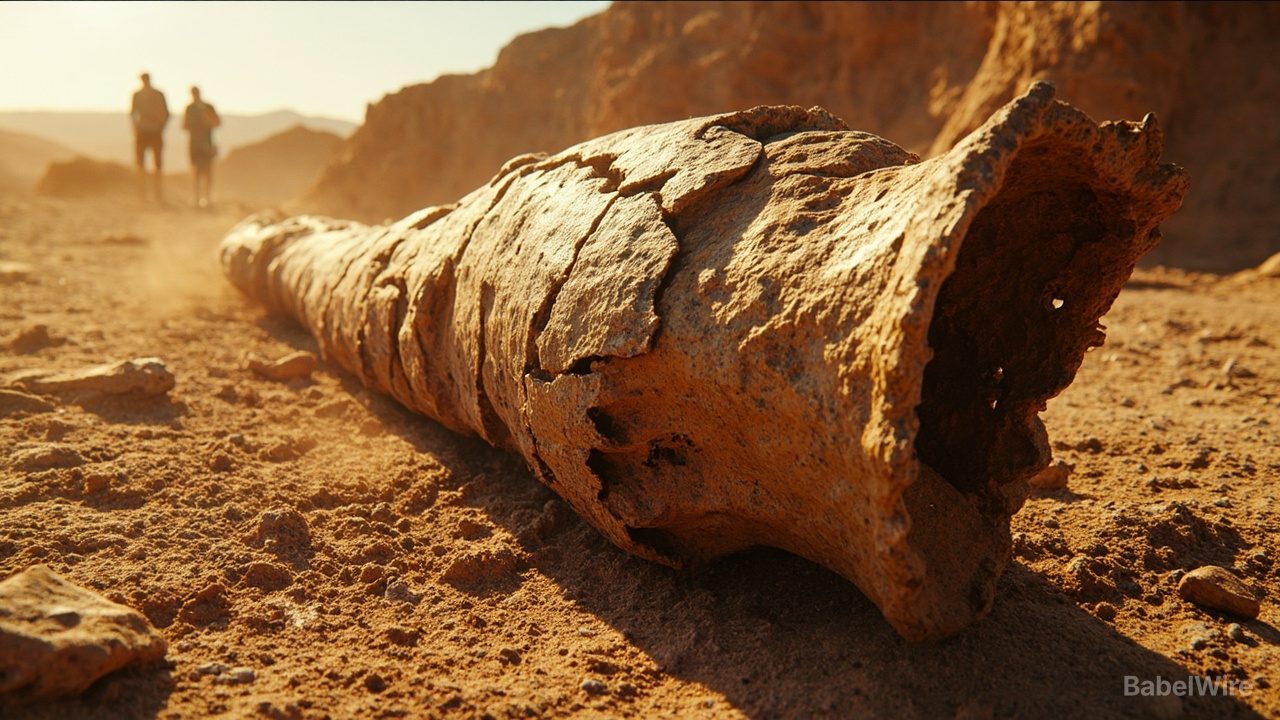
Tooth marks on more than 3,000 fossilized dinosaur bones from Wyoming offer rare direct evidence of how Tyrannosaurus rex fed — and scavenged — 66 million years ago.
The study, published July 15, 2026 in the open-access journal PLOS One, was led by Bethania C. T. Siviero of Loma Linda University. Researchers examined bones from northeastern Wyoming dating to the late Cretaceous, roughly 72 to 66 million years ago. Most belonged to Edmontosaurus annectens, a large plant-eater known for its broad, duck-shaped bill.
Only 12 bones showed possible tooth traces. Four bore distinctive patterns that matched the expected shape and spacing of T. rex teeth, making the tyrant lizard the most likely source. Other marks may have been left by different carnivorous dinosaurs or by crocodilians living in the region at the time.
Most of the marked bones showed no signs that the surrounding tissue had healed, suggesting the bites happened close to death — or after it. Combined with previous research at the same fossil site, the evidence indicates that some animals were killed by predators, then left exposed so that scavengers could feed before the bones were buried and fossilized.
The team also created a guide for interpreting possible tooth marks, since disease, insects, weathering and erosion can create similar features on bone. "Correctly identifying bone depressions and perforations is important because not all of these features are tooth marks," the authors note — a toolkit that will help paleontologists read behavior locked in ancient bones.
Sources
- sciencedaily.comScienceDaily (PLOS): Did T. rex leave these 66-million-year-old bite marks?
- sci.newsSci.News: Tyrannosaurus rex Scavenged Duck-Billed Dinosaurs in Wyoming
- doi.orgPLOS One: Identification of tooth traces from a Cretaceous Edmontosaurus annectens bonebed in the Lance Formation, Wyoming, U.S.A.