When Tomb Raider arrived on the Sega Saturn in Europe in late October 1996, it was not a sequel or a known franchise but the work of a small studio in Derby that wanted to build something other than a first-person shooter. Thirty years on, Lara Croft is one of the longest-running characters in games — and the game that produced her is also the story of a studio undone by its own success.
A studio that wasn't just a port house
Core Design was founded in Derby in 1988 and was not one of the conversion shops common at the time. Rick Dangerous (1989) and Chuck Rock (1991) had made the team around founder Jeremy Heath-Smith a known quantity, and the arcade racer Jaguar XJ220 and the helicopter shooter Thunderhawk (both 1992) had already taken it into 3D. What was missing was the jump to a 3D platform.
Tomb Raider was chiefly the work of two people: the artist Toby Gard and the programmer Paul Douglas. Both were fans of Prince of Persia (1989) and wanted to carry its blend of elegant movement and exploration into three dimensions — not to adopt the perspective of Doom (1993), which then dominated the market. Gard wanted to see his character from a chase camera. And because, as he said afterwards, he was bored of muscle-bound male heroes, the character became a woman: first "Laura Cruz", renamed Lara Croft during development so the name would fit her background as a British aristocrat.
The awkward controls were the design
What reads as strangeness today is above all this: Lara moves digitally, relative to her own facing, like a tank. You press forward and she walks where she is looking, not where your thumb points. On the Saturn and the PlayStation that was not carelessness — analogue sticks only arrived on those consoles in numbers with the DualShock at the end of 1997.
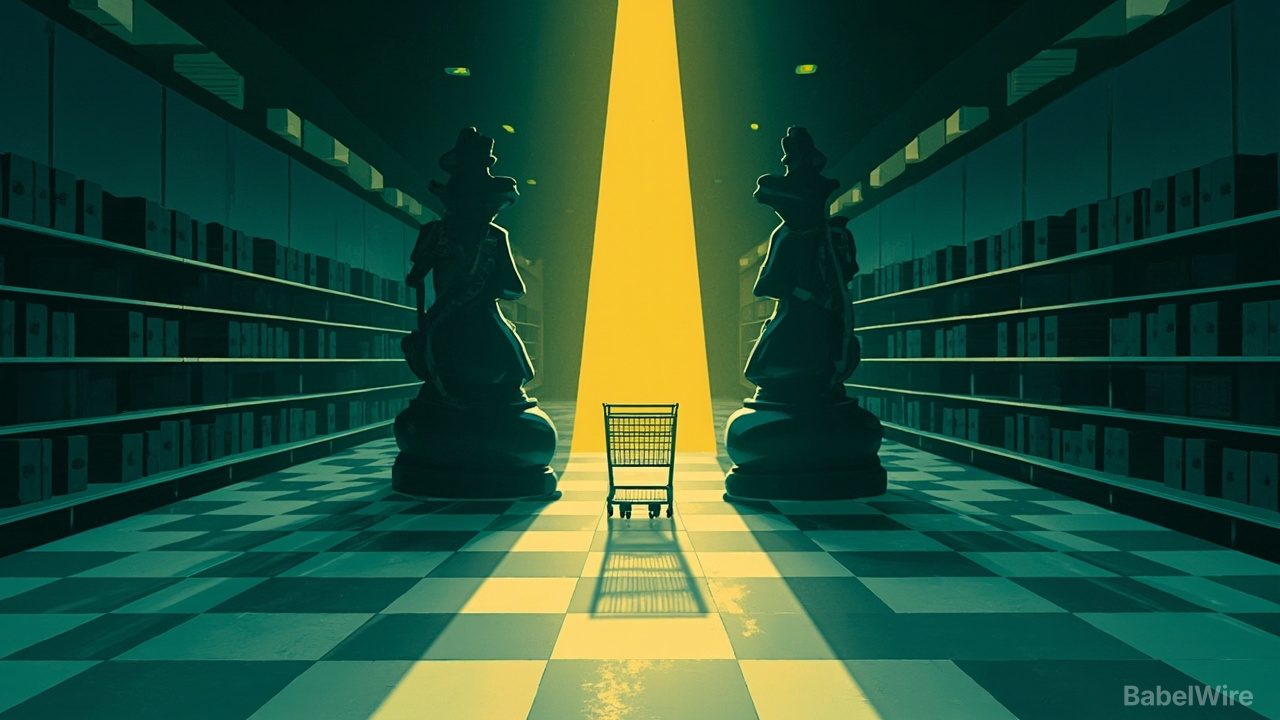
More interesting is that the levels were cut to fit that system. Layouts followed a chessboard grid, and the jump mechanics were designed around it: line Lara up precisely before take-off, take the geometrically correct run-up, and she reaches the target. The game asked not for a feel for speed but for reading a geometry. Add the hold-and-action buttons, the handstand on a ledge, the swan dive — and the rule that you kept the grab button down through the jump, or Lara's neck broke with an audible crack.
The 15 levels were accordingly not scenery but an apparatus: levers that open a door somewhere, often not next door; crumbling floors, poison darts, spikes; the hand of King Midas, which turns Lara to gold; giant boulders rolling through corridors. You saved at save crystals. Quick-saving existed only in the PC version, which appeared about a month after the first release.
Seven million copies and a treadmill
The press was ecstatic and the sales figures broke every ceiling: more than seven million copies worldwide. For Core Design that was blessing and curse at once. The studio was from then on mainly an assembly line for annual sequels — Tomb Raider II in 1997, III in 1998, The Last Revelation in 1999, Chronicles in 2000.
The break came in 2003 with The Angel of Darkness, which critics and fans tore apart so thoroughly that Eidos took the series away from the studio and handed it to Crystal Dynamics. Legend, the reboot the series needed, followed there in 2006. Core Design was finished — a studio that had built a global hit and then mostly built its sequels.
What survives
In the late Nineties Lara was everywhere: on magazine covers, in the Ärzte video for "Männer sind Schweine", in a U2 video, with her own merchandise catalogue and her own shampoo, with a street in Derby and with feature films. That ubiquity is why the 30 years are being marked today.
The more honest technical memory is different. Tomb Raider was a game whose controls are hard to defend by modern standards, and whose level design worked precisely because movement and geometry obeyed the same rule. It is a design principle plenty of modern games have rediscovered without stating it so plainly. And it is the reason Tomb Raider can still be played today without apology: you simply have to stop playing it like a shooter.