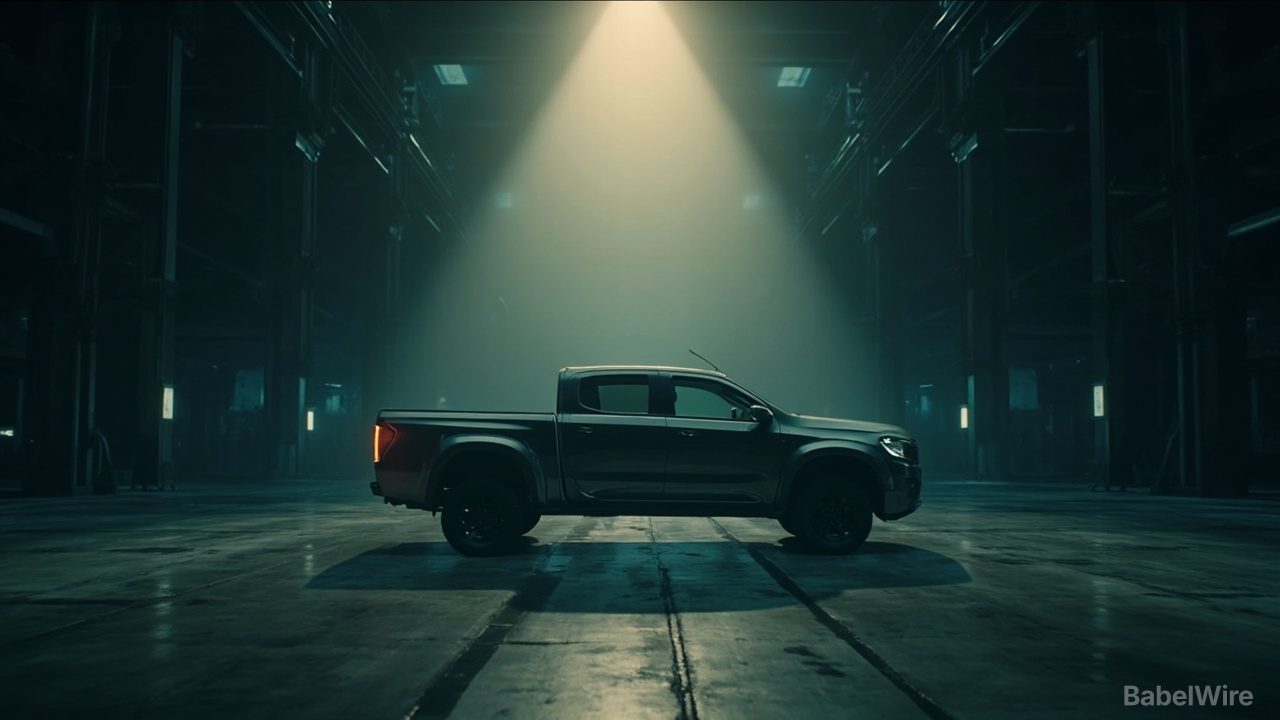
Tesla is ending the Cybertruck. In a post on X on Friday, Elon Musk said the company will "wind down production of the Cybertruck at Gigafactory Texas around the middle of next year to make room for increased Cybercab production." The truck will have been in production for less than four years.
The sales record explains the decision more clearly than the official rationale does. Cox Automotive estimates, cited across US outlets, put Cybertruck sales at 38,965 in 2024, then 20,237 in 2025 — a 48 percent drop — and 11,586 across the first three quarters of 2026, down another 28 percent year over year. Annualised, that is roughly 15,400 units a year against the 2024 peak: a decline of about 60 percent. Tesla does not report the model separately; it files it under "Other Models," a line that recorded 8,295 deliveries in the third quarter, down from 12,364 in the second.
The launch promised far more. Musk said in 2023 that reservations had passed a million and that demand was "off the charts," and positioned the pickup against Ford's F-150 and General Motors' trucks. The stainless-steel body that made the truck recognisable also limited it: European regulators proved difficult to satisfy, and the geometry of the exoskeleton made the vehicle hard to certify in the markets Tesla needed for volume.
Quality problems accumulated. Tesla has issued 11 recalls for the Cybertruck since sales began in late 2023, covering an accelerator pedal pad that could trap itself under interior trim, a stainless trim panel that could detach while driving, and brake rotor stud holes that could crack and separate a wheel from its hub. WIRED reported in 2023 on a leaked internal document from January 2022 describing suspension, sealing, noise, handling and braking problems in the pre-production "alpha" build.
The timing of Friday's announcement was pointed. According to WIRED, Musk's post came roughly 80 minutes after Tesla raised US Cybertruck prices and paused new orders for the entry-level Dual-Motor AWD version.
The official reason is the Cybercab. Gigafactory Texas is the only Tesla plant equipped to form the truck's stainless body, and Musk wants that line for a vehicle with butterfly doors and no steering wheel, pedals or mirrors — the centrepiece of his plan to recast Tesla as a robotics and autonomous-vehicle company rather than a carmaker. Paid Cybercab rides began with a small fleet in Austin in September, and the company still has to answer questions from the US auto safety regulator about whether it properly self-certified the vehicle against federal safety standards.
"Cybertruck was an incredible technology development platform and lives on through Cybercab," said Wes Morrill, the truck's lead engineer, on X. Musk called the Cybertruck "the best vehicle Tesla has ever made," described the wind-down as the "end of an era," and told a user that the "Cybertruck fleet will be around for a long time" — a commitment to existing owners that does not extend to the parts supply chain, which Tesla has not said it will maintain.