The protein tau is famous for clogging the brain: in Alzheimer's disease and other tauopathies, chains of the molecule twist into tangles inside neurons and choke the cells. But a study published today in Neuron suggests tau plays an earlier, more fundamental role in neurodegeneration.
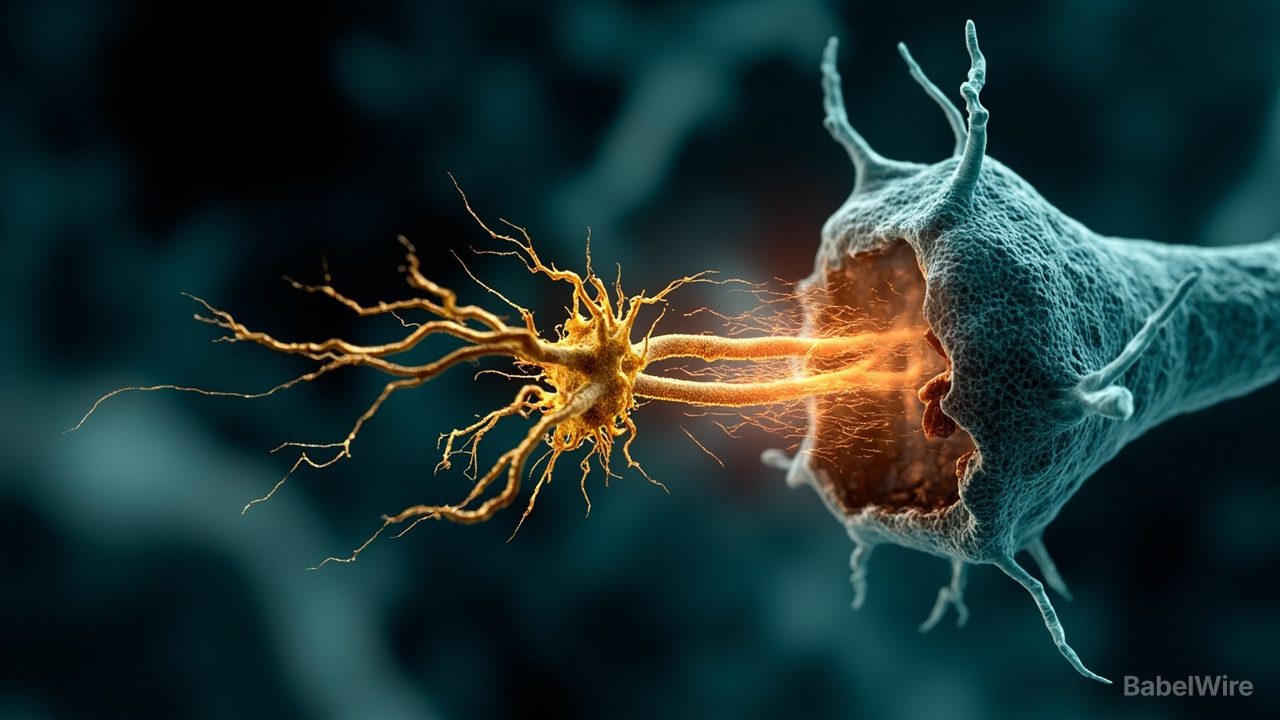
Stanford geneticist Bingwei Lu and colleagues found that phosphorylated tau (p-tau) can slip into mitochondria — the cell's power plants — and bind to an enzyme called NDUFS3. That binding reverses the flow of electrons along the energy-production chain, a process known as reverse electron transport, which halts energy output and releases toxic molecules that damage proteins, DNA and other structures.
The team observed the effect in fruit flies, fish, neurons grown from human stem cells and human brain tissue. Worse, reverse electron transport triggers pathways that add even more phosphate groups to tau, creating what Lu calls a 'vicious cycle' that can spiral out of control — which may explain why people with Alzheimer's show glucose-metabolism problems long before tangles appear.
There may be a way to break the cycle. A drug called CPT, which binds to NDUFS3 and crowds out p-tau, improved cognitive performance and reduced inflammation in mice with cognitive deficiencies. Lu's biotech company, Cerepeut, is testing CPT in animals and hopes to start human trials within two years. 'This is one way to get rid of bad tau without depleting normal tau,' he says.