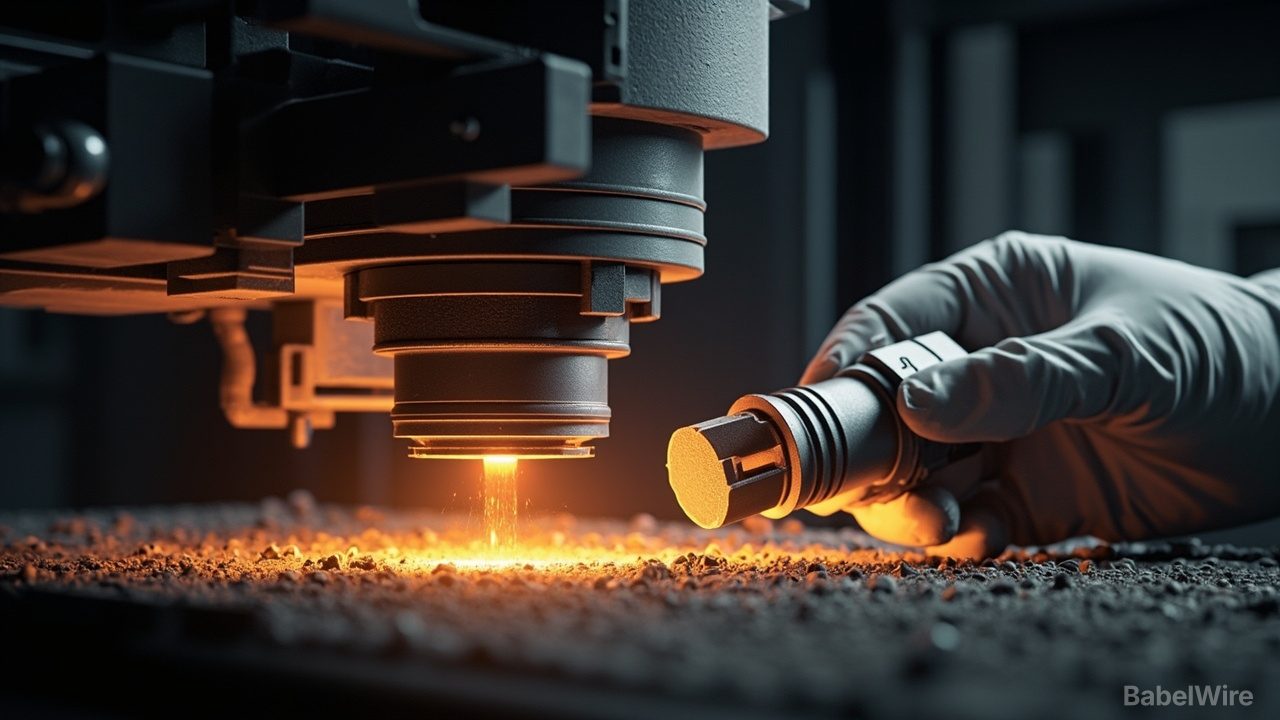
Researchers at the Institute of Combustion Technology for Aerospace Engineering (IVLR) at the University of Stuttgart have developed a gas-turbine fuel injector that can be printed in one piece by a 3D printer and used as-is, heise online reports.
Injectors are the expensive part that additive manufacturing had largely left alone. They must atomise liquid and gaseous fuels into a fine, homogeneous fuel-air mist: coarse sprays produce soot and nitrogen oxides. The catch for small turbines is that laser powder-bed fusion leaves surfaces too rough to produce the required fine mist.
The Stuttgart team's answer was to keep the rough surfaces but change the geometry, combining additive manufacturing with the atomisation principle used in aircraft turbines, miniaturised so the injector fits compact gas turbines. In laboratory tests the design burned hydrogen, kerosene, methanol, natural gas and e-fuels with low emissions — because the nozzle is laid out to form an ideal mixture for both gaseous and liquid fuels.
That versatility matters: operators can burn whichever fuel is on hand, and the researchers say older turbines could be retrofitted. Next steps are optimising the print parameters and nozzle geometry, followed by a practical multi-fuel test rig built with the German Aerospace Center (DLR) in Stuttgart. The stated goal is clean combustion of different fuels at high power density, at a lower manufacturing cost than conventional injector production.