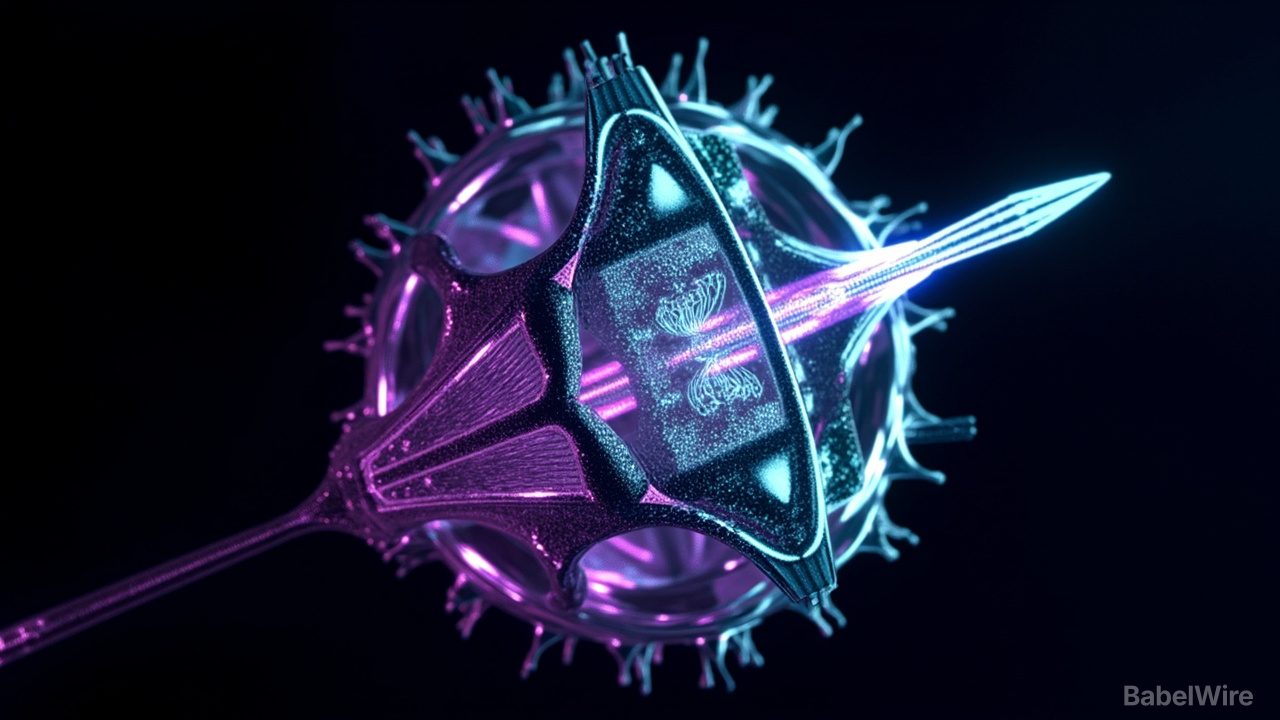
For the first time in history, scientists have used artificial intelligence to create functional viruses that do not exist anywhere in nature — a breakthrough that could transform medicine while raising profound biosecurity concerns.
Researchers at Stanford University and the Arc Institute, a nonprofit AI and biology research organization in Palo Alto, California, published their results in the journal Science. They trained a large language model called Evo 2 on the genomes of more than two million bacteriophages — viruses that infect and kill bacteria — and then asked it to design entirely new viral genomes.
Using the well-studied bacteriophage Phi X-174 as a template, the AI generated thousands of potential genomes. The researchers chemically synthesized 285 of these designs and tested them in the lab. Of these, 16 produced viable viruses capable of infecting and killing Escherichia coli — including strains that had evolved resistance to the original reference virus.
In this case, we wanted the model to generate the entire genome end-to-end in a single left-to-right pass, said Brian Hie, an assistant professor at Stanford and co-author of the paper. We didn't add anything.
The implications for medicine are significant. Antibiotic-resistant bacteria cause more than 2.8 million infections and 35,000 deaths annually in the US alone. The 16 newly created phages could form the basis of phage cocktails — mixtures of genetically distinct viruses that would be far harder for bacteria to develop resistance against than single-agent treatments.
However, the breakthrough has triggered alarm among biosecurity experts. Thomas Inglesby and Moritz Hanke of the Johns Hopkins Center for Health Security wrote in an accompanying piece in Science that while the Stanford team deliberately excluded human-infecting viral data from their training set, this safeguard can be partly circumvented by fine-tuning the models on pathogen data.
They argued that the National Institutes of Health and the World Health Organization urgently need new oversight policies. The question is no longer whether generative viral genome design will exist, they wrote. It is whether society can build oversight that allows its benefits to unfold while preventing it from enabling serious harm.
The research represents a pivotal moment in synthetic biology: the same AI tools that promise to revolutionize medicine also hand bad actors a powerful new capability. The race to build adequate guardrails has officially begun.