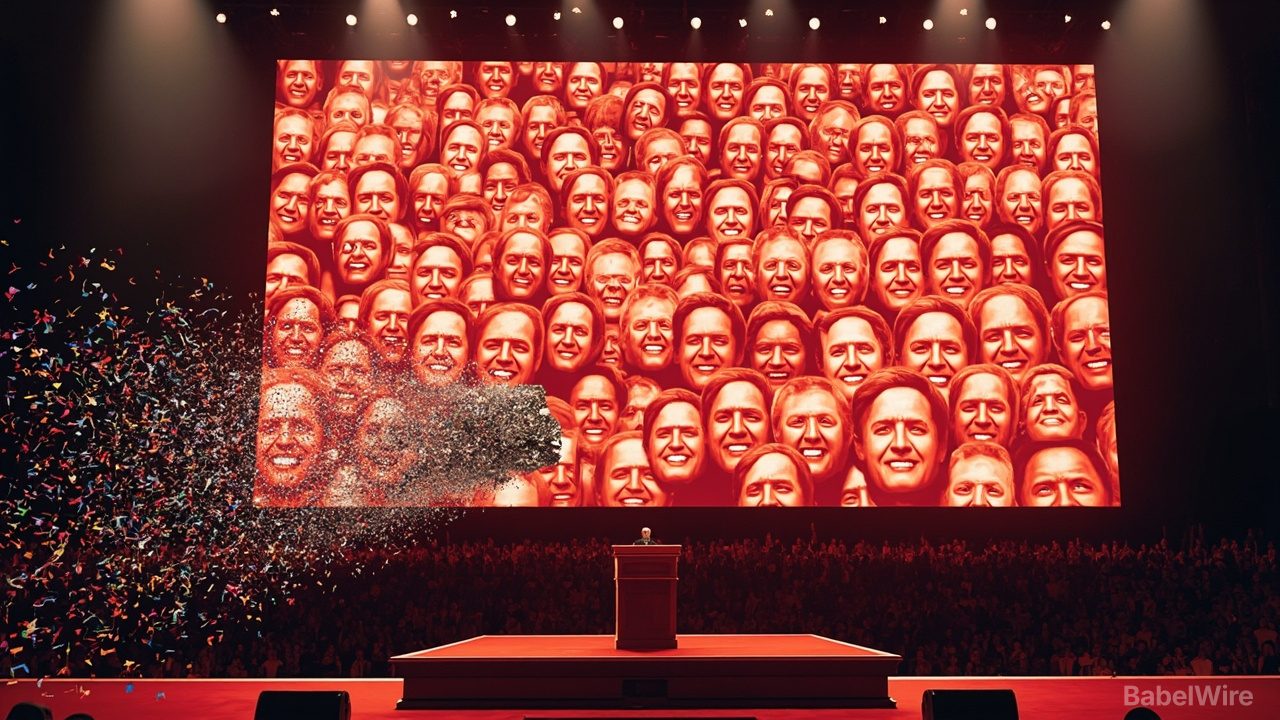
Three weeks before Spain's general election on 29 November, the conservative People's Party published a video in which AI-generated figures confess to things they never said. One of the people depicted has now filed a legal complaint, turning the episode into the first serious test of what an AI label is worth when nobody reads it.
The video ran from the PP's official social media accounts. It uses synthetic likenesses of several public figures, including Begoña Gómez, the wife of Prime Minister Pedro Sánchez, and former Socialist prime minister José Luis Rodríguez Zapatero. The Gómez figure appears to discuss obtaining a university position because of her husband; the Zapatero figure discusses hiding jewellery. The statements are invented, though they attach to real controversies. By 23 October the video had drawn nearly two million views, according to Spanish press reports.
The PP did label the material as AI-generated. That is where the argument starts: critics say the notice was so small and inconspicuous that it was effectively invisible while scrolling. Spain's digital transformation minister, Óscar López, criticised the use of synthetic footage, arguing that viewers unfamiliar with the technology could mistake the fabricated statements for real recordings. The PP rejects the charge. Party spokesperson Borja Sémper called the video political satire and said it was clear the people depicted had not made the statements.
On Friday, Leire Díez, a former Socialist whose likeness appears in the video, filed a complaint seeking its immediate removal. The filing reportedly accuses the PP of defamation and digital identity theft. The Díez figure allegedly admits to efforts to interfere with law enforcement and the judiciary — also fabricated. The complaint does not establish that the PP broke the law; a court would have to decide where the boundaries of defamation, identity rights and political expression lie.
Legal experts consulted by El País were cautious about predicting that the video would be found unlawful. Several pointed to the broad room that freedom of expression and satire protections leave for political mockery, and to the possibility that the overall context makes the fabrication obvious to viewers. That is the difficulty at the heart of the case: satire is allowed to lie, and a campaign is allowed to provoke. What is new is that the lie now wears a face that moves convincingly.
Spain is not an outlier so much as an early case. Campaigns in several countries have experimented with synthetic images, cloned voices and generated video because the technology is fast and cheap. The EU's AI Act imposes transparency obligations on certain AI-generated or manipulated content, and political advertising is covered by separate transparency rules. Neither answers the question now heading to a Spanish court: whether a label existed, or whether it worked.
There is a second-order effect that gets less attention. As deepfakes become ordinary, politicians can dismiss authentic recordings as AI-generated. The problem, sometimes called the liar's dividend, erodes exactly the evidentiary value that a campaign like this one relies on. The damage then comes not from a fake video but from the licence to deny any real one.
For voters, the practical rule is unglamorous: a realistic-looking clip is not proof that anyone said anything. Check whether an original recording exists, how prominent the disclosure is, and whether independent outlets have verified the content. For platforms and regulators the lesson is less comfortable: a labelling duty that specifies no size, contrast or placement requirement produces compliance without effect — and a precedent that will be repeated in every member state.