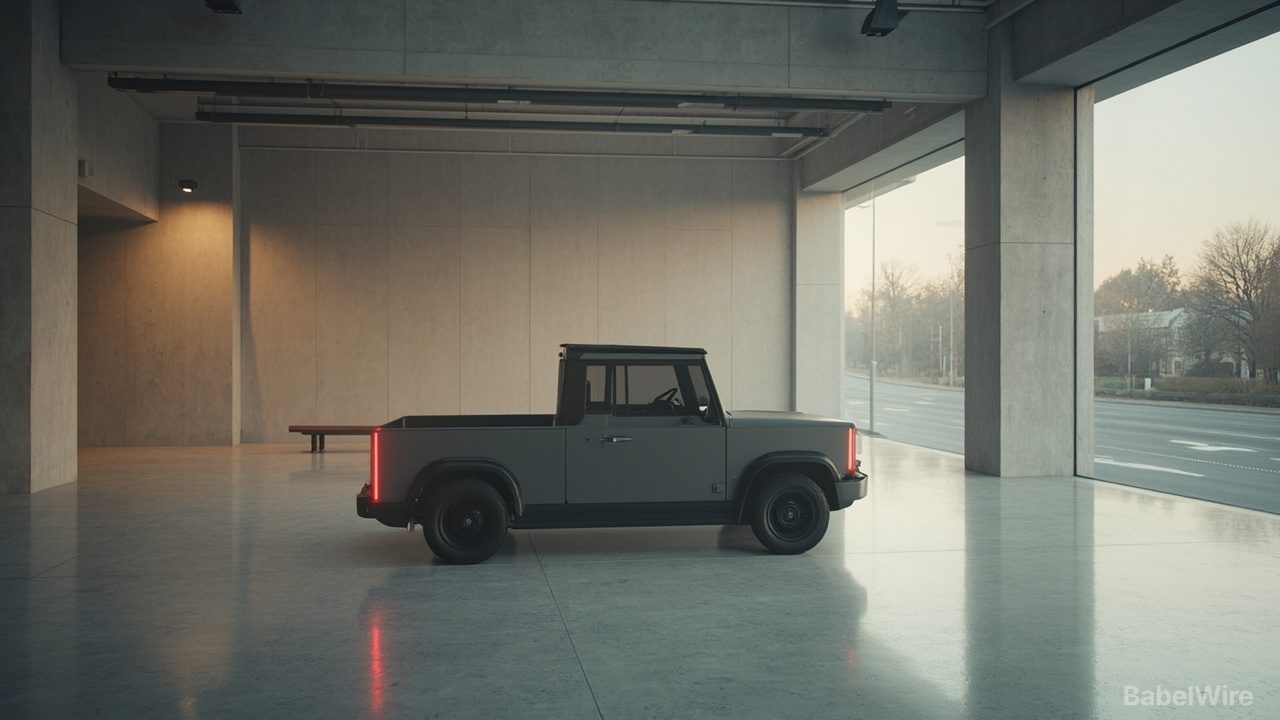
The cheapest way into a new car in the United States has been getting more expensive for a decade. Average transaction prices sit well above $40,000, the sub-$30,000 segment has thinned to a handful of small sedans, and almost nobody is selling a genuinely cheap electric vehicle. Slate is betting that gap is real.
Ars Technica visited the company's first showroom as its $25,000 electric truck moves toward production. Slate, backed by Jeff Bezos among others, has staked its pitch on a deliberately small, deliberately basic vehicle: a compact two-seat pickup rather than a five-seat family hauler with a screen where the dashboard used to be.
Opening a showroom is a small event with a large meaning. Concept cars and reservation pages cost comparatively little; retail space, staff trained to hand over keys, and service arrangements cost real money and imply a date certain. A startup that opens a storefront is saying the vehicle is close enough to production that customers should be able to sit in one.
The strategy runs against the direction of the market. Automakers have spent years concluding that small, cheap cars are a poor business in the US — margins are thin, buyers who can afford a loan usually trade up, and the fixed costs of a dealership and service network do not scale down with vehicle price. Electric vehicles make the arithmetic harder still: a battery pack is the single most expensive component, and a small, cheap pack leaves little room for error on cost.
Slate's counterargument is subtraction. Fewer seats, fewer screens, fewer motors, a smaller pack, a simpler bill of materials. If the vehicle is cheap enough to build, it does not need to be expensive enough to subsidize a luxury brand's electrification program. It is the same logic that made the original mass-market small cars work, applied to a different powertrain.
The risks are the familiar ones for any young car company, and they are not small. Production ramps are where ambitious price targets usually go to die: the first units off a new line cost far more than the sticker price assumes, and every month of delay is a month of fixed costs without revenue. Then there is service — a $25,000 truck sold to buyers who cannot easily drive three hours to a dealer needs a maintenance plan that does not depend on a dealer.
Nearing production is not the same as shipping, and showroom visits are not deliveries. What Slate has demonstrated so far is that the price point is being taken seriously enough by investors and by the press to warrant a storefront. Whether a stripped-down electric pickup can be built at that price, sold at that price, and serviced profitably is the question the next eighteen months will answer — and the answer matters well beyond one startup, because it decides whether the cheap end of the EV market is a business or a marketing claim.