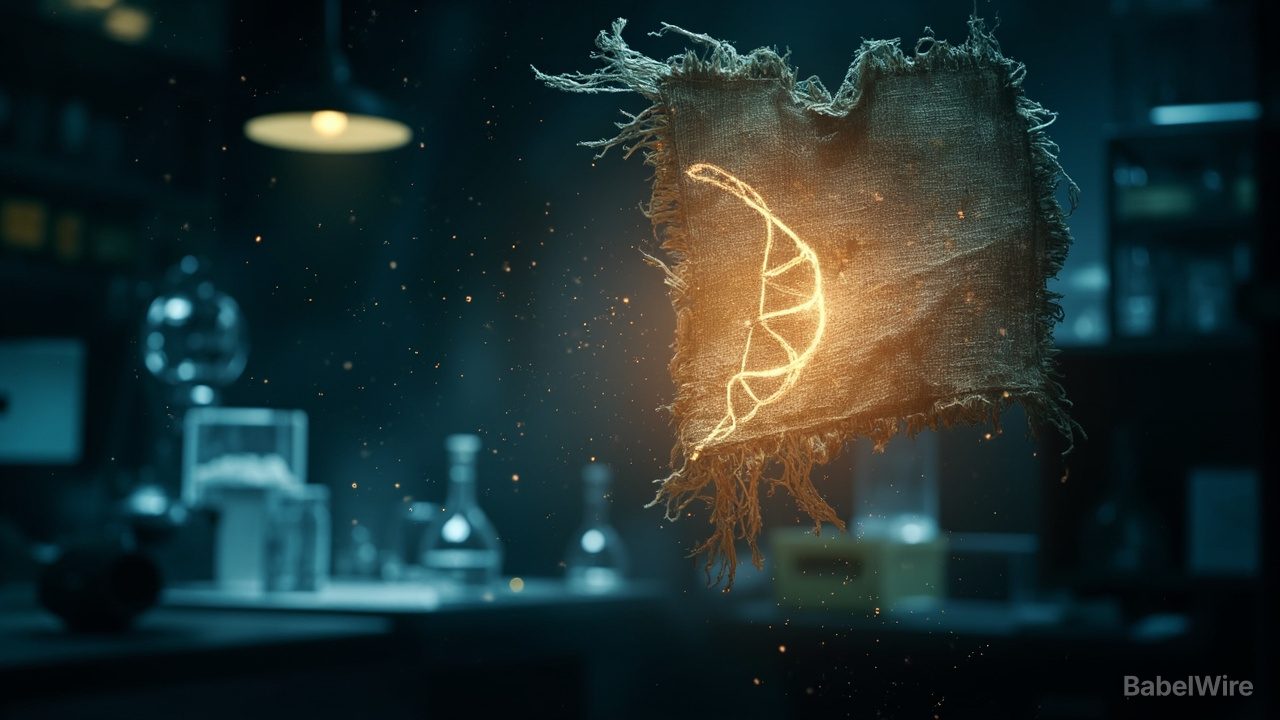
A new DNA study has exposed a remarkably complex biological record preserved on the Shroud of Turin, one of the world's most studied — and most controversial — relics.
Published in Scientific Reports, the research is the first to apply rigorous PCR-free next-generation metagenomic sequencing to official samples of the linen cloth taken in 1978. The international team, which included Professor Noemi Procopio of the University of Lancashire, detected several human mitochondrial DNA lineages alongside a diverse microbiome of bacteria, fungi and salt-loving archaea.
The fibers also held DNA from cultivated plants — wheat, carrots, maize, bananas and peanuts — as well as domesticated animals such as cattle, pigs, chickens, dogs and cats, and even Mediterranean red coral. Together, these signatures hint at the environments, objects and people the cloth encountered across centuries of handling, storage and travel.
The findings do not prove the Shroud's age or authenticity. Because the cloth has been touched and exposed to the environment for centuries, the researchers say it is impossible to isolate any original DNA. "The Shroud represents a rich archive of genetic information that has accumulated over centuries of human interaction and environmental exposure," Procopio said. "Advances in forensic science can unlock new information from historical artifacts."