Since 1967, nuclear weapons have been prohibited in space under the Outer Space Treaty, ratified by 118 countries including Russia and the United States. But there has never been a way to actually check if anyone is cheating.
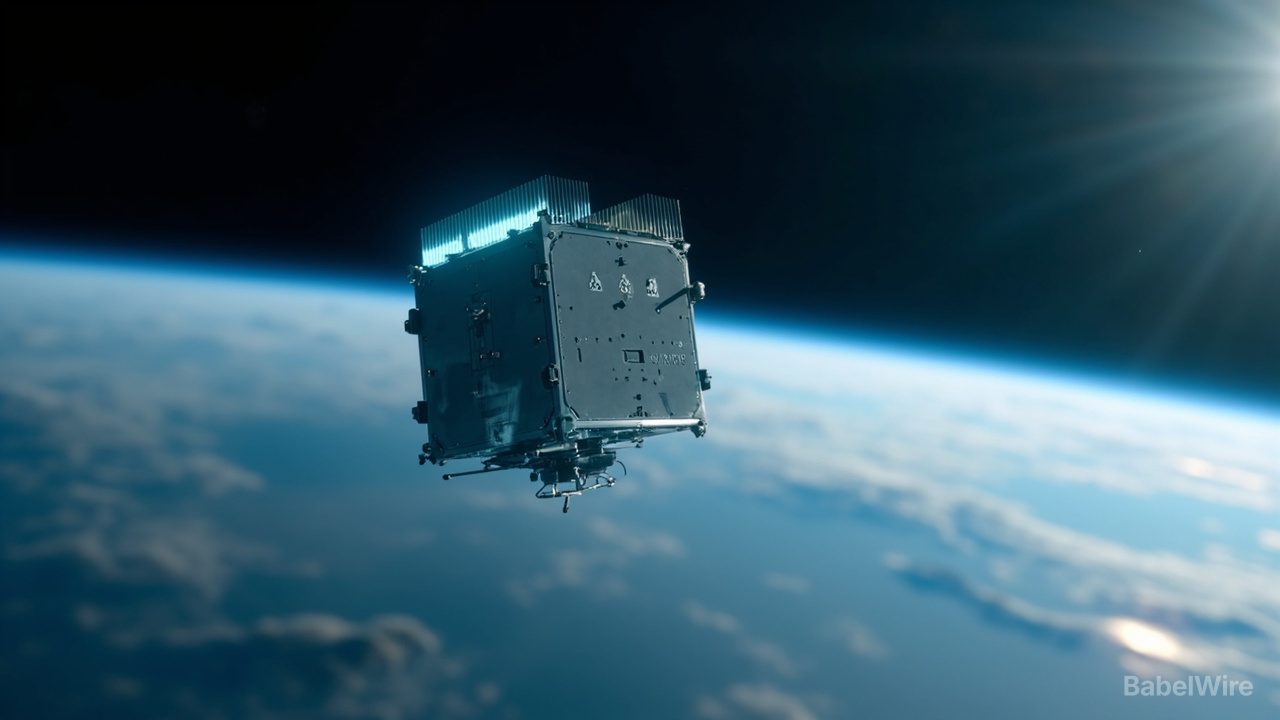
Now, researchers have proposed a technique that could change that: a shoebox-sized satellite — a CubeSat — equipped with neutron detectors that could sniff out illicit nuclear warheads hidden in orbit.
The concept, reported by Science News on July 9, exploits a fundamental property of nuclear weapons: the plutonium or uranium inside them naturally emits neutrons. A small satellite in low Earth orbit, carrying a compact neutron spectrometer, could detect these emissions from a nearby object — even if the weapon is concealed inside a spacecraft or satellite casing.
The challenge has always been distinguishing weapons-grade material from background cosmic radiation and other space phenomena. But the researchers behind the proposal argue that modern neutron detection technology is now sensitive and selective enough to identify the unique neutron signature of weapons-grade fissile material.
If deployed, such a satellite could serve as a space-based verification tool, allowing the international community to inspect suspicious spacecraft and enforce the Outer Space Treaty. This is particularly relevant given recent tensions: the U.S. has accused Russia of developing anti-satellite nuclear weapons, and Russia has denied launching weapons into orbit.
A CubeSat-based inspector satellite could be built relatively cheaply and launched quickly, providing a practical means of monitoring compliance. The proposal adds a new dimension to the growing field of space security, where the lines between civilian, military, and weaponized space assets are increasingly blurred.
While the technology is promising, the researchers acknowledge that political and diplomatic hurdles remain. Any inspection satellite would need to be accepted by spacefaring nations as a legitimate verification tool rather than a spy platform — a distinction that may prove as challenging as the engineering itself.