Science Corporation said it has implanted its vision-restoring chip in its first patient with Stargardt disease, the inherited retinal disorder that destroys central vision in children and young adults — the first move from laboratory research toward a clinical therapy.
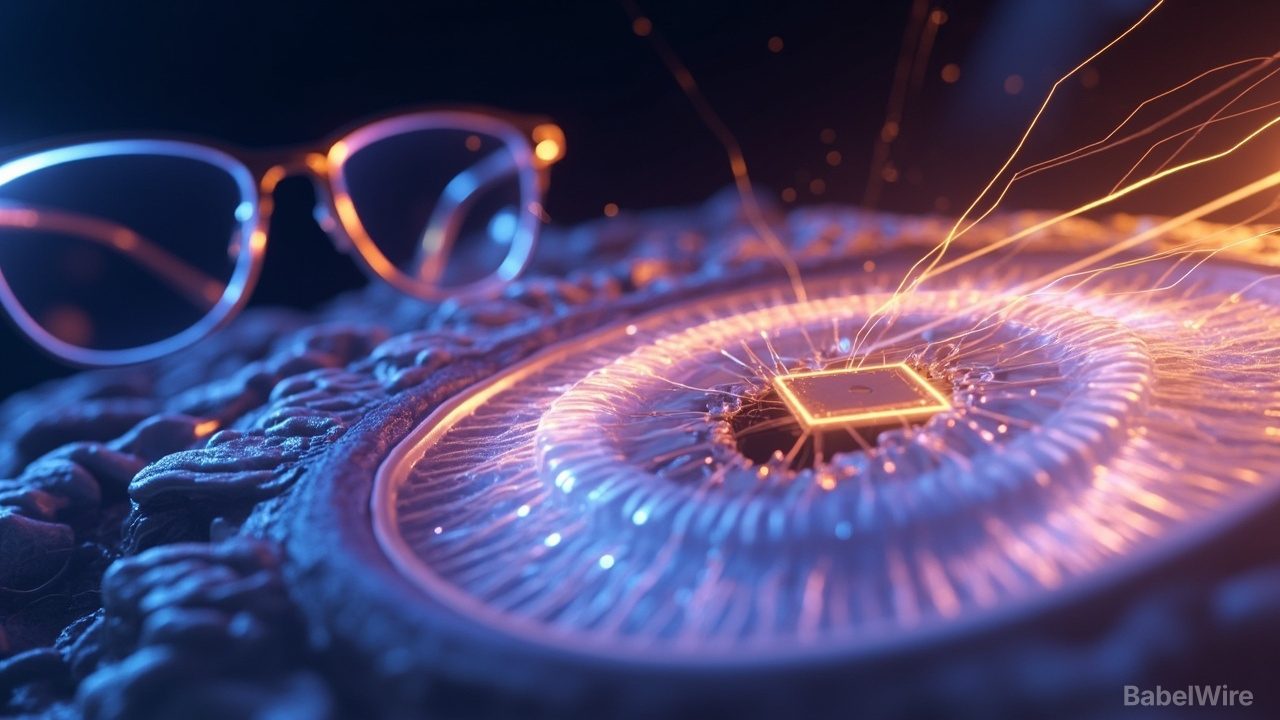
At the centre of the milestone is PRIMA, a photovoltaic implant about the size of a grain of rice that is placed beneath the retina. Paired with camera-equipped glasses that project infrared light into the eye, the chip converts that light into electrical pulses that stimulate the surviving retinal cells, restoring a small patch of central vision. Science Corporation picked up the technology as part of the assets of France's Pixium Vision.
Stargardt disease has no approved treatment that reverses vision loss, which is what makes a first implant notable: it moves the device out of the laboratory and into a patient with the exact condition it was designed for. The company has not yet disclosed the patient's identity, the details of the procedure or the measured visual outcome.
What to watch now is durability. Restoring a patch of central vision is one thing; proving that the restored sight holds up over months and years, that the surgical procedure and the external glasses are practical for everyday life, and that regulators such as the FDA accept the evidence, is another. Manufacturing at scale — and at a price health systems will pay — is the third hurdle.
Context: Science Corporation is the neurotechnology company founded by Max Hodak, a co-founder of Neuralink. The PRIMA implant was developed in France before Science Corporation took over the technology through Pixium Vision's assets, and it has been tested in patients with atrophic age-related macular degeneration as well as Stargardt disease.