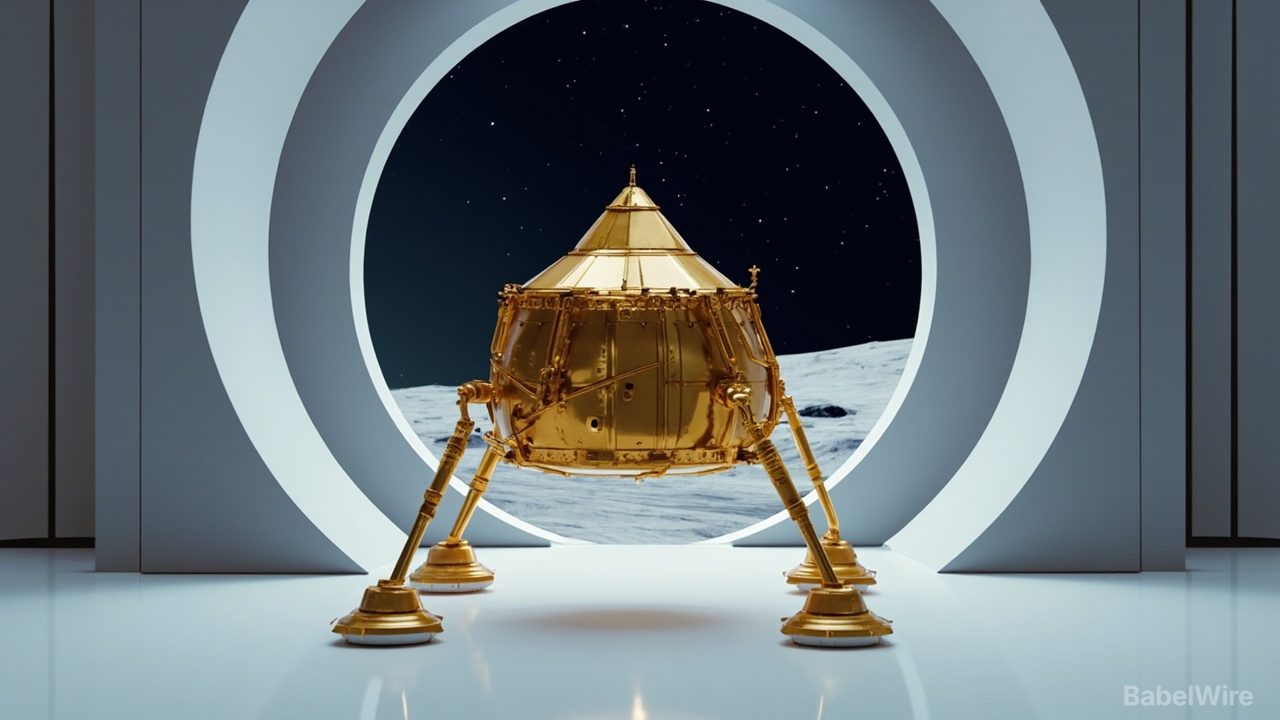
The lunar lander Griffin-1 is ready for its flight to the Moon, according to heise's 13 October 2026 report. The vehicle is a commercial lander developed by Astrobotic, the larger successor to the Peregrine lander that failed to reach the surface in early 2024 after a propulsion problem.
The wider significance is institutional. NASA has outsourced much of its lunar cargo delivery to private companies under the Commercial Lunar Payload Services programme, paying for rides rather than building landers itself. That model only works if the landers work; several attempts since 2024 have ended in crashes, partial successes or total losses, and each one is a data point about whether the model is sound or premature.
Griffin is a much bigger, more capable vehicle than the small first-generation landers — the kind of spacecraft whose success would move commercial delivery from a novelty to a service. Readiness, however, describes ground preparations, not a launch date or a guaranteed landing; final scheduling depends on the launch provider and the remaining pre-flight reviews.
The landing itself remains the hard part. Most failures happen in the final descent and touchdown sequence, where propulsion, terrain-relative navigation and the vehicle's own software must all behave perfectly with no second chance. A clean landing would be a genuine milestone; a failure would not settle the question either, but it would sharpen the argument about how much risk NASA is paying to absorb.
What to watch: the confirmed launch window, the payload manifest, and above all whether the vehicle transmits from the surface.