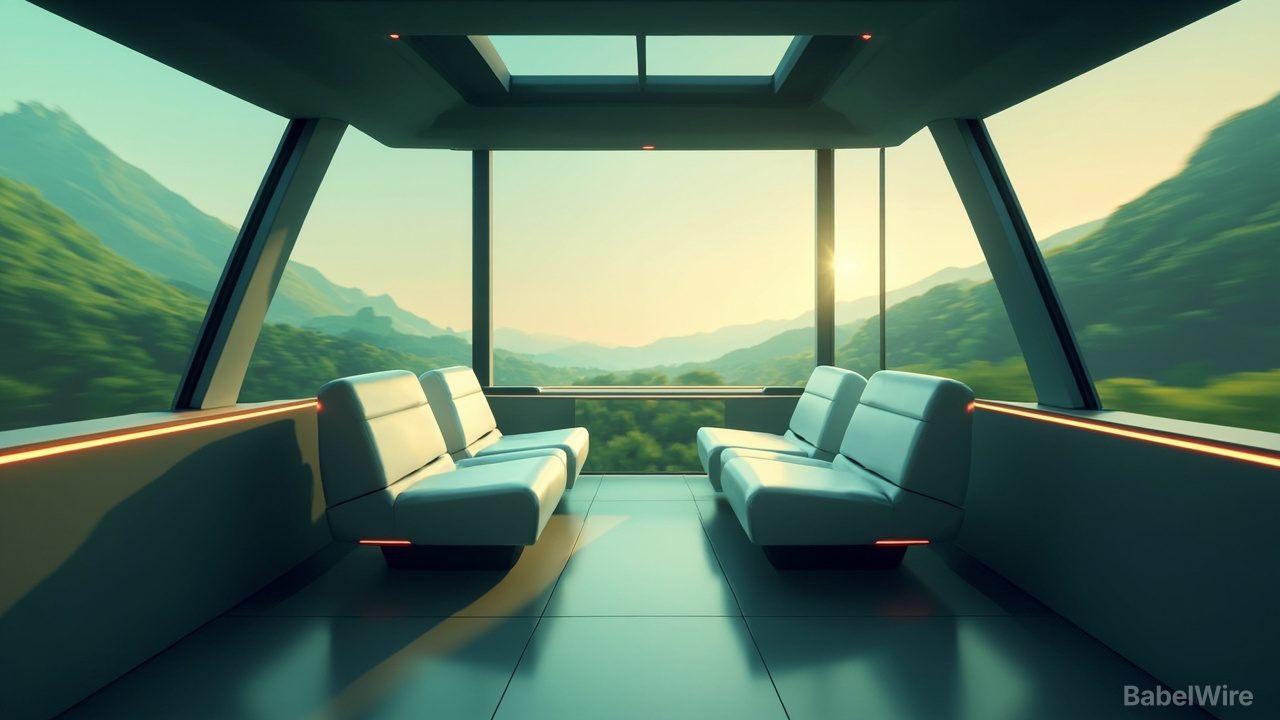
Rivian's CEO says autonomy will enable dramatically different vehicle designs, TechCrunch reports — a framing that goes well past the usual treatment of self-driving as a software upgrade.
The consequence is more fundamental than a new interface. If nobody is driving, the steering wheel, pedals, dashboard, and the whole ergonomics of the driver's seat stop being givens. For a manufacturer shaping a new model generation, that opens the door to interiors closer to mobility lounges than car cabins: flatter fronts, different proportions, seating that can face each other — at least wherever regulation still requires a human driver to be present.
The position contrasts with companies treating autonomy as a gradual, conservative evolution of the existing car form. It shifts value creation from driving dynamics to the cabin and the on-board experience — territory Rivian appears keen to claim as it lines up future models.
Two brakes remain realistic: approval frameworks that still mandate a human driver, and the autonomy technology itself, which has to arrive first. The specific design concepts and timelines Rivian attached to the statement are in TechCrunch's report.
Read more: TechCrunch.