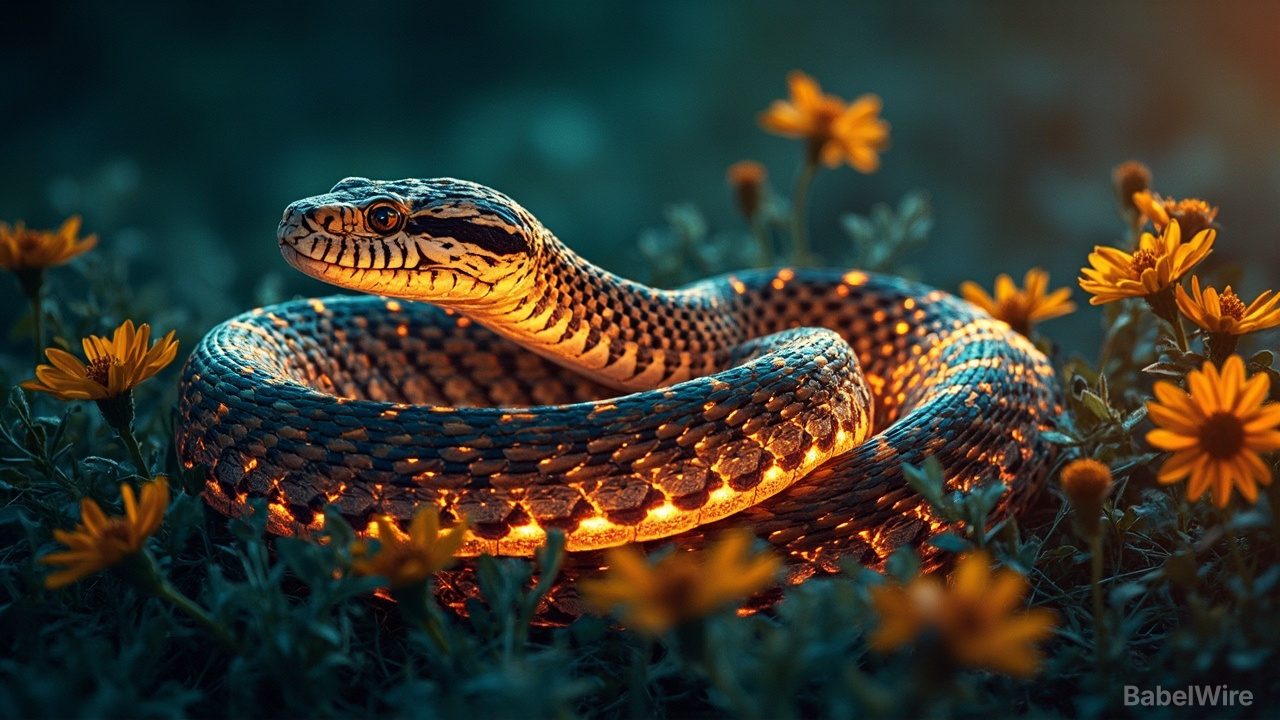
Rattlesnakes may carry the ingredients for a better antivenom in their own blood. Researchers at the University of Maryland have shown that a combination of proteins found in the blood of the western diamondback rattlesnake can prevent death in mice injected with an otherwise lethal dose of the snake's own venom.
Snakebites kill an estimated 80,000 to 140,000 people every year and leave around 400,000 others disabled. Most victims live in rural areas where antivenom is scarce, expensive, or unavailable in time. Current antivenoms are produced by immunizing horses with venom and harvesting antibodies — an approach that works but can be costly, hard to store, and prone to side effects.
Led by Sean Carroll, the team took a different route: they asked how snakes protect themselves against their own venom. The answer, published in the Proceedings of the National Academy of Sciences, is a small set of conserved serum proteins called metalloproteinase inhibitors that circulate in the rattlesnake's blood. In experiments, mixtures of these proteins blocked the lethal effects of venom in mice, staving off death and preventing the bleeding and tissue destruction that viper venom causes.
The finding suggests that snake-derived proteins — not just horse antibodies — could form the basis of a new generation of antivenoms that are safer, more stable, and easier to produce and transport. That could matter enormously in the rural tropics, where snakebite is a neglected killer. The work is part of a broader push to rethink antivenom development, and it highlights how evolution's own solutions inside the snake may be repurposed to save human lives.