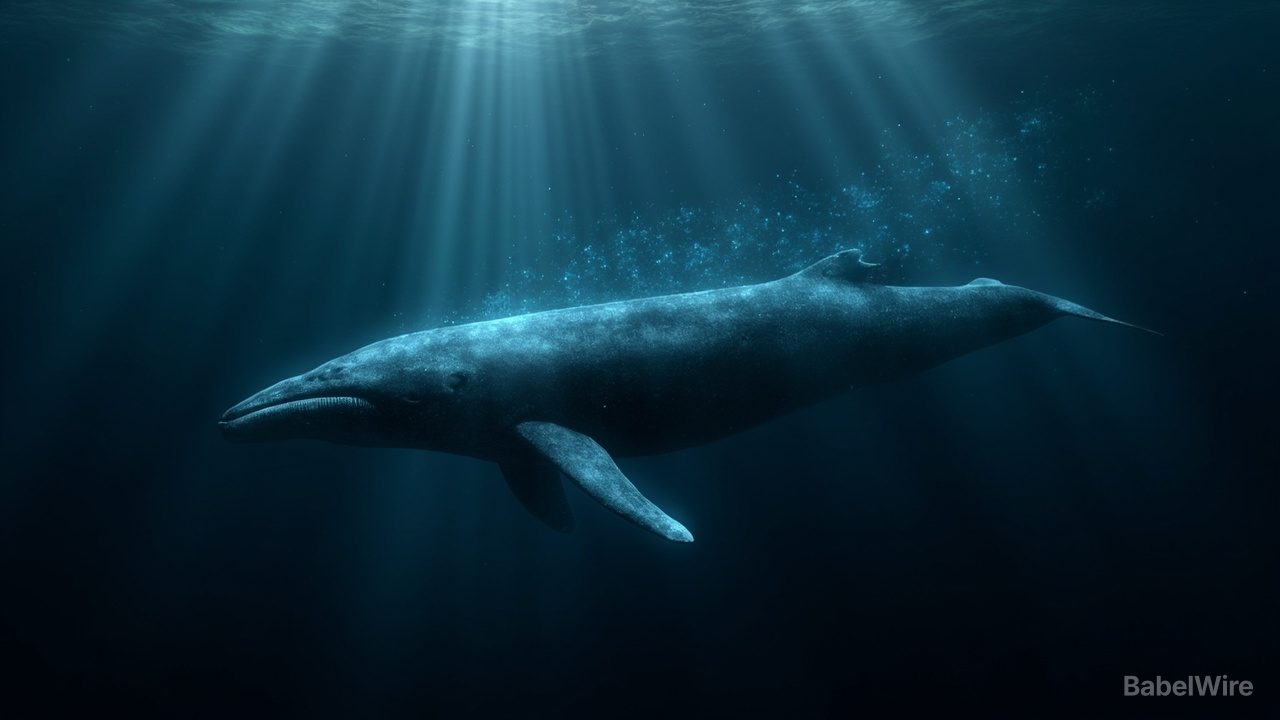
Scientists studying decades of pygmy sperm whale (Kogia breviceps) strandings off the southeastern United States have uncovered three previously unknown types of Helicobacter bacteria hiding in the animals' stomachs.
Pygmy sperm whales are among the least understood marine mammals. They spend most of their lives far from shore, diving deep to hunt squid and fish, and are rarely seen at the surface. Most of what researchers know comes from animals that wash ashore — and strandings are especially common along the Florida coast.
From 1999 through 2020, Florida Atlantic University's Harbor Branch Oceanographic Institute responded to 59 pygmy sperm whale strandings. In four cases, scientists found spiral-shaped bacteria within stomach tissue. Using histopathology, molecular testing, and DNA sequencing, the team identified three entirely new Helicobacter genotypes, named Kogia Helicobacter 1, 2, and 3.
Each of the four infected whales showed clear signs of gastrointestinal disease — gastritis, gastric ulcers, fibrosis, and nematode infestations. One also had colitis, suggesting the infection may not be limited to the stomach. While Helicobacter was not listed as the cause of death in any case, the repeated presence of inflammation and tissue damage raises questions about its role in chronic illness.
"Helicobacter bacteria have long been associated with gastrointestinal disorders in humans and other animals, including chronic gastritis, ulcers, and even gastric cancer," said Dr. Annie Page, senior author and clinical veterinarian at FAU Harbor Branch. "To find novel strains of these bacteria in a deep-diving whale species is intriguing."
Notably, Kogia Helicobacter 3 belongs to a more divergent lineage than the other two, which are genetically similar to known Helicobacter species found in dolphins, porpoises, and humans. This suggests there may be far more undiscovered bacteria in the ocean than scientists realize.
The findings, published in the Journal of Wildlife Diseases, underscore the value of long-term stranding response programs. As Dr. Page put it: "Every whale tells a story, and sometimes that story leads us into entirely new scientific territory."
Sources
- sciencedaily.comScienceDaily — Mystery bacteria found in elusive pygmy sperm whales
- fau.eduFAU News — Researchers Find New Bacteria in Stranded Florida Pygmy Sperm Whales
- pubmed.ncbi.nlm.nih.govJournal of Wildlife Diseases — Novel Gastric Helicobacter Species in Stranded Pygmy Sperm Whales
- scitechdaily.comSciTechDaily — Mystery Bacteria Found Inside One of the Ocean's Most Elusive Whales