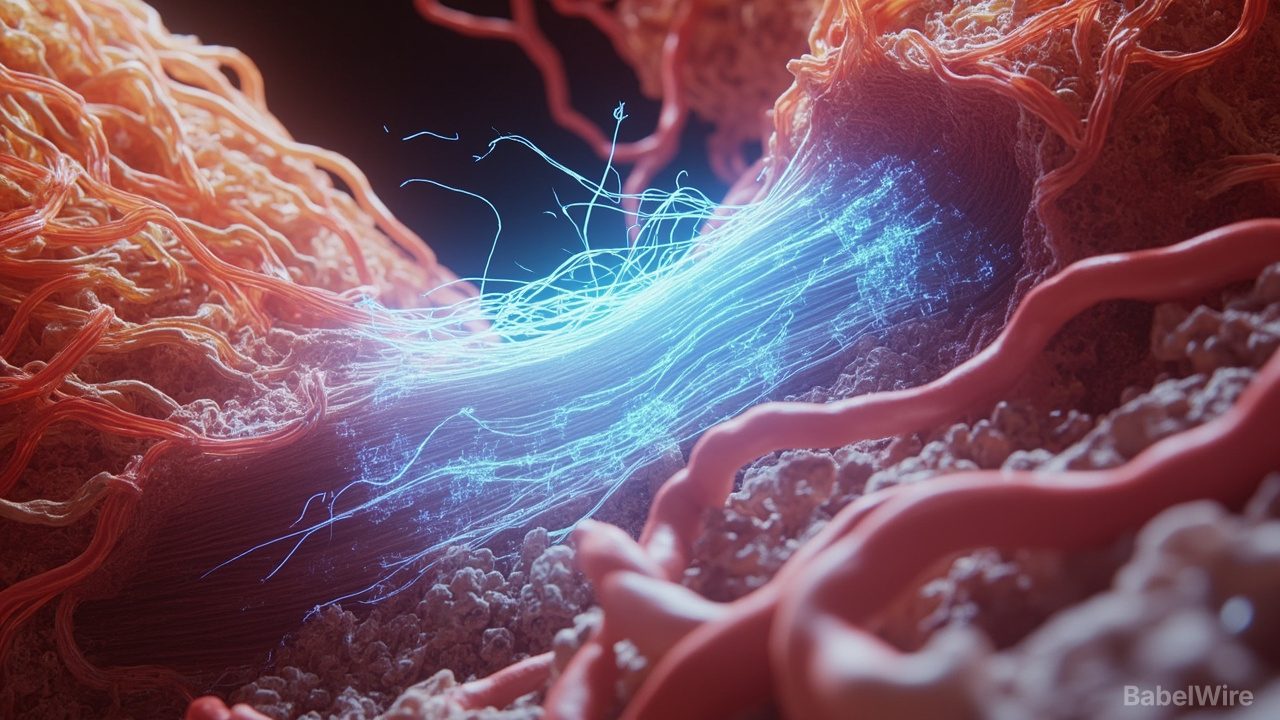
Scientists have created a surgical muscle implant that pulsates on its own, delivering some of the benefits of physical exercise to sedentary mice — more muscle mass, greater strength, and improved bone density — without the animals having to exert themselves.
The implant, described in a study published in Nature, consists of muscle cells injected beneath the skin that develop into a patch of self-contracting tissue. This rhythmic contractions mimic the mechanical signals that exercise sends through the body.
Mice with the implant showed measurable increases in muscle mass, grip strength, and bone density compared to sedentary controls. The researchers say the approach could eventually help people who are unable to exercise due to injury, illness, or disability.
The study represents an early step toward what scientists call "exercise mimetics" — interventions that replicate the molecular and structural benefits of physical activity without requiring movement.