Some of the brightest explosions in the universe may have an invisible trigger. An international team of astrophysicists has found that primordial black holes — hypothetical remnants of the universe's earliest moments — could pass through white dwarf stars and detonate them as Type Ia supernovae, one of astronomy's most-studied cosmic beacons.
The research, published in The Astrophysical Journal, was led by Shing-Chi Leung of SUNY Polytechnic Institute, a visiting associate scientist at the University of Tokyo's Kavli Institute for the Physics and Mathematics of the Universe (Kavli IPMU), working with Kavli IPMU researchers Ken'ichi Nomoto and Alexander Kusenko.
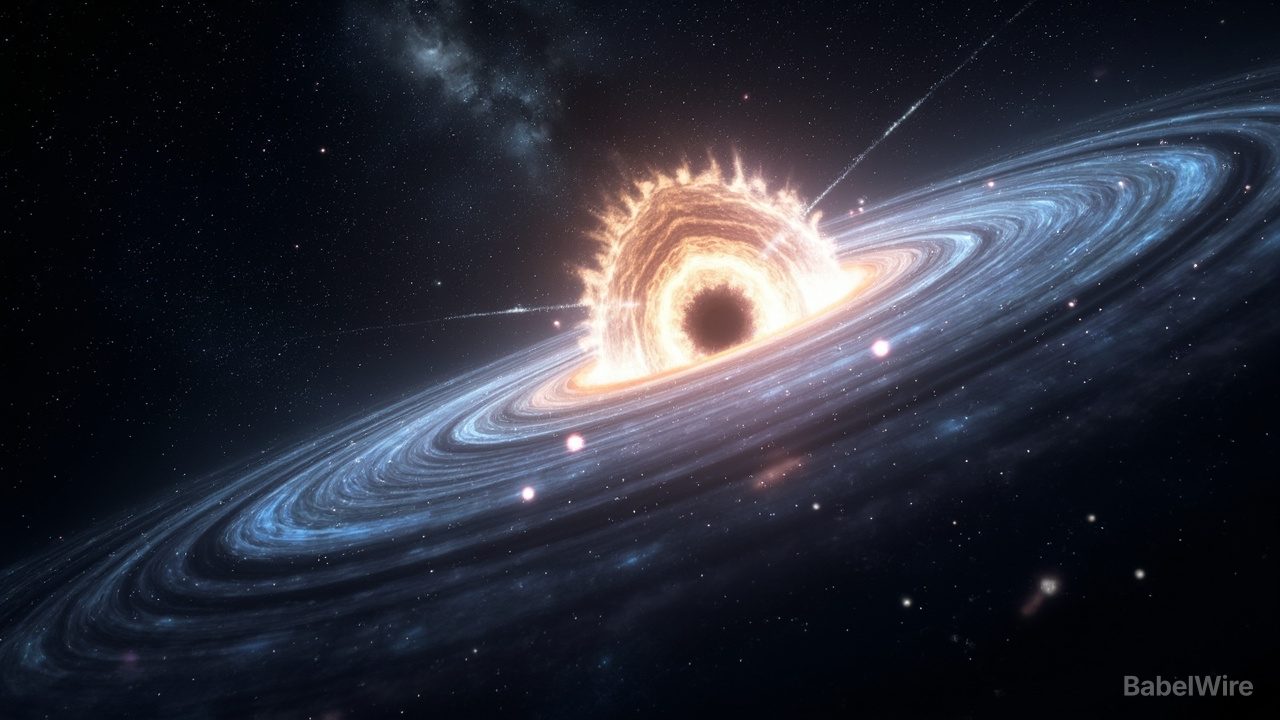
Primordial black holes are thought to have formed during cosmic inflation, when rapid expansion amplified tiny fluctuations in matter density. Because they would be invisible yet gravitationally influential, they have long been proposed as candidates for dark matter, the unseen material believed to make up the vast majority of the universe's matter.
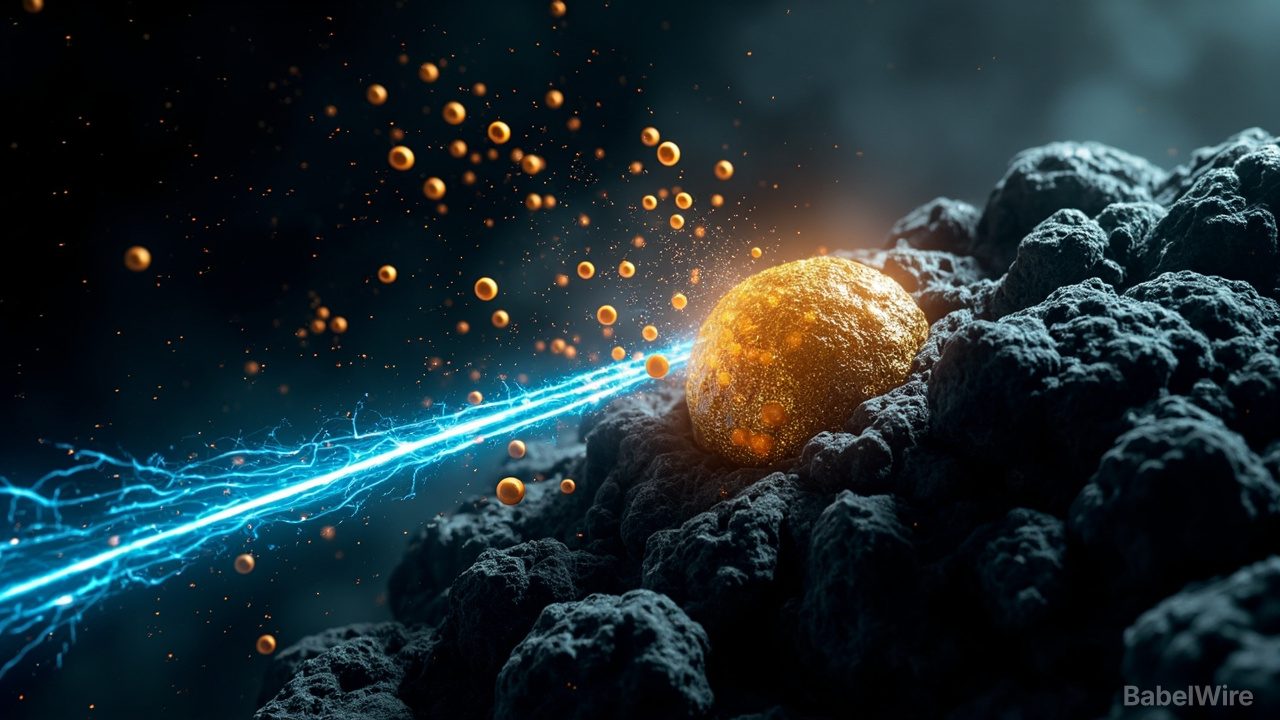
If one of these objects crossed a white dwarf — the dense remnant of a low-mass star that has exhausted its fuel — its gravity could stir powerful tidal forces inside the star, destabilizing it and igniting a runaway thermonuclear explosion: a Type Ia supernova. Earlier work by the team had shown such explosions could mimic standard Type Ia light curves; the new study goes further, comparing the model against real objects.
The researchers matched their simulations with well-known supernova remnants (Tycho, Kepler, 3C 397), nearby supernovae such as SN 2011fe and SN 2012cg, and the chemical abundances of Milky Way stars. Radioactive isotopes including nickel-56 and nickel-57, along with stable elements such as manganese and nickel, offered signatures to estimate the masses and metallicities of the exploding stars.
Strikingly, the analysis suggests a non-zero fraction of Type Ia supernovae would need to be primordial-black-hole-triggered to explain the chemical abundance trends observed across our galaxy — meaning these elusive objects may have quietly shaped the Milky Way's chemistry for billions of years.
"Some supernovae that we observe in the sky could be a result of the PBHs," Leung said. "Even though we cannot directly observe these evasive entities, they leave many interesting clues in nature for us to probe their properties." The team plans next to study how the mechanism affects the overall population and rate of conventional supernovae.
Sources
- sciencedaily.comTiny black holes may be secretly exploding stars across the Milky Way — ScienceDaily
- ipmu.jpResearchers uncover signatures of primordial black holes when triggering Type Ia supernovae — Kavli IPMU
- universetoday.comPrimordial Black Holes Can Trigger Type Ia Supernovae And Astronomers Should Be Able to Find Them — Universe Today