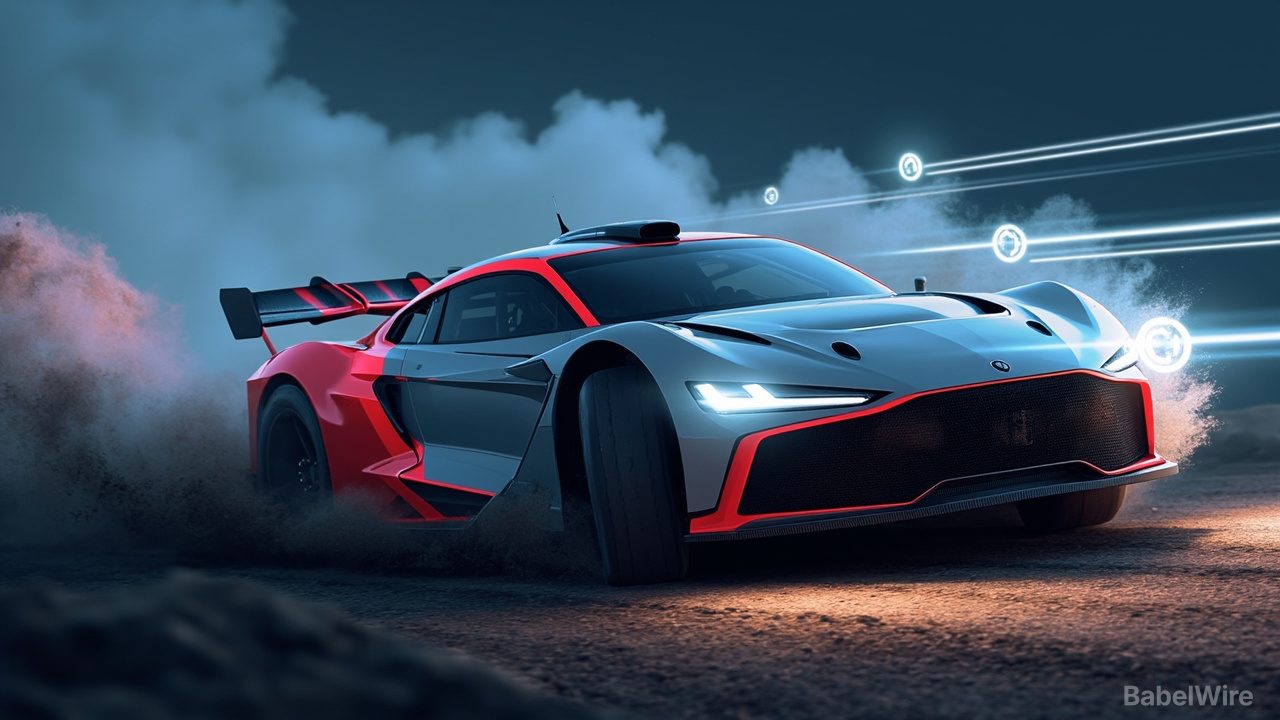
Why three motors? In an electric performance car, the number of motors is really a statement about control. A tri-motor layout typically drives each rear wheel separately, with the front axle either driven jointly or by a third unit, which lets software apportion torque wheel by wheel in milliseconds. On a rally stage, where grip changes every few metres and the surface swings between gravel, mud, snow and tarmac, that is less a performance gimmick than an active-safety and cornering tool: torque vectoring can rotate the car into a bend and help it pull out again far faster than a mechanical differential.
The E-T16, reported by Golem, dresses that idea in Peugeot's rally history — the low, wide, short-overhang silhouette that the 205 T16 made famous in the 1980s, restated for an electric package. Concepts of this kind are how manufacturers keep a heritage badge warm while the powertrain changes underneath it, and they usually preview technology that will appear, in diluted form, in road cars.
Rally has been moving in this direction for years. The current Rally1 regulations pair a combustion engine with an electric boost unit and a battery, making hybrid power part of the sport's top class rather than a novelty, and the FIA has discussed a fully electric future for rally's highest tier. Manufacturers like the discipline for the same reasons they always have: it is the harshest duty cycle in motorsport, a place to prove out cooling, energy management, structural lightweighting and software under conditions far more brutal than a lap of a circuit.
The obstacles are equally clear. Batteries remain roughly two orders of magnitude less energy-dense than petrol by mass, stages are long and there is no charging infrastructure on a mountainside, and spectators have noticed what the loss of engine noise does to the experience. Concepts like the E-T16 are, in effect, manufacturers arguing that those are engineering questions rather than reasons to stop — a pitch to the rule-makers as much as to the public.