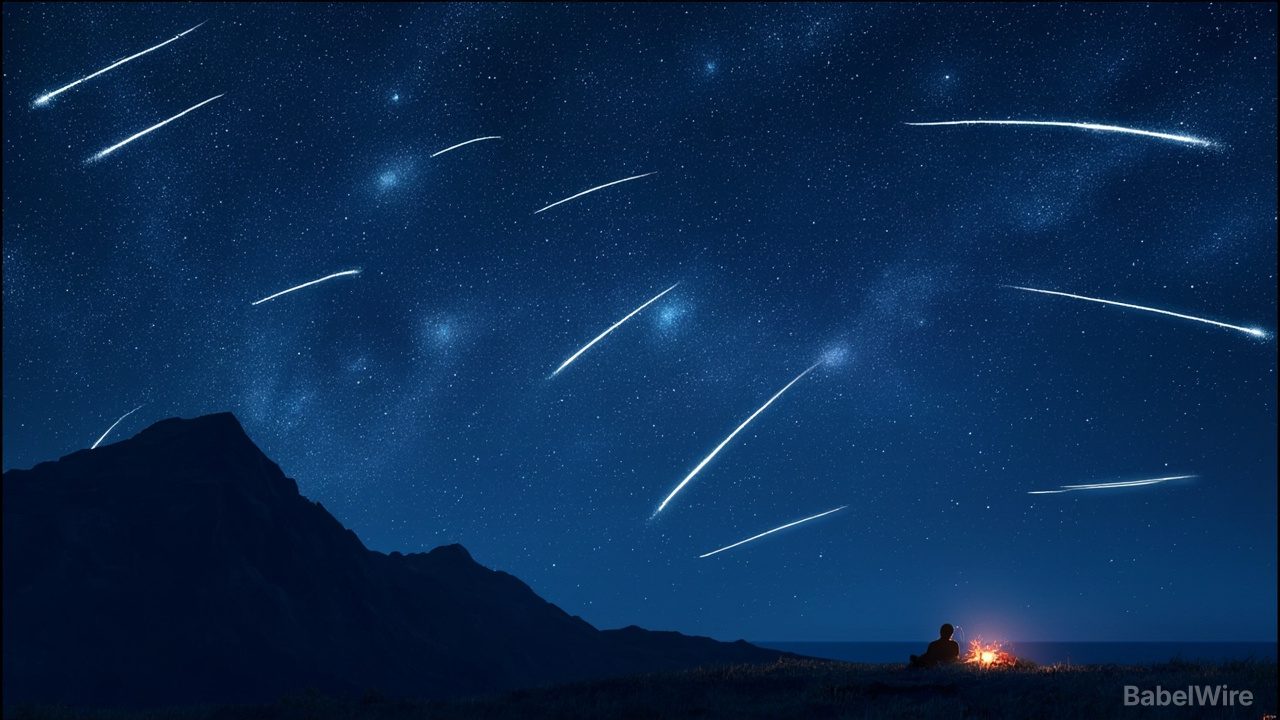
Less than 24 hours after the total solar eclipse swept across Europe, the night sky delivers a second celestial highlight: the Perseid meteor shower peaks on the night of August 12–13, 2026 — and astronomers say this year offers the best viewing conditions in years.
The key ingredient is the Moon. The shower's maximum coincides with a new moon, meaning virtually none of the Moon's illuminated side faces Earth. With no moonlight to interfere, even faint meteors will be visible, making the sky far darker than in typical years.
Under ideal conditions, the Perseids traditionally produce up to 100 meteors per hour — one of the three most intense showers of the year, alongside the Geminids in December and the Quadrantids in January. At a dark-sky site, observers can realistically expect 50 to 75 meteors per hour during the peak, with occasional fireballs.
The shower is caused by debris from comet Swift-Tuttle, which last entered the inner Solar System in 1992 and returns roughly every 133 years. As Earth crosses the comet's debris trail, dust and small rocks burn up in the atmosphere at tens of kilometers per second, creating the bright streaks known as shooting stars. The meteors appear to radiate from the constellation Perseus, which gives the shower its name.
Both NASA and the European Space Agency offer the same advice for watching: get away from city lights, find a dark site with an unobstructed horizon, and give your eyes 20 to 30 minutes to adapt. Avoid telescopes and binoculars — they narrow the field of view — and avoid bright phone screens, which reduce night vision. The best time is after midnight, when the radiant climbs higher in the sky, and patience matters: meteors arrive in bursts, so spending at least an hour under the stars offers the best chance of catching the show.
While the Perseids are best seen from the Northern Hemisphere, parts of the Southern Hemisphere may also catch some activity. The shower remains active, at lower rates, for several days before and after the peak.
Sources
- wired.comHow and When to View the Perseid Meteor Shower (August 2026) — WIRED
- planetary.orgThe Perseid meteor shower 2026: How to watch — The Planetary Society
- amsmeteors.orgMeteor Shower Calendar 2026-2027 — American Meteor Society
- rmg.co.ukPerseid Meteor Shower 2026 Guide — Royal Museums Greenwich
- science.nasa.govWhat's Up: August 2026 Skywatching Tips from NASA