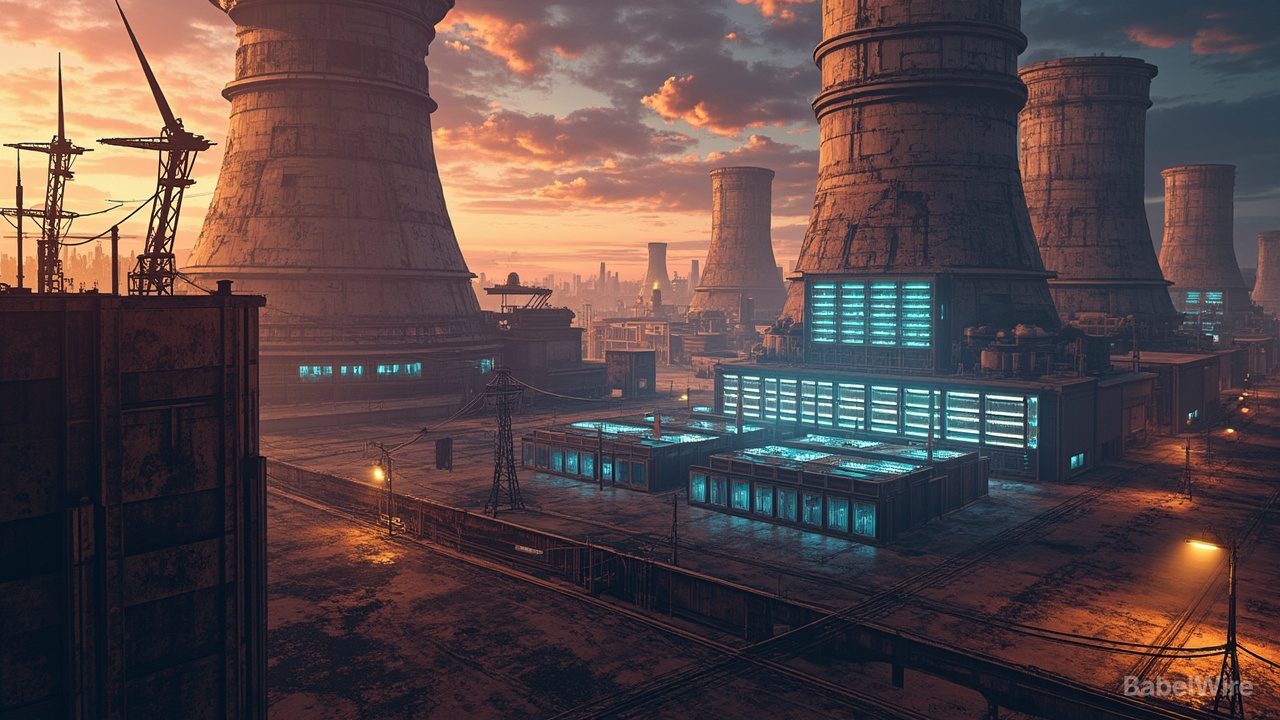
The U.S. Department of Energy is converting a Cold War-era uranium enrichment site in Kentucky into a $100 billion AI data center complex with its own natural gas and battery storage power plant — the latest federal push to turn former nuclear sites into artificial intelligence infrastructure.
The department selected investment firm Brookfield Asset Management to develop and operate the data center at the government-owned Paducah Gaseous Diffusion Plant. In March, the department announced a similar project at its Portsmouth Gaseous Diffusion Plant in Ohio. Both sites are undergoing extensive cleanup, decontamination and decommissioning after decades of fueling the nation's nuclear weapons and power plants.
"The federal government is transforming former DOE sites into 'engines of innovation and economic growth' to 'ensure the United States wins the A.I. race,'" Energy Secretary Chris Wright said in a statement. "There will be a lot of new natural gas power plants, a large data center, thousands of jobs and tens of billions of dollars of investment in rural western Kentucky," he added.
Florida-based NextEra Energy will build and own the power plant, which is to include 2 gigawatts of natural gas-fired generation, transmission upgrades and 2.6 gigawatts of battery energy storage to support a new 1.8 gigawatt AI data center campus. A single gigawatt, by a general industry standard, can power about 750,000 homes. Construction is expected to be complete in 2031.
Earlier in July, the department picked engineering contractor Amentum to negotiate a lease for a similar AI data center at South Carolina's Savannah River Site. The project is in line with the Trump administration's efforts to make AI superiority over China a top national security and economic priority. The roughly 3,550-acre Paducah site shut down in 2013; cleanup there is projected to continue until 2065 at a cost of about $17 billion.