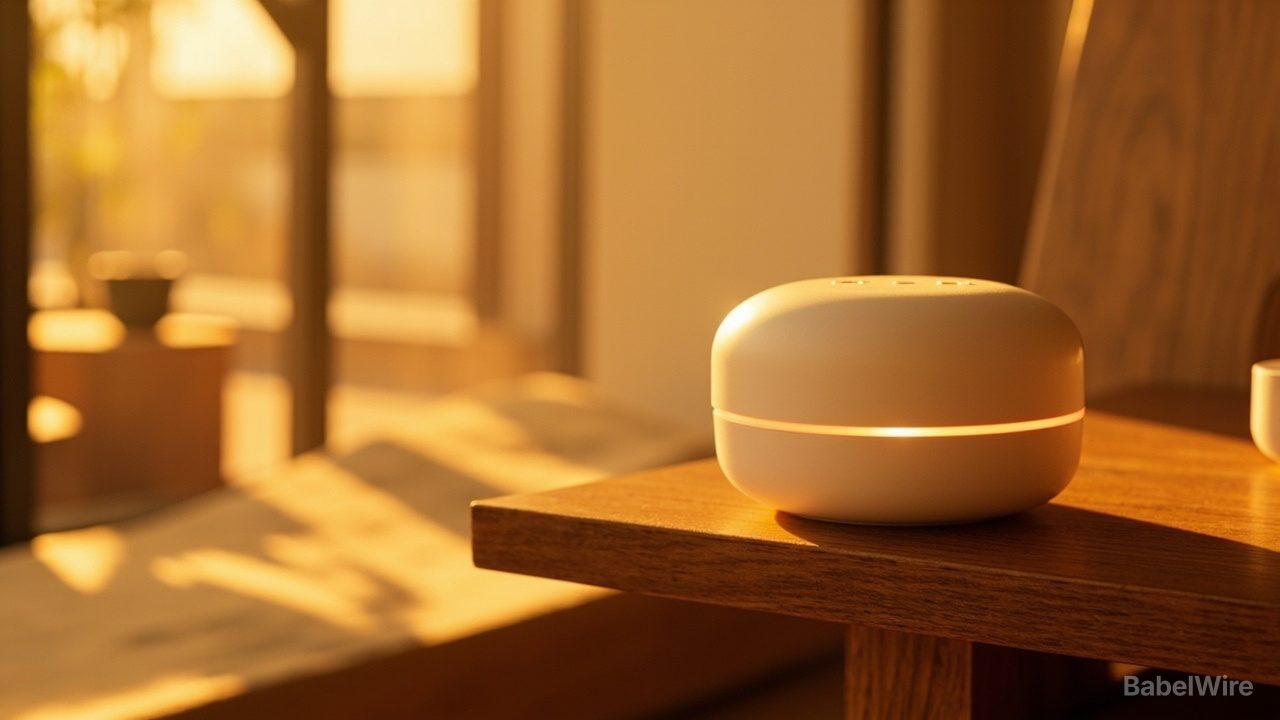
OpenAI's long-rumored push into consumer hardware is taking shape as a portable, screen-free smart speaker that can move on its own, Bloomberg News reported on July 14.
The device — still in development — is being pitched internally as a "humanlike AI companion that lives in the home" and is designed to "feel like a companion and become a physical manifestation of OpenAI's ChatGPT," according to sources familiar with the matter.
Unlike conventional smart speakers, the device includes "mechanical elements that can move on their own" and is designed to proactively learn about its owner over time, providing increasingly personalized service. It will have access to a user's digital life, drawing on emails and other data.
Key features include a camera and sensors for understanding surroundings and context, smart home control, media playback, messaging, and deep integration with OpenAI's ChatGPT capabilities. The device runs advanced AI models beyond those available on conventional smart speakers.
The project involved numerous former Apple designers and engineers who worked on the iPhone and Mac, recruited through Jony Ive's LoveFrom design studio. OpenAI paid $6.5 billion last year to acquire io, an AI devices startup from Ive, to accelerate its hardware ambitions.
The launch comes amid legal tensions — Apple sued OpenAI last week, accusing the company of stealing trade secrets related to its hardware efforts. OpenAI has denied wrongdoing and claims its product "veers significantly from anything Apple has on the market today."
OpenAI's hardware push arrives as the broader tech world grows increasingly excited about consumer AI hardware. Hark, an AI lab founded by Brett Adcock, raised $700 million in May at a $6 billion valuation for its own "personal intelligence" hardware.
Pricing is expected between $200 and $300, with a target launch in late 2026. The device represents OpenAI's bet that the next major computing paradigm will be ambient, voice-first AI — not another rectangle in your pocket.