In a historic first for geology, scientists have directly observed sea-floor spreading in real time — capturing the moment tectonic plates pulled apart and molten rock erupted from Earth's mantle to form brand-new oceanic crust.
The finding, reported in Nature, confirms a process that has been theorized for decades but never directly witnessed.
The Observation
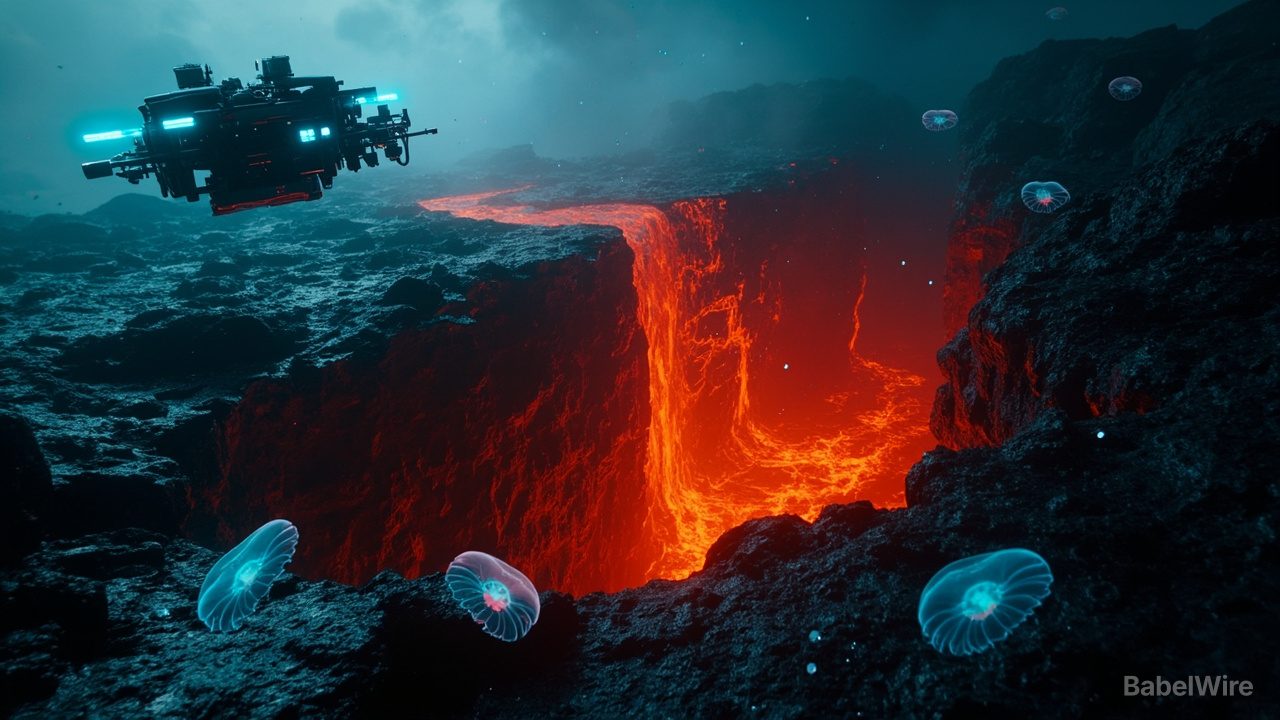
An undersea observatory — a network of seismometers, hydrophones, and pressure sensors deployed on the ocean floor — detected the event as it unfolded. Researchers watched in real time as two tectonic plates separated along a mid-ocean ridge, triggering a volcanic eruption that spewed lava across the sea bed.
The observatory recorded the full sequence: initially, a series of small earthquakes signaled the plates were pulling apart. Hours later, lava emerged, spreading across the rift valley and instantly solidifying into new crust upon contact with 2°C seawater.
Why It Matters
Sea-floor spreading is a cornerstone of plate tectonics — the theory that Earth's outer shell is broken into moving plates. While scientists have known for decades that new crust forms at mid-ocean ridges (the longest mountain chains on Earth, almost entirely underwater), the actual process had only been inferred from seismic data and rock samples collected weeks or years after the event.
"This is like seeing a continent being born," said the lead researcher. "We've had the theory for 60 years, but this is the first time anyone has actually watched it happen."
The Technology Behind It
The breakthrough was made possible by a new generation of sea-floor observatories that combine: - Borehole seismometers drilled into the crust itself - Pressure sensors sensitive enough to detect centimeters of sea-floor uplift - Acoustic monitoring that hears the sound of magma moving through cracks - Real-time data relays via underwater cables and surface buoys
What Comes Next
The success opens the door to a new era of "real-time geology." Scientists now hope to instrument other mid-ocean ridges — particularly faster-spreading ones in the Pacific — to understand how spreading rate affects eruption frequency, lava chemistry, and the unique ecosystems that thrive around hydrothermal vents.
For now, the first direct observation of sea-floor spreading settles one of geology's last great unseen processes: we can now see the planet building itself, in real time, miles beneath the waves.