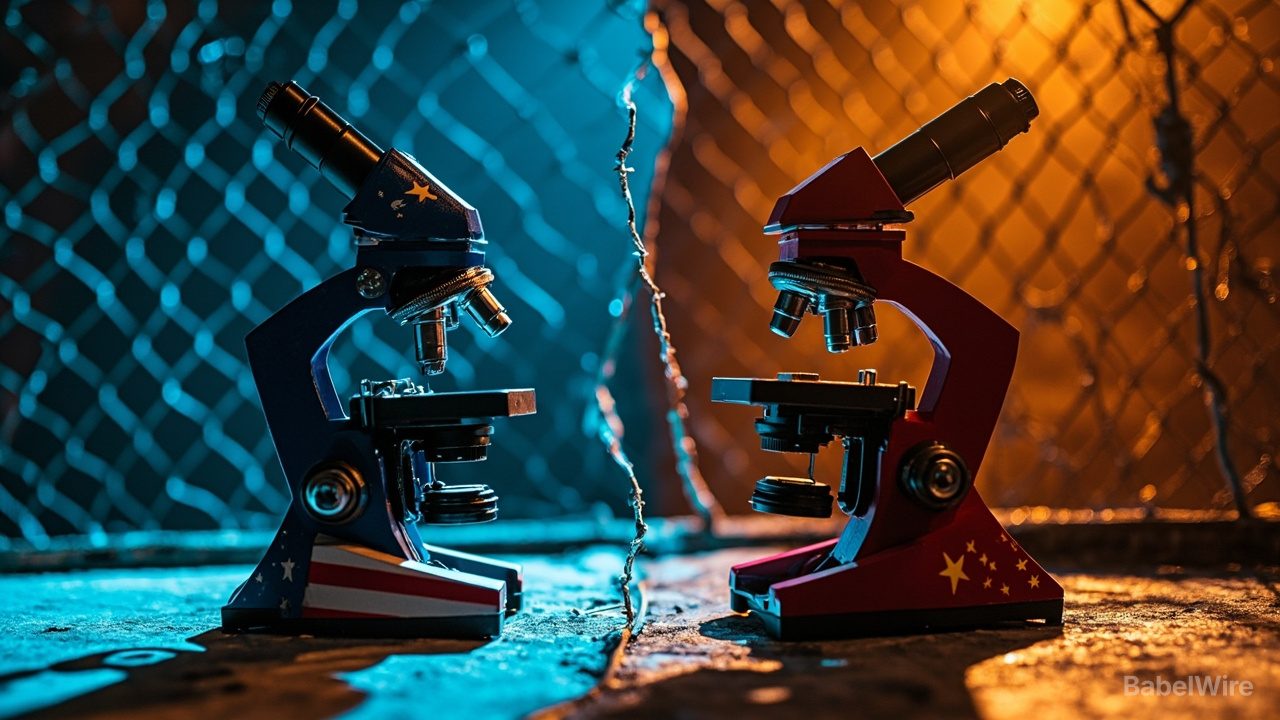
The National Science Foundation has decided to ban collaborations between every U.S. scientist it funds and nearly all Chinese research institutions and their employees, marking a seismic shift in American science policy.
The new policy, posted on Wednesday and reported by Science.org on July 10, abandons NSF's earlier attempt to balance potential risks and benefits of such collaborations through its TRUST framework. Instead, it relies on lists of restricted entities maintained by the Department of Defense and other federal agencies, which name hundreds of leading Chinese universities, national laboratories, and research institutions.
'NSF has determined research security risk mitigation for NSF-funded projects involving these restricted entities is not sufficient,' the policy reads.
There are a handful of notable omissions, however, including Tsinghua University, which last week announced it had hired away the 2025 winner of the Nobel Prize in Chemistry, Omar Yaghi, from the University of California, Berkeley.
The move puts NSF in step with actions taken earlier this year by the much larger Department of Defense, and aligns with congressional Republicans who assert that any interactions with China threaten national security. Representative John Moolenaar (R-MI), chairman of the Select Committee on China, called the move 'commendable and commonsense.'
But many scientists are alarmed. Stanford physicist Peter Michelson called the policy 'very damaging' for U.S. science. Longtime China watcher Denis Simon warned that it gives Moolenaar 'an open playing field to put anybody on the banned list.'
NSF is inviting comments on the policy and plans to finalize it by October 1. One of the biggest unsettled questions is the definition of a research collaboration — whether it includes casual conversations at conferences or joint authorship on papers where the authors worked independently.
The picture may become clearer on July 15, when NSF's Rebecca Keiser and counterparts from NIH and DOE are scheduled to testify before Moolenaar's committee.
The White House Office of Management and Budget has proposed an even broader prohibition on research collaborations with China as part of a sweeping reform of federal grants management, which would ban collaborations with entire 'countries of concern' — with China topping that list alongside Russia, Iran, and North Korea.