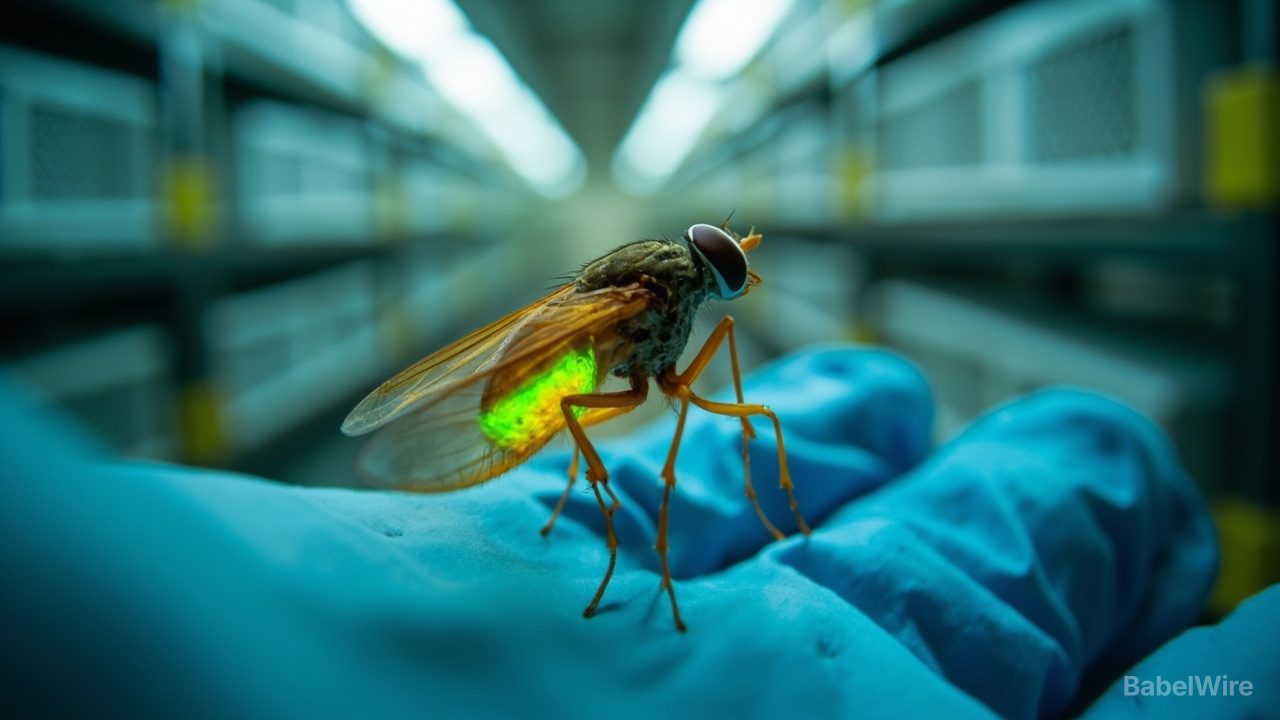
At a U.S.-funded facility in Panama, scientists are preparing to launch the first outdoor tests of NovoFly — a genetically modified screwworm fly engineered to produce only sterile males — in a high-stakes race against a flesh-eating parasite that has spread through Central America and into the United States.
The New World screwworm was detected in Texas livestock in June for the first time in decades, triggering alarm across the U.S. agricultural sector. Widespread infestations could cause estimated losses of more than $1 billion to Texas' livestock industry alone and spread to other states.
Screwworm flies are parasitic insects whose females lay eggs in open wounds and mucous membranes of any warm-blooded animal. Once hatched, hundreds of larvae burrow through living flesh using sharp mouth hooks, eventually killing the host if untreated.
For decades, the most effective tool against them has been the sterile insect technique — releasing radiation-sterilized flies to mate with wild females. But the Panama facility, which produces about 100 million sterile flies per week, is operating at maximum capacity. Experts say 500 million are needed weekly to push the parasite back to the Darien Gap.
NovoFly offers a breakthrough: genetically engineered to produce only male offspring, it could double the number of effective sterile flies without increasing production. "It's going to allow us to almost instantaneously double the number of sterile flies that we put in the fight," said Scott Hutchins, USDA's chief scientist.
If fully approved by the EPA — which would make it the first genetically modified insect to receive full clearance in the United States — NovoFly could transform pest control. But success is not guaranteed. Scientists worry the modified flies may lack the strength and virility to compete with wild males.
"We may get out in the field, and it may not fly very well," warned Maxwell Scott, the North Carolina State University entomologist who helped develop NovoFly.
The outdoor tests in Panama, pending approval from local biosecurity authorities, will confine flies in mesh cages to measure survival under tropical conditions. Larger field trials at a nearby ranch would follow in 9 to 12 weeks, releasing 50,000 marked flies every few days.
Mexico supports the technology and could begin producing male-only flies by year's end. The USDA hopes to open a new sterile-fly facility in Texas late next year. Even under the best scenario, experts say controlling the pest will take more than a year. As Kerrville lab director Kim Lohmeyer put it: "We need more flies."