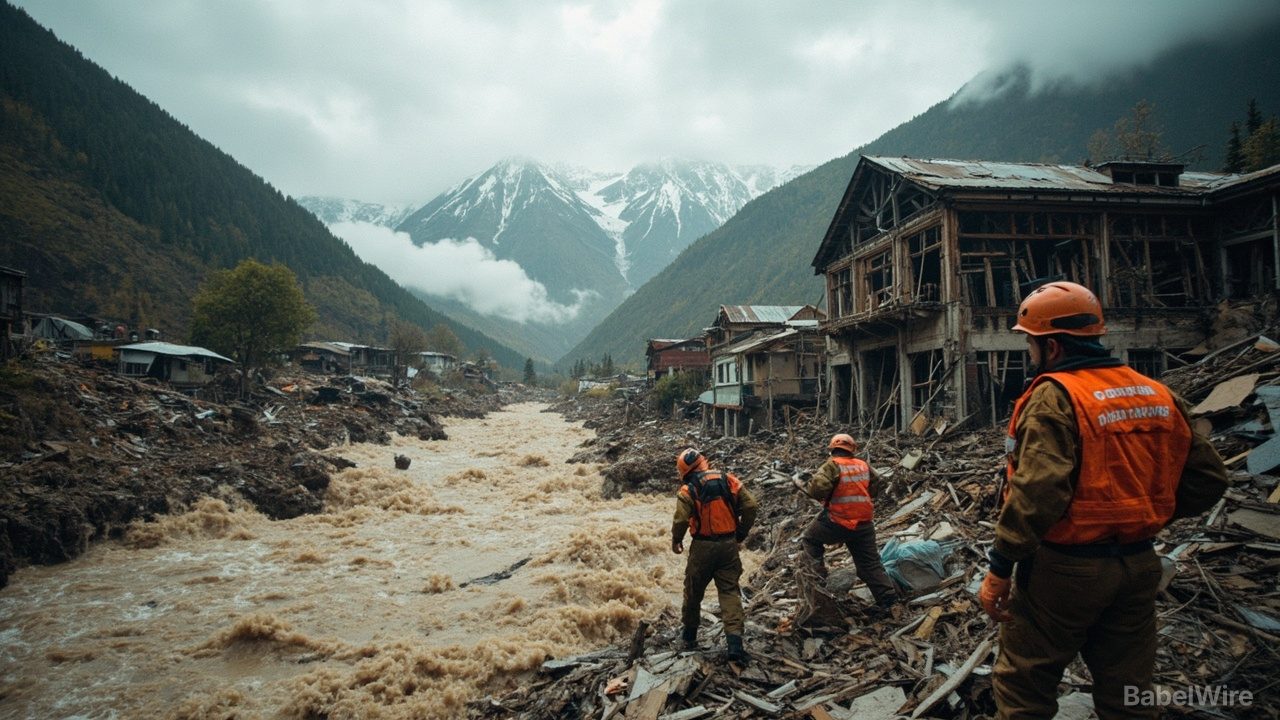
Nepal is reeling from one of the deadliest natural disasters in its recent history, as the death toll from catastrophic flash floods has surged past 800 with more than 3,000 people still missing.
The disaster began when glacial lakes in the Himalayas burst their banks, sending walls of water, mud, and debris cascading through central Nepal's Rasuwa and Nuwakot districts. The floods struck with little warning, catching communities in their sleep and washing away entire villages.
As of August 30, Nepal's disaster management authority confirmed at least 800 deaths, with rescue teams continuing to recover bodies from the devastation. More than 3,000 people remain missing, many of them workers from a hydropower project who were buried under a massive landslide.
Poor weather conditions — including continued rainfall and cloud cover — have severely hampered rescue operations, preventing helicopters from reaching remote areas where survivors may still be trapped. Ground teams are struggling through mudslides and damaged roads to reach isolated communities.
The floods also crossed into Tibet, where Chinese authorities reported at least 16 deaths and 546 people missing. International aid organizations have begun mobilizing, with UNICEF reporting that at least 14 children are among the confirmed dead.
Nepal's Prime Minister called the disaster "unprecedented" and declared a state of emergency in the affected districts. The government has deployed the army and police for search and rescue operations, but officials acknowledge that the scale of the disaster has overwhelmed local capacity.
The catastrophe has raised urgent questions about climate change impacts in the Himalayas, where rising temperatures are accelerating glacier melt and destabilizing glacial lakes that can burst without warning. Scientists have warned for years that such events would become more frequent as global temperatures continue to rise.