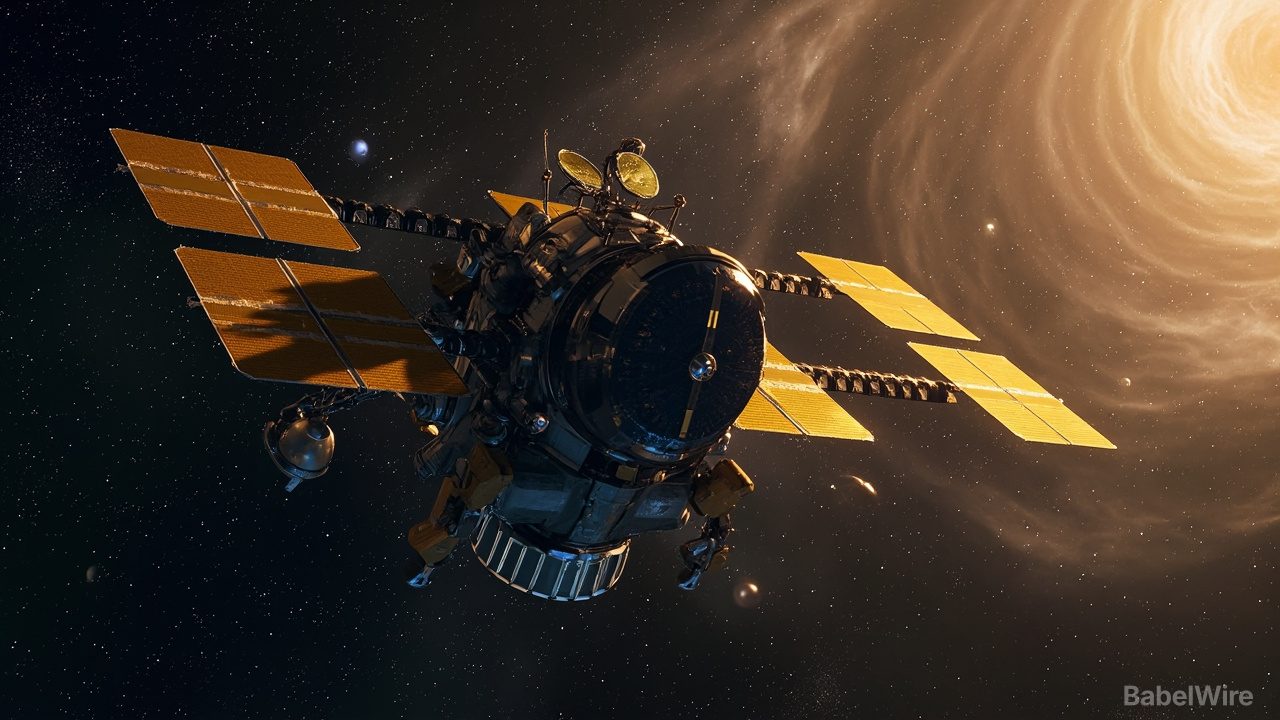
NASA's next-generation space telescope is ready for its ride to orbit.
The Nancy Grace Roman Space Telescope has formally passed its Flight Readiness Review at Kennedy Space Center in Florida, clearing the way for final launch preparations. NASA and SpaceX are targeting liftoff no earlier than 7:26 a.m. EDT on Sunday, August 30, aboard a SpaceX Falcon Heavy rocket from Launch Complex 39A.
Roman is designed to give astronomers a far broader view of the cosmos than any previous space telescope. With a field of view at least 100 times larger than Hubble's and sharp infrared vision, it will survey enormous swaths of sky to investigate what drives the accelerating expansion of the universe, how dark matter is distributed, and what kinds of planets orbit distant stars.
After launch, the telescope will travel to the second Sun-Earth Lagrange point (L2), roughly one million miles from Earth, where it will operate for a planned five-year primary mission with a goal of lasting a decade. All science data will be publicly available. The mission also carries a coronagraph instrument to directly image exoplanets by blocking starlight.
Named for Nancy Grace Roman, who pioneered space-based astronomy, the telescope represents a generational leap in humanity's ability to survey the universe.