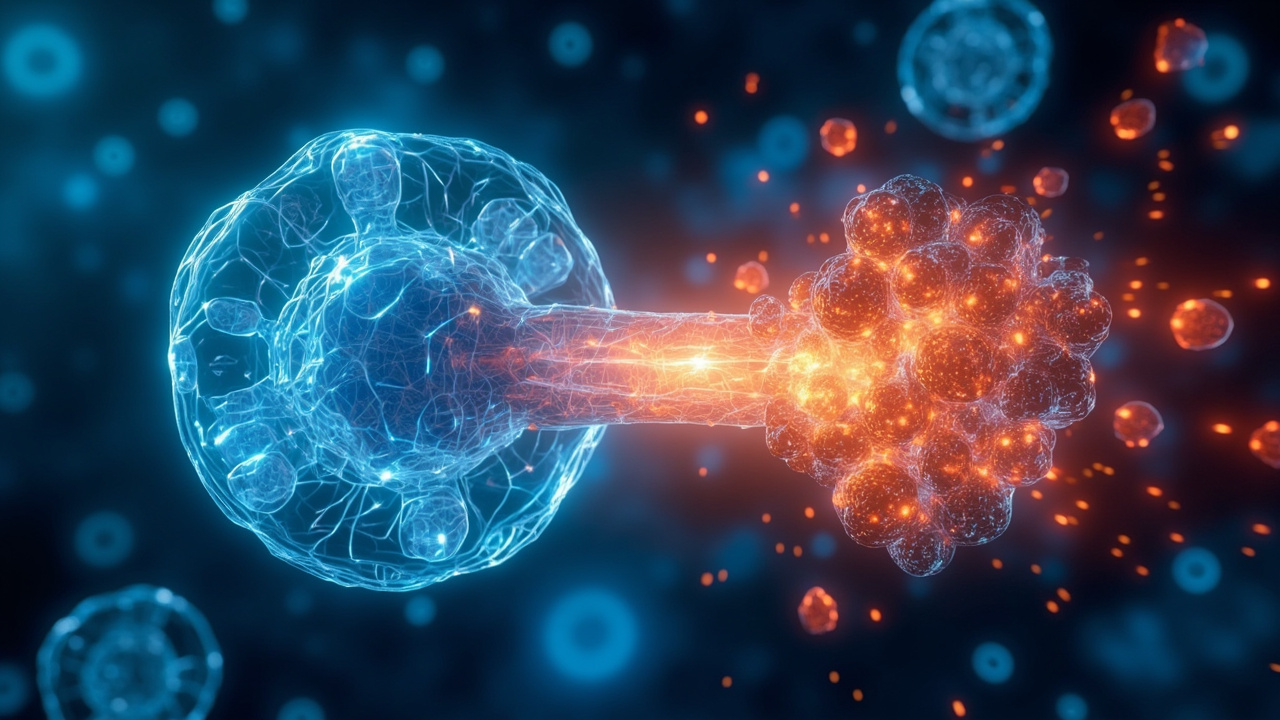
Scientists at the Weizmann Institute of Science in Israel have identified a protein called MTCH2 — nicknamed "Mitch" — that plays a major role in how cells manage energy and store fat. When disabled in human cells, the protein dramatically increases fat burning while blocking the formation of new fat cells, offering a potential new direction for obesity treatments.
The findings, published in the EMBO Journal, build on earlier research in mice that produced a surprising result: animals lacking Mitch in their muscles became more physically fit, developed greater endurance, and were remarkably resistant to obesity.
"After deleting Mitch, we examined, every few hours, the effect that had on more than 100 substances taking part in metabolism in human cells," explained doctoral student Sabita Chourasia, lead researcher on the study. "We saw an increase in cellular respiration — the process in which the cell produces energy from nutrients using oxygen."
How the 'Mitch' Switch Works
The researchers discovered that Mitch controls mitochondrial fusion — the process by which mitochondria, the cell's power plants, connect into efficient networks. When Mitch is removed, the mitochondrial network breaks apart. Energy production becomes less efficient, forcing cells to consume more fuel to meet their needs.
Cells lacking Mitch shifted from using carbohydrates and proteins to relying primarily on fat as their fuel source. "We discovered that deleting Mitch led to a major drop in fats in membranes," said Prof. Atan Gross. "We showed that Mitch determines the fate of fat in human cells."
Blocking New Fat Cells
The study also found that removing Mitch from progenitor cells — cells that develop into mature fat cells — made fat cell formation much more difficult. The energy-deprived environment created by the loss of Mitch suppressed the genes necessary for fat cell differentiation.
Women with obesity tend to have elevated levels of the protein, the researchers noted, suggesting a potential therapeutic target.
A New Approach to Obesity Treatment
Modern weight loss medications have transformed obesity treatment but often come with an important drawback: they can reduce muscle mass. Targeting Mitch could potentially bypass this problem by increasing fat burning while preserving muscle, as the mouse studies showed improved muscle fiber development alongside fat reduction.
Although the work was conducted in cells and is still far from becoming a treatment, the findings reveal a powerful biological pathway that influences both energy use and fat storage.
The study involved researchers from the Weizmann Institute of Science, the University of Pennsylvania, and the University of Texas at San Antonio.