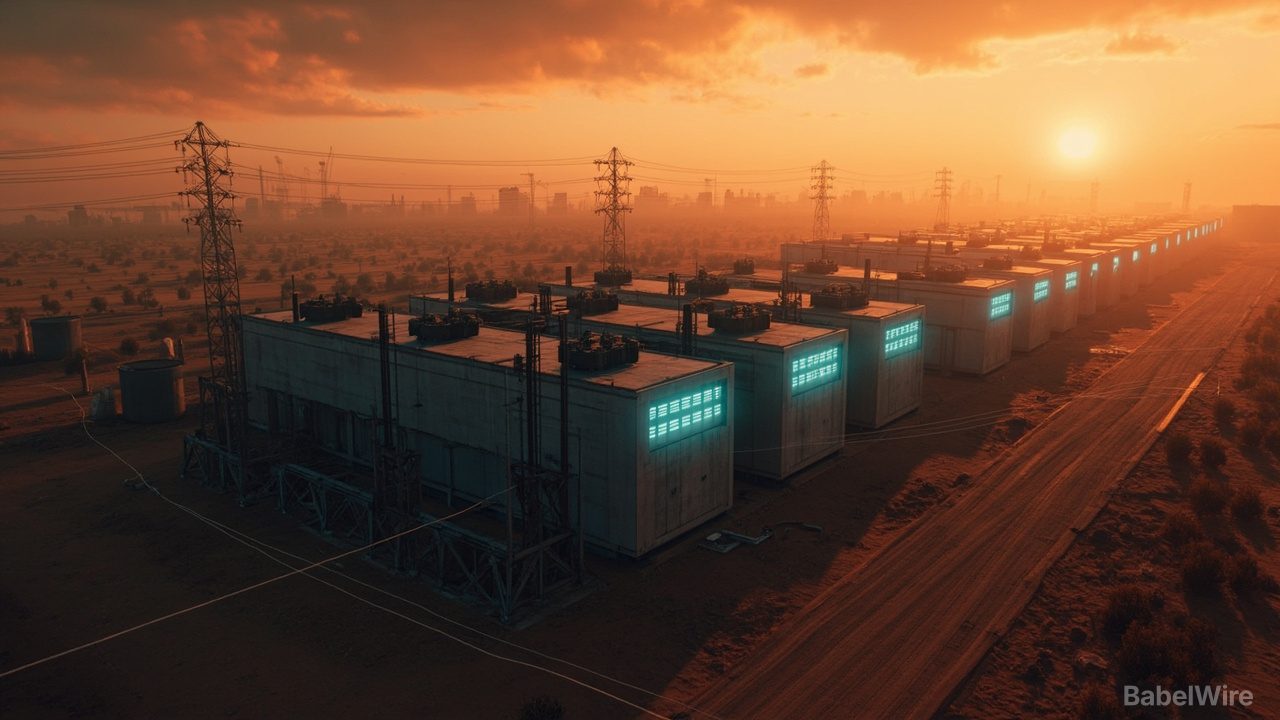
Microsoft will not exercise an option to more than double the size of its existing agreement with the British AI cloud provider Nscale for computing capacity at a data center in Ward County, Texas. The Financial Times reported the decision first on Thursday; Reuters confirmed it with a person familiar with the matter, who said a potential extension would have been worth tens of billions of dollars to Nscale.
The timing is the part both sides want read differently. According to that same source, Microsoft made the call several months ago — before Nscale filed for its IPO in September — and the existing Texas contract is untouched. The source also said the lapse has no impact on the roughly $103 billion total contract value Nscale disclosed in its listing paperwork. On that reading, this is a scheduling artifact being reported late, not a verdict on AI demand.
The pattern is harder to wave away. Weeks before, Microsoft pulled out of anchoring Nscale's flagship British project at Loughton, Essex, after delays to the grid connection pushed the expected supply date into the 2030s. Two retreats from the same supplier in a single quarter, both rooted in sites and schedules rather than in any stated doubt about the model business.
What Nscale actually is matters here. The London-based neocloud disclosed in its IPO filing that it signed statements of work with Microsoft worth up to about $43.8 billion between September 2025 and April 2026, running through December 2033 and excluding optional extensions. Last year's expanded agreement had it deploying around 200,000 Nvidia AI chips across Microsoft data centers in Europe and the United States. The company is simultaneously reported to be in talks to sell compute to Anthropic in a deal worth roughly $45 billion, and it is seeking a listing valued near $35 billion.
A neocloud's economics rest on anchor tenants. A contract that will not grow is a structurally different asset from one that doubles on schedule, and the gap between the two is exactly what a $35 billion valuation is supposed to price. The $103 billion headline figure is not wrong — it is simply the ceiling including options that a customer has now declined to take up. Investors will want to know how much of the pipeline is signed and how much was ever likely.
The glut question is the one nobody at either company wants to answer on the record. Walking away from large compute commitments is, as the FT put it, a quiet signal about where hyperscalers expect capacity to be tight — or not — by the time it is delivered. Microsoft is still building at extraordinary scale, and the chip supply chain remains the binding constraint on everything, so this is not a company betting against AI. But a hyperscaler that declines a locked-in option is one that believes it can buy the same capacity later, cheaper, or simply does not need it on that schedule.
There is a plainer explanation sitting in the grid. The Loughton project did not die of a contract dispute; it died because power connections in Britain are queued into the next decade. Ward County is a power-and-permitting story before it is a chips story, and Microsoft's own filings have made interconnection, not silicon, the recurring bottleneck. Demand for AI compute in aggregate has not softened — the physical ability to energise a hall on schedule is what has become scarce, and with it the willingness to pre-commit to timelines nobody can guarantee.
That reframes the neocloud risk. The question is not whether enterprises want tokens; it is whether a company that sold capacity for 2030 can carry the financing until 2030 if the anchor tenant trims the order book in 2026. Nscale's answer, per the source, is that several major customers are already in talks for the remaining Texas capacity. Its IPO will be the first place that claim gets tested in public, with disclosure obligations attached.
What to watch: whether the prospectus is updated to reflect the lapsed option and how the $103 billion is broken down between signed and optional; who ends up taking the Ward County capacity; and whether the Anthropic deal closes on the reported scale, which would do more for the story than any contract extension from Microsoft.